
Veteran guga hunter celebrates return of annual tradition as licence granted to hunt 500 gannet chicks
It’s the first time the annual tradition has been granted a licence in the last four years.
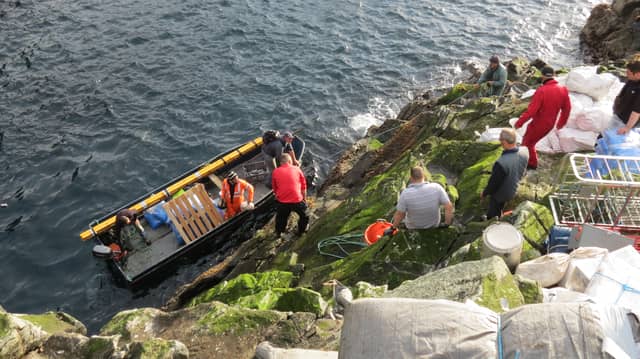


An islander who ran Scotland’s last remaining hunt for young seabirds for more than two decades said he is pleased the tradition has returned after bird flu brought it to a standstill.
The guga hunt, which dates back to the 15th Century, sees a group of ten men hunt plump gannet chicks, known locally as guga, for their meat.
The annual tradition takes place on Sula Sgeir, a small rocky island 40 miles north of Ness on the Isle of Lewis.

The hunting of the protected birds has a special derogation, with Ness being the only community in the British isles with a licence.
The hazardous ritual has continued almost unbroken for the last 500 years. However, it was unable to go ahead over the last three years due to concerns around avian flu.
NatureScot, the Scottish Government’s nature agency, has now granted a licence for the team of hunters, known as the Men of Ness, to kill a limit of 500 birds this summer.

The agency said the number has been reduced from the usual quota of 2,000 kills permitted in recent times in order for the gannet population to recover from the disease.
John Macfarlane, who prefers to go by the name Dods, first took part in the hunt in 1974.

The local Ness man made more than 40 trips to the island and led the annual hunt for more than two decades before retiring in 2018.
Commenting on the renewed licence, Mr Macfarlane said: “I am pleased, absolutely, that it’s going ahead.
“I really enjoyed going out.
“We always looked forward to it every year.”
The hunt is held in August and traditionally lasts about two weeks. The method has hardly changed in the last five centuries, with the hunters landing on the uninhabited island and sleeping in stone huts, known as “beehive huts”, for the duration.

This year, however, due to the reduced quota of birds, Mr Macfarlane said the hunt will be a shorter one, likely only lasting one day.
Usually working in pairs, the men grab the birds from their nests on cliff edges with a long pole, catching them around the neck with a rope noose. They then pass them back to a colleague who knocks them on the head with a stick.
“It’s very quick,” Mr Macfarlane said.
“Within seconds they are dead, so it’s not cruel.
The islander said the hunt is controlled to ensure a limited number of birds are taken from the island, which has some 10,200 occupied sites recorded, according to NatureScot.
“And it’s the best way to get meat,” Mr Macfarlane added.
“There’s no additives in these beasts. When you get meat off the supermarket shelves you don’t always know what’s in it.”
The birds are gutted, plucked and salted before the team brings their harvest back to Ness.

Guga meat is considered a delicacy by some with the bird remaining a popular dish locally while some is sold abroad.
Controversy
In modern times, the annual ritual has proved a controversial practice with animal rights groups.
Responding to the approval of this year’s guga hunt licence, Jason Rose, chief executive of animal rights charity OneKind, said the move will “appal and embarrass” people of the Western Isles and across Scotland.
Mr Rose said: “There is simply no need for this cruel activity to take place.
“We live in a modern society where we have many more choices about where our food comes from.
“The guga hunt is a grisly story from history that should be left in books or a museum.”
He said the charity will write to Scottish ministers asking them to rethink the decision.
While the guga hunt continues, Mr Macfarlane said there are concerns island traditions are being “watered down.”
“There aren’t so many young people around which can be a problem for the hunt,” he said.
“You need to have a two week period free in August and that can be hard when local boys are working in the oil industry or on the ferries.”
NatureScot said it recognises the cultural significance of the guga hunt.
The agency said licencing the traditional activity is made possible through the Wildlife and Countryside Act.
A spokesperson for the nature agency said: “This is the first year we have received a licence application from the Men of Ness since 2021, due to concerns about the impact of avian flu on the gannet population.
“We have thoroughly assessed the application taking into account survey data and population analysis and we have granted a licence with a limit of 500 birds.
“This is significantly fewer than in previous years where up to 2,000 have been granted.
“This revised limit for 2025 safeguards the sustainability of the Sula Sgeir gannet population and allows for its continued recovery following avian flu.”
Avian flu
In 2022, Avian flu hit seabird colonies across the Western Isles and the St Kilda archipelago, with gannets among the species worst affected. In the same year, the population of gannets at Bass Rock, off the coast of North Berwick, said to be the world’s largest colony of the species, also suffered significant losses, with some experts saying numbers shrunk by a quarter because of the disease.
The widespread impact meant that, at the time, for only the second time since the end of World War Two, the guga hunt was called off. The previous occasion was in 2020 due to the Covid pandemic.
What does guga meat taste like?
In the past, guga hunts were carried out in other parts of Scotland, including on the remote archipelago of St Kilda where seabirds were part of the islander diet. Residents at the time also ate puffins and fulmars.
On Lewis, guga is traditionally served with potatoes and milk and is regarded as a delicacy. The meat has been given various descriptions by those who have tried it, including “fishy beef” and “salty goose.”
Comments
Want to join the conversation? Please or to comment on this article.