
'Unprecedented' calls to farming wellbeing charity as suicide figures rise

95 per cent of farmers under 40 believe mental health is the biggest hidden issue for those working in agriculture.
Scotland’s leading agriculture charity said it is receiving an “unprecedented” number of calls to its wellbeing department as figures show mental health among farmers in the UK is at a four-year low.
RSABI said it has substantially increased its suicide prevention work, including employing a fulltime Suicide Prevention Lead and delivering free suicide prevention training ,as well as mental health first aid training.
It comes as new figures showed there were 47 suicides in the farming industry in the UK in 2024 - an increase of 7 per cent from 2022 - according to the Office of National Statistics.
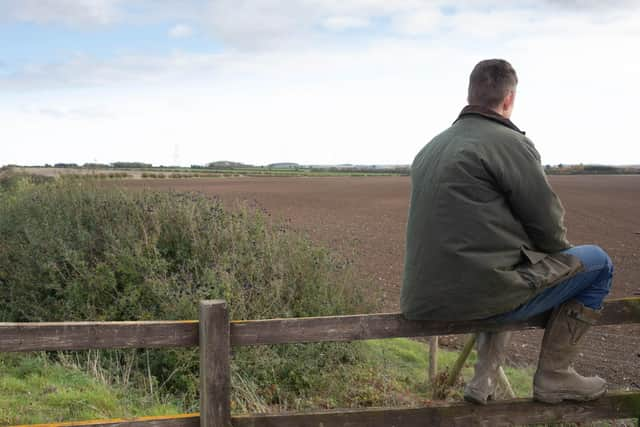

The research from the Farm Safety Foundation also found that 95 per cent of farmers under 40 believe mental health is the biggest hidden issue for those working in agriculture. Historically the most resilient group, wellbeing among UK farmers over 61+ has seen the sharpest decline, according to the figures.
Working in farming can bring with it several pressures, including long hours, isolation, financial uncertainty, generational expectations and physical risk.
RSABI is also collaborating with the University of Glasgow on a three-year £85,000 research programme to research suicide risk in the sector and develop evidence-based strategies to protect those most vulnerable.
Previous Scottish and UK studies, dating back to as early as the 1980s, have suggested that farming had the highest proportion of suicides of all industries.
In 2021, research showed the UK suicide rate for male farm workers was about three times the male national average. For the following two years, data from the Office for National Statistics indicated the number of suicide deaths among farmers increased year-on-year.
Carol McLaren, chief executive of RSABI, said: “RSABI is seeing unprecedented demand for the counselling services the charity offers free of charge to those who are struggling with their mental wellbeing, and requests to be referred for counselling are now the single most common reason for calling our 24/7 Helpline.”

She said the charity also provides “postvention support” for those bereaved by suicide.
This week marks the Farm Safety Foundation’s Mind Your Head week.
The campaign calls on farmers, rural organisations, colleges and Young Farmers Clubs to start life-saving conversations, learn practical skills and connect communities to support - addressing what many now recognise as the industry’s “biggest hidden problem.”
The charity’s latest research reveals that overall wellbeing within the farming community lags behind the UK general population and has fallen to its lowest point in four years. This is measured by the Warwick-Edinburgh Mental Wellbeing Scale (WEMWBS), a widely used national measure of positive mental health.
Stephanie Berkeley, manager of the Farm Safety Foundation, said: “Farming is tough. Long hours, hard graft and a mindset that says ‘just get on with it.’
“That grit is admirable - but it is also why some farmers leave it too late to ask for help. As we enter 2026, we want to address the issue of suicide awareness and prevention.
“Too many farming families are quietly carrying the weight of crisis and loss. The message this year is simple: learn the steps, start conversations earlier and look out for each other. When communities know what to say and what to do, lives can be saved.”
Where to get help
RSABI’s free confidential support service is available 24 hours a day, every day of the year, by calling 0808 1234 555 (calls won’t show up on phone bills) or through a confidential webchat service, available on RSABI’s website at www.rsabi.org.uk
If you are having thoughts of suicide, speak to someone you trust or call one of these helplines:
- Samaritans – 116 123 (available 24/7)
- Breathing Space – 0800 83 85 87 (available Monday to Thursday 6pm to 2am. At weekends, open between Friday 6pm and Monday 6am)
- NHS 24 mental health hub on: 111 (available 24/7)
If you are ever in immediate danger or have the means to cause yourself harm, you should dial 999 and request an ambulance.
Comments
Want to join the conversation? Please or to comment on this article.