
The nocturnal animal using Glasgow's streetlights to hunt
The change in behaviour near the roadside has raised concern about increased vehicle collisions.

It’s a silent-winged animal that has historically used sound to hunt given its nocturnal existence.
But new evidence has shown the tawny owl is adapting to the noisy urban city life by using streetlights to help it find its catch.
Noise and light pollution from human activity is widely known to disrupt wildlife behaviour across sea, land and sky.


From turtle hatchlings becoming disorientated and heading inland instead of the ocean to frogs unable to hear one another during mating calls, species of all shapes and sizes can be impacted.
Researchers have said knowledge is limited on how nocturnal acoustic predators cope with these pollutants.
The tawny owl, while a common species in the UK, has seen population numbers decline in the past few decades, which has landed it a place on the Amber List of Birds of Conservation Concern.
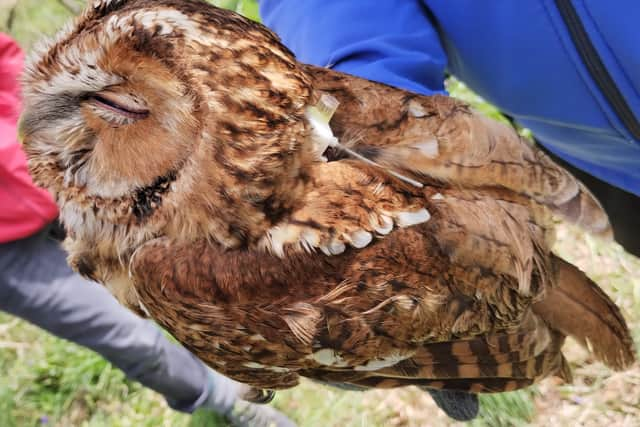
They are more known to favour woodland habitat, but also make themselves at home in city parks, large gardens, and farmland.
They usually hunt mice and voles, but studies have shown they will take other prey on occasion, including birds, amphibians, young rabbits and even insects and worms when food is scarce.
According to the Woodland Trust, the species’ population is estimated to have fallen by more than a third since the 1970s.
The decline has prompted scientists to research causes, including urbanisation, prey availability and habitat loss.
To test how noise and light pollution could be affecting tawny owls, researchers from the University of Glasgow fitted GPS trackers to 20 owls in both urban and forest landscapes in Glasgow suburbs: Bearsden and Milngavie.
They tracked the owls’ movements over three years and used remote sound recorders to collect noise data in these areas.
They found that while tawny owls in forests experienced low exposure to noise and light, owls in urban environments chose hunting spots within about 50m of roads that were both illuminated and noisy.
There appeared to be less movement in these areas, suggesting more stationary foraging behaviour, which could indicate they were using the light to help them spot their prey.
Giuseppe Orlando, a PhD researcher at the University of Glasgow, said: “In urban areas, owls selected noisy roadsides only when illumination was high.

“This behaviour was strongest close to streetlights in louder conditions, suggesting that owls may exploit artificial light to hunt effectively near roads when noise levels are high.”
The findings suggested that in well-lit and noisy urban areas, tawny owls may rely more on visual cues than hearing to improve hunting success.
However, Mr Orlando warned that while the artificial light can be seen to be attracting owls to roadside areas, the change in behaviour could potentially increase the risk of vehicle collisions.
He said: “As noise and light pollution continue to expand as a result of urbanisation, managing the spread of these pollutants could help maintain more natural and safe foraging conditions for Tawny Owls.”
Mr Orlando will presented the findings at the British Ecological Society’s annual meeting in Edinburgh this week.
Comments
Want to join the conversation? Please or to comment on this article.