
Scots living near new pylons would get £250 a year off household bills for 10 years under UK government plans

The proposals come as Scotland continues to face backlash to energy infrastructure upgrades from rural communities.
Scots living near new pylons would receive £250 off energy bills each year for a decade under UK government plans.
The Department of Energy Security and Net Zero is launching a consultation into proposals included in the Planning and Infrastructure Bill to provide payments to households affected by the new pylon developments.
Households within 500m - a third of a mile - of new or upgraded electricity transmission infrastructure could receive a discount of up to £250 via their electricity bill every year for ten years, totalling £2,500. The discounts, which would be assigned to the home, and applied to the occupant, could be provided in instalments of £125 every six months.
New transmission cables and pylons are being built across Britain to upgrade ageing electricity networks.
The upgrades are being done to connect new wind and solar farms, nuclear power plants and large scale battery storage, and reinforce the grid to cope with the planned rise in electric heat pumps and car charging in homes.
The UK government says around twice as much new transmission network infrastructure will be needed by 2030 as has been built in the past decade.
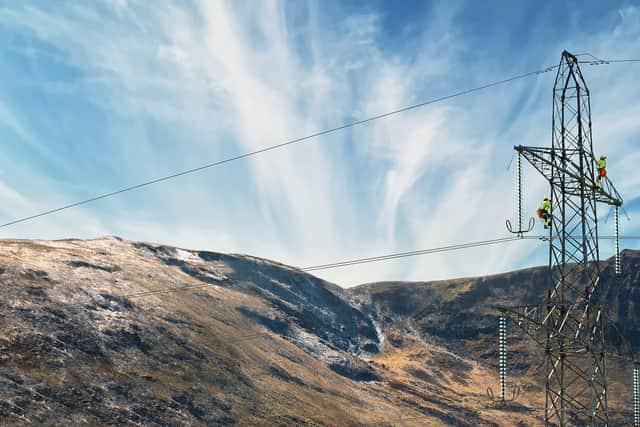

Building new pylons and cables, however, have and continue to face fierce backlash in Scotland, which is home to most renewable energy projects, particularly wind farms.
Residents across affected areas, from the Highlands to the Borders, dispute the quantity of such developments and the impact, both visually and economically, on communities.
Campaign group Action Against Pylons described the move as “an insult”.
A spokesperson for the group said: “When average household electricity bills are around £700 or more, £250 is an insult to people living near the proposed giant pylons.
“It is not enough to compensate local people for the destruction of their countryside, the interruption to businesses and daily life from construction work - up to 750 lorry movements per day - and the known adverse effects on the health of people living close to pylons.”

Minister for Energy Consumers Miatta Fahnbulleh said: “As we build the infrastructure we need to deliver home-grown, affordable energy, communities must be given a stake. That is why we are teaming up with communities hosting new pylons to ensure they receive direct, tangible benefits.
“We are on the side of those who want Britain to get back to what it does best: building for the future, driving innovation and putting communities first.”
A second community council convention is taking place in Inverness next week with members meeting to put pressure on the Scottish and UK governments to pause “a barrage of major energy infrastructure applications” across the Highlands and Islands.
The UK government has pledged to deliver clean energy by 2030, as part of efforts to boost the economy, cut climate emissions and reduce Britain’s exposure to volatile fossil fuel prices. It hopes cash benefits to local people will reduce opposition and planning delays to the infrastructure needed to deliver the clean energy plans.
Questions were recently raised over the recent approval of the overhead line upgrade on the Isle of Skye. The plans were objected to by Highland Council which a community group of residents said should have prompted an inquiry.

The pylon upgrade, however, was approved by ministers in June - more than two years after developer SEEN lodged the plans.
Energy bosses have said the grid upgrade has not kept up with the pace of renewable energy developments over the years, which explains what feels like a sudden expansion of infrastructure.
Academics studying energy policy said conflict could have been avoided with incremental upgrades over the years.
The launch of the UK government consultation comes alongside reforms which place new obligations on energy companies to improve smart meters, and improving connectivity across Scotland and northern England, including rolling out 4G services to allow more households to benefit from getting meters installed.
The proposals, from Ofgem, are set to be introduced next year. They include requirements to cut times for installation appointments and to fix meters that have stopped working in smart mode within 90 days – or provide consumers with automatic compensation.
Officials said the measures would help households get lower bills through better management of their energy use and access to more flexible tariffs, such as paying less to use power off-peak or benefiting from free electricity offers when excess power is available on the grid.
Charlotte Friel, director of retail pricing and systems at Ofgem, said: “Millions of consumers rely on their smart meter every day for accurate billing, cheaper tariffs, automatic meter readings and real-time data to help keep track of spending.
“But we know many customers that want a smart meter wait too long to get one installed or face delays on repairs when it stops working – this needs to change.
“These new rules are about setting clear expectations of suppliers, incentivising them to boost smart meter standards, and protecting consumers from poor service if things go wrong.”
Comments
Want to join the conversation? Please or to comment on this article.