
Exclusive:Scots called to change relationship with water as charges set to increase
Scottish Water said 2025 should be a “reset year” for Scotland’s relationship with water.

Scotland’s water charges are set to increase amid ongoing calls for the country’s relationship with water to change.
Scottish Water said bills are likely to rise by about £45 a year next year— £3.75 a month.
This compares to the average water charge in Scotland increasing by £44 in 2025.
The official setting of next year’s charges in Scotland will be decided by the Board of Scottish Water early in the new year.

They will take effect from the new financial year in line with the annual review of council tax, which, in Scotland, includes water charges.
The figures come as Scottish Water, the public body responsible for providing drinking water and treating wastewater, said the country was having to rethink its relationship with natural resources in a changing climate.
Multiple river catchment areas this year, for example, reached significant water scarcity levels due to prolonged periods without rainfall. The country experienced its driest spring since 1964.
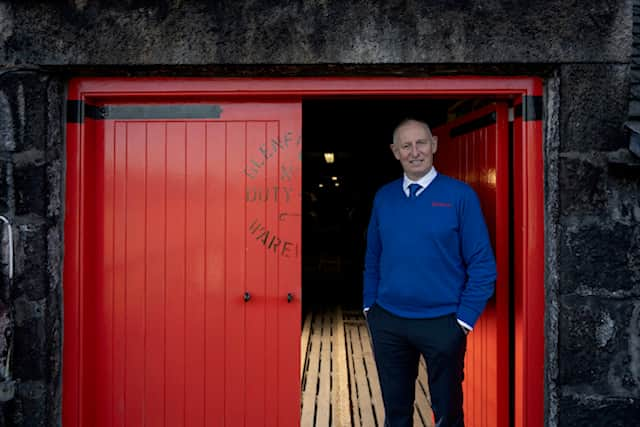
Several whisky distilleries in Speyside, a region home to more than 70, temporarily shut down due to low water levels.
According to Scottish Water, reservoir levels in the east of the country are 25 per cent lower than they should be at this time of year.
In the south and north, reservoirs are 7 per cent and 9 per cent below average respectively. Meanwhile, in the west, levels are 6 per cent above average.
Scottish Water’s chief executive Alex Plant said he hoped 2025 would be seen as “a reset year” for Scotland’s relationship with water.

“The reservoir levels are one example to highlight how we’re all having to rethink what ‘normal’ means when it comes to Scotland’s weather,” he said.
“We are now a country that frequently gets periods of both too much rain (overwhelming our drains) and too little (seeing our reservoirs emptying and rivers running low).
“At the same time, Scotland continues to be one of the highest users of water per head of population.”
The average person in Scotland, according to figures, uses roughly 40 per cent more water than someone living in Yorkshire, for example. Scots are also the second highest users of water in Europe, just behind Italy.
Mr Plant said the higher usage could be down to cost.
Figures show in England and Wales, the yearly increase in water bills was £123, which follows a long-term trend of Scotland seeing lower average bills. More than half of customers in Scotland also receive some form of financial assistance with their bills, Mr Plant said.
He said attitudes could also be down to water being considered an abundant resource in Scotland.
“In some parts of Scotland this is true, but not everywhere, as 2025 has shown so clearly,” he said.
Mr Plant said while there were ways of reducing water use, investment in infrastructure to meet the changing climate was needed.
“Scotland’s population is growing in the east and shrinking in the west meaning new facilities are needed,” he said. “And many of the pipes and other assets that keep water flowing are nearing the end of their operational lives, meaning repairs and replacement costs are increasing.
“There are also tighter environmental standards. These are welcome, but also costly. For example, we are currently investing £500 million in improving urban waters.
“This all means that we will need to replumb Scotland in the years ahead to ensure water and waste water services are resilient.”
Mr Plant was recently accused of downplaying sewage on Scotland’s beaches after faeces was found in seawater. Labour MP Melanie Ward said the chief executive was “out of touch” after he said he did not want concerns over water quality to be “overblown”.
Scottish Water said its “bathing water performance” was improving year-on-year, with 87 per cent achieving good or excellent classification and only 2 per cent falling below sufficient.
Earlier this year, the public body was forced to increase salaries for staff after strike action took place over a dispute in pay. Workers accepted a pay increase in July.
Comments
Want to join the conversation? Please or to comment on this article.