
Scotland set for bumper year for birdlife after cold weather across Europe

It’s that time of year when migratory restlessness kicks in for some
Scotland could be in line for a bumper year for visiting birds due to cold and unsettled weather across Europe, experts have said.
While it might not feel like it, Scotland has relatively mild winters compared to places on the continent.
It means birds who spend most of the year in these countries tend to jump ship for a relatively mild Scottish winter.


With a recent cold spell, the Royal Society for the Protection of Birds (RSPB) said 2026 could be an “exciting year” for Scots for spotting a larger number of visiting birds.
These include thrushes such as Fieldfare and Redwing and the berry-loving Waxwings from as far as Scandinavia, Poland and Russia.
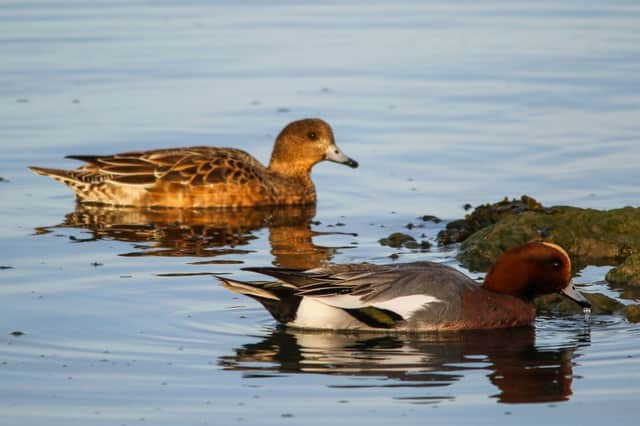
Wildfowl, such as whistling Wigeon, Whooper Swans, and geese like Pink-footed and Barnacle Geese are known to come to Scotland to seek refuge from harsher Arctic winters and are often seen in wetlands and fields. Meanwhile, coastal areas could be lucky enough to welcome rare Snow Buntings and Twites.
The birdlife predictions tie in with the RSPB’s upcoming Big Garden Birdwatch. In 2025, more than 40,000 people in Scotland took part in the survey counting more than 700,000 birds of nearly 50 species. UK-wide, more than 600,000 participants counted a grand total of 9.5 million birds.
Among those, 3,000 Redwing and Fieldfare were recorded across the UK (3,201 and 2,885 respectively, with 339 and 494 in Scotland).
Those taking part, however, are encouraged to record all birds, even if it is the humble Robin.
Last year, the bird with the highest number of sightings was the House Sparrow.

The next most popular species spotted was the Starling, followed by the Blackbird, the Chaffinch, the Blue Tit, the Woodpigeon, the Goldfinch, the Robin, the Great Tit and the Feral Pigeon in tenth place.
Anne McCall, director RSPB Scotland, said: “Scotland’s relatively warm winters compared to our European neighbours means we are lucky enough to see large numbers of migratory birds heading here to seek shelter, food and water.
“But numbers change every year depending on what the weather is like there and here – with the recent cold spell you may see some surprise migratory visitors outside your window.
“But whether you see a Redwing, your regular local Robin, or even if you don’t see anything, every observation counts.
“By taking part, you and thousands of other nature lovers across Scotland, are helping us understand how garden birds are doing.
“Whether you live in a city or the countryside, anyone, anywhere, can take part in the Big Garden Birdwatch – even if you don’t have a garden. A park, balcony, allotment or window box will do. Simply spend an hour and count the birds you see. It’s good for wildlife and evidence shows it’s good for our own wellbeing too.”
This year's Big Garden Birdwatch takes place on January 23, 24 and 25.
People keen to take part have been asked to spend an hour watching and counting the birds in their garden or local park, or from their balcony, then send their results to the RSPB.
The Birdwatch, which started in 1979, has become the UK’s biggest citizen science wildlife survey, according to the charity.
Over that time, the RSPB said more than 200 million birds have been counted and over 12.6 million hours spent watching and counting garden birds.
Comments
Want to join the conversation? Please or to comment on this article.