
Scotland as a ‘coolcation’ is going to become ‘the mainstream’ - tourism expert
People usually complain about the weather in Scotland, but now more visitors appear to be booking to visit it because of its climate.
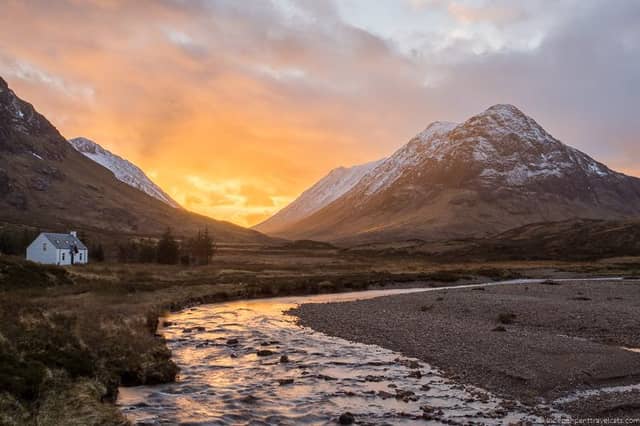


For generations, Scotland’s debatable reputation as a rain-soaked country has been something of a hard sell to some overseas holidaymakers.
But as temperatures have soared across southern Europe in recent years, its cooler summers are beginning to look less like a drawback and more like a selling point for visitors during the warmer holiday months.
An emerging term for a change in travel behaviour, known as the “coolcation”, is turning traditional ideas of a summer holiday on their head, with growing numbers of travellers looking north in search of more temperate weather rather than baking temperatures on a Mediterranean beach.
And experts have said the coolcation boom is not simply a passing trend, but rather the beginning of a pattern that is predicted to become the norm.
Once associated with cosy winter escapes to snow-covered Highland cottages with an open fire, or Scandinavian winter-wonderland retreats, the term has evolved over the past decade. It now describes holidays designed to escape the scorching summer heat, with Scotland emerging as one of the potential beneficiaries.
The shift comes amid increasingly punishing summers across Europe where, in recent years, parts of Spain and Greece have passed 40C, while wildfires have torn through rural France, Portugal and the Mediterranean. Closer to home, prolonged dry spells have also brought drought conditions to parts of southern England, with residents in the UK looking to stay in their country for a holiday, but find somewhere cooler. For holidaymakers accustomed to such extremes, a Scottish summer reaching 25C can suddenly look rather appealing.
According to the European Travel Commission (ETC), the body that represents Europe's national tourism bodies, visitor numbers to northern Europe were up 10 per cent across April to June of this year, compared to the same period in 2025.
The ETC said that northern Europe, which it classifies as Denmark, Finland, Iceland, Ireland, Norway, Sweden and the UK, had "outperformed all other European subregions".
Meanwhile, travel agency Trip.com found that from January to April of this year searches for cooler holiday destinations this summer had increased by 74 per cent from the first four months of 2025, "as travellers seek to escape the heat, shifting their attention to places that offer more comfortable climates".
Christopher Greenwood, senior research fellow at Moffat Centre for Travel and Tourism Business Development at Glasgow Caledonia University, said the idea of the coolcation had been evolving since it first entered travel industry discussions around a decade ago in 2017.

“Originally, it was more about visitors from particularly hot or arid destinations, such as the Middle East and places in North Africa, coming to temperate countries to escape the ambient heat,” he said.
“There was also a marketing twist to it. You could offer people experiences they might not have in their normal environment, whether that was snow, rain or some different type of extreme outdoor activities. Rain in Scotland became part of that conversation, although it is one of those myths that you have to play down. It doesn’t rain every day.
“But the idea has evolved. We are now seeing the consequences of climate change, from bushfires in Australia to flooding and the excessive summer heat across the Mediterranean. People still want to enjoy a summer holiday and have warm weather, but they don’t necessarily want to be sitting in 40C temperatures.
“Twenty-five degrees is still warm and pleasant. You can enjoy being outdoors without the risk of heat exhaustion. People are increasingly looking for more temperate destinations.”
Tourism companies are already seeing signs that the change in travel preferences is being reflected in demand for Scotland.
Flight-search data from ForwardKeys, published through VisitBritain, showed that searches for flights to Scotland were up 17 per cent year on year in June 2026, the strongest growth of any UK region. Demand from Italy rose by 37 per cent, Spain by 31 per cent, France by 23 per cent and the Netherlands by 21 per cent. Canada, China and Germany also saw percentage growth compared to the previous year.
The momentum continued into September, when searches for flights to Scotland increased by 25 per cent compared with the same month last year, again leading regional growth across the UK. Edinburgh and Glasgow recorded increases of 30 per cent and 9 per cent respectively.
Experts said a slightly more striking result from the data showed eight of the ten Scottish destinations recording the biggest increases in flight searches in September were in the islands. Although overall search volumes for these destinations remained relatively small (less than 10k), the top two ranked destinations for flights in terms of change compared to September last year were to Benbecula, in the Outer Hebrides, and Kirkwall, in Orkney.
The figures measure travel interest rather than confirmed arrivals, and cannot establish that cooler weather was the main reason for the increase in interest. Other factors, including changing airline capacity, economic conditions and geopolitical uncertainty, have also influenced travel decisions, tourism bodies said.
Nevertheless, the data suggest that Scotland is increasingly featuring on the summer holiday radar of international visitors.
Andrew Fletcher, who owns Ardlussa Estate on the Isle of Jura, said the west coast Scottish island is experiencing a noticeable increase in “climate tourists.”
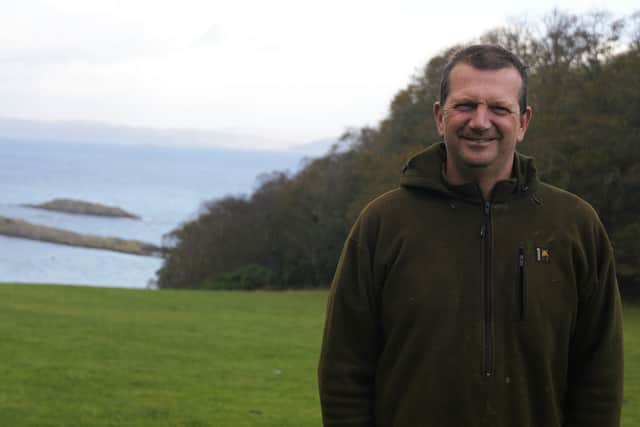
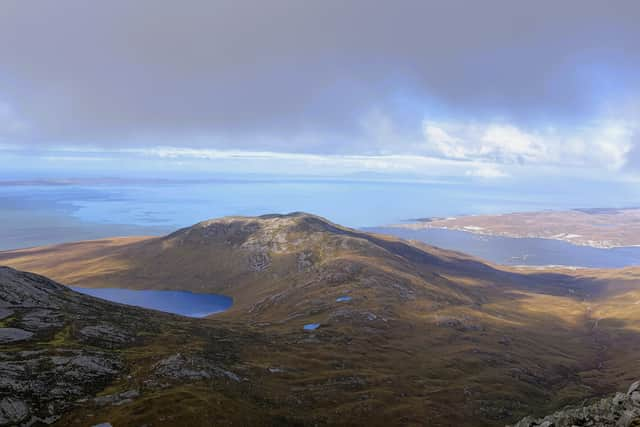
“It’s getting too hot for people in some countries and people need somewhere else to go. Scotland is that place,” the landowner said.
Traditionally a location that drew tourists for deer stalking, Mr Fletcher said estates are diversifying to suit a change in what visitors want because of an increasing number and a change in the type of visitor coming to the island.
“There is definitely a shift in the type of visitor coming,” he said.
“We now have electric bikes and other equipment for outdoor activities for those who are coming as well as those who come for the traditional stalking.”
Mr Greenwood said the growth of interest in a ‘coolcation’ presents an opportunity for tourism in Scotland to spread beyond the country's most familiar destinations where reports of localised “over tourism” has become an issue for some communities.
Edinburgh, which remains one of the UK's most popular visitor cities after London, has faced concerns over the pressure of summer tourism in recent years with a dramatic increase in short-term lets and holiday rentals pushing out locals and reducing housing supply. The same issue, albeit on a smaller scale, has caused issues in rural communities across Scotland’s, including the East Neuk of Fife and many areas in the highlands and islands. Locals on Islay have described the western village of Portnahaven as a “ghost town” in the winter months given the amount of homes that have been turned into holiday lets over the years.
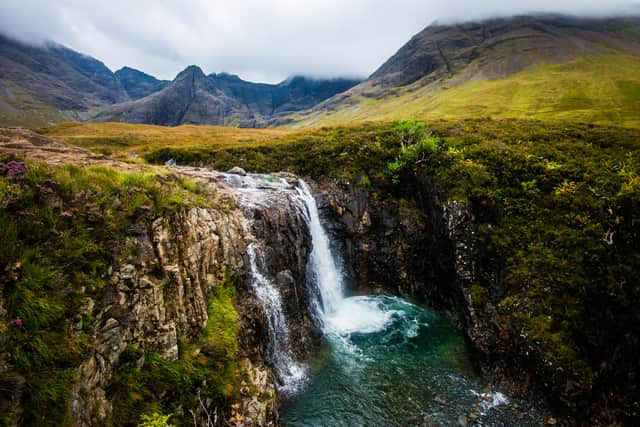
Skye, including the island’s Fairy Pools attraction, and other well-known go-to locations, including the NC500, have also struggled with congestion and the impact of demands placed on local infrastructure.
But the growing appeal of a cooler holiday could bring with it a broader interest in what else Scotland has to offer, Mr Greenwood said.
“While Skye and some other areas are hugely popular, we need to encourage people to explore other islands and different parts of Scotland,” he said.
“Places such as Aberdeenshire, Moray and Dumfries and Galloway offer fantastic opportunities to get outdoors and enjoy the landscape without necessarily going to the places everyone already knows.
“Glasgow is also a really good base. You can enjoy the buzz of a city and then escape to Loch Lomond and the Trossachs National Park or head towards North Ayrshire and Arran.
“We need greater regionality in tourism, so that the benefits are shared more widely and we don't simply put more pressure on the places that are already busy.”
Mr Greenwood said he believes Scotland is in a much stronger position to ensure visitor numbers are not heavily impacting a handful of areas.
“There is greater community engagement now compared to in the 2010s,” he added.
“There is a much better understanding now of community tourism and how we can work with communities and destinations to really see the benefits that tourism can bring.”
The industry is also becoming more focused on working with local communities to develop tourism that reflects the character of individual destinations, rather than relying on a one-size-fits-all national approach. New community groups, including Scottish Community Tourism (SCOTO) have developed in the last five years to encourage communities to embrace community-led tourism.
‘Slow tourism’ movements have also been growing in Scotland, encouraging visitors to come during off-peak times of the year.
Mr Greenwood said while the new coolcation has a focus on the summer months, it should not come at the expense of Scotland's traditional winter appeal.
“There is still a need to promote seasonality,” he said.
“We want people to come in winter as well, and to experience something completely different — the fires, the comfort food, the dark skies, the myths and legends of a Highland cottage.
“Autumn in Perthshire, for example, can be every bit as spectacular as the famous autumn colours of New England.”
Yet come rain or shine, Scotland’s landscape, heritage and culture and warmth of welcome is a consistent theme among the reasons why people like to visit the country, Mr Greenwood said.
“This has been consistent feedback for the last few decades in Visit Scotland visitor surveys,” he said.
“There are some answers that change a bit over the years but the central and consistent answers that come up for people when they think about coming here is because of its landscape, its heritage, culture and its people.”
Comments
Want to join the conversation? Please or to comment on this article.