
Stunning Highland loch to see mandatory quality checks after special bathing status granted



Campaigning for bathing status has also led to demands for greater transparency around sewage discharges into lochs.
A stunning Highland loch will be subject to mandatory water quality checks after it was awarded bathing status.
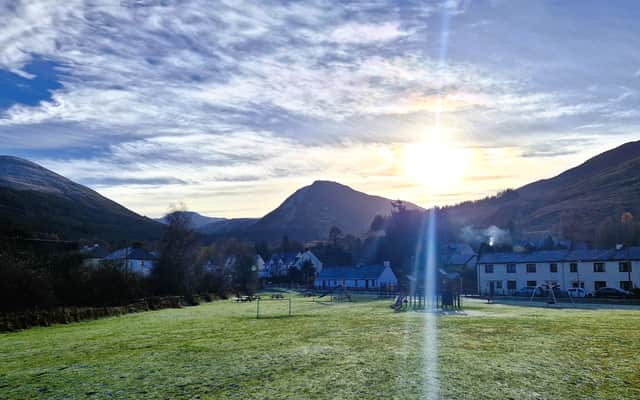
Loch Leven, that stretches alongside the village of Glencoe, has been officially designated as a Bathing Water by the Scottish government, starting in the 2026 season.
The status is given to help protect human health at locations that are popular for people to use during the bathing season, which runs from 1 June to 15 September.


Campaigners working to improve water quality and public health in the Loch Leven area said the move marks a significant milestone in their efforts. They said the designation is particularly significant given that rural inland sites are not in the limelight as much as coastal areas for such status.
The decision was confirmed by the Cabinet Secretary for Climate Action and Energy, Gillian Martin.
The status will ensure regular monitoring of water quality and the provision of public information during the bathing season. The application was led by Loch Leven Sea Savers, a community citizen science group of all ages established to address long-standing concerns about water quality in the loch.
Their work has included campaigning for greater transparency around sewage discharges, as well as initiating water sampling projects to better understand pollution levels.
Saz Reed, a local marine scientist and open water swim coach, said: “Gaining bathing water status at one site in Loch Leven is a massively positive first step, built on three years of community-led work measuring sewage tracers in our lochs and rivers.
“As year-round users of these waters, we’re able to keep monitoring outside the short official bathing season.
“Our project has shown that sewage pollution can occur more often than many realise.
“Sewage pollution in Scotland is widespread and under-monitored, masking the true scale of contamination. Now is the time to build on this progress, with regulators and decision-makers taking the lead to improve oversight of sources like private septic tanks and unregulated discharges, and to work towards consistent, year-round water quality monitoring and regulation.”
The group has worked closely with Surfers Against Sewage, including receiving a year of accredited laboratory testing of the Loch Leven and the River Coe, which runs into the loch, through its Citizen Science Programme.
While Scottish Government guidance for awarding bathing status typically refers to water sources with around 150 bathers per day as an indicator, the Loch Leven Sea Savers campaigners said their application demonstrated that strong community use, facilities, and public backing can justify designation even in less densely populated areas.
Campaigner Charlotte Parkin said: “What really made the difference was the strength of that collective voice.
“This designation shows that even in a rural area, a committed community can make the case for change. Being recognised under ministerial discretion is a huge moment, and it reflects just how strong and united that application was.”
Loch Leven Sea Savers celebrates the decision as an important step forward, but emphasised that designation is only the beginning.
Bathing water status brings transparency through monitoring, but campaigners said it also highlights the need for continued action to address pollution sources, including sewage outflows into the loch.
Comments
Want to join the conversation? Please or to comment on this article.