
I've been walking around Scotland for over a year - I think I've found my favourite spot

The village’s inhospitable location is what preserves its unique character.
The coastal villages nestled in the north-east coastline aren’t so easy to reach on foot when following the sea.
The steep drops into the cosy huddles of dwellings, scattered with orange rooftops, followed by sharp ascents onto exposed cliff tops to avoid impassable jagged rock edges can be hard on the knees.
It always feels worth it, though, walking through some of Moray and Aberdeenshire’s quaint seaside communities. The slower pace allows you to venture into the narrow streets squished between chunky cottage walls, picking up on the subtle details that make the place.
Follow Hay’s Way updates via Katharine’s Instagram page and by signing up to her free Scotsman Rural newsletter here.
It might be the linen on washing lines blowing in the sea breeze, white-washed walls with different colour-painted window frames, and there’s usually a snoozy seaside cat lounging on a lobster trap or a wooden bench somewhere, waiting for its titbit.


There are a handful of these villages or towns “on the map” for various reasons. Pennan has a film stamp for its role in Bill Forsyth’s Local Hero starring Peter Capaldi, with the red telephone box from the ‘80s Scottish cult classic still standing proud in the village.
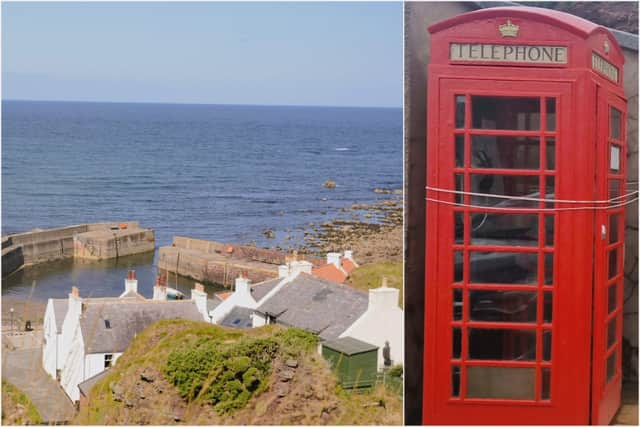
More recently, Cullen, while known for being the birthplace of the hearty “Cullen Skink”, proudly hosted Good Will Hunting-star Matt Damon for filming Christopher’s Nolan’s The Odyssey. Portsoy has a Peaky Blinders memorial to commemorate the fictional death of Michael Gray filmed at the harbour. Meanwhile, Gardenstown is said to have hosted Bram Stoker in its Garden Arms Hotel in 1896 where the author is believed to have written some of his horror classic, Dracula, released the following year.
But one location, less than a mile up the coast, stole the limelight for me, and that was Crovie.
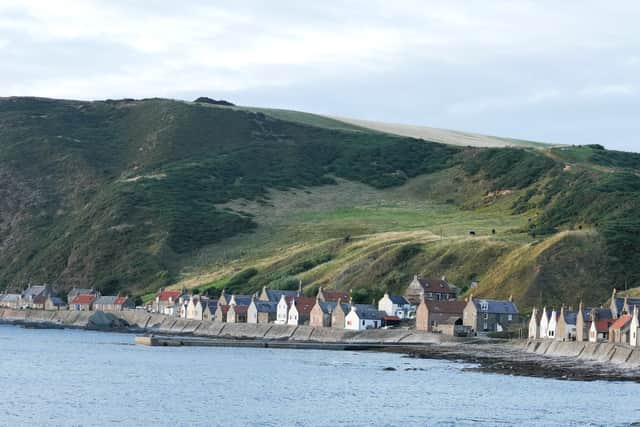
There are no roads leading through this wee cliff-foot fishing village right at the waters edge. Cars are to be left outside it and even bikes aren’t allowed in. You can only access the row of some 60 houses on foot.

Like other seaside fishing villages, Crovie is characterised by a distinct layout, with many houses having their gable ends facing the sea to protect them from the changeable north east weather patterns.
I arrived at the village at about 8pm on a summer’s evening. Walking along the front row of houses, their different pastel shades and muted colours had taken on a warm glow in the sunset light. Two girls in their nighties were playing cards on the stone walkway smoothed over by years of exposure to the elements.
A few doors further up, a middle-aged man sat holding a glass of red wine, losing his thoughts in the infinity view of the North Sea ahead. A couple further up were sat on a bench pointing out to the water. Following the direction of their gaze, I saw dolphins leaping in the bay. It was a rare occasion being in a beautiful location in Scotland at the height of summer with people around, yet feeling such peace. There seemed a mutual respect for place and gratitude for the serenity that evening brought.
Crovie is no stranger to visitors. One Aberdeenshire local, who owns a holiday cottage for him and his wife, said there are just five permanent residents in the village. The rest are holiday homes.
It was a bit sad to hear some history of the place that once was, was lost. Yet, Crovie’s inhospitable location with no roads will no doubt continue to preserve this unique place standing defiant in a cliff’s edge in years to come.

Comments
Want to join the conversation? Please or to comment on this article.