
'It's the next big thing' - Inside a Scottish community preparing to be first for island subsea tunnels
Islanders said the tunnels will come, it’s just a matter of when.

Christopher Thomason finishes washing down equipment after a day’s work at his Shetland mussel farm.
The 63-year-old founded the business in Cullivoe, on the island of Yell, more than two decades ago with his brother, Marvin. It remains one of two small independent mussel producers in the North Atlantic archipelago.
“We started at a time where you just had to build a business to make a living, so that’s what I did,” he said.
It’s a sentiment shared widely among Shetlanders, who are often described as innovative and forward-thinking when it comes to industry.


Today, however, the job market, particularly in the northern isles of Unst, Yell and Fetlar, is different. From community shops to the advancement of the aquaculture industry, islanders said they are crying out for people to fill job positions across the islands.
While Shetland’s population, as a whole, has remained fairly steady, Mr Thomason said the northern isles have suffered from depopulation, with young moving away, school rolls plummeting and small businesses closing since the 2000s.
“We have cases of young people leaving, then their grandparents leave to be closer to family and suddenly you have three generations from these places, gone. It’s not a good story at the moment.
“The shops, pubs and restaurants we had 20 years ago, all gone. It’s sad, really.”

But Shetlanders have historically embraced the ebb and flow of industry, from the herring trade of the 19th century coming to an end, to the oil boom in the 1970s at Sullom Voe, now being decommissioned.
Today, “the next big thing” for Shetland, according to islanders, will be undersea tunnels.

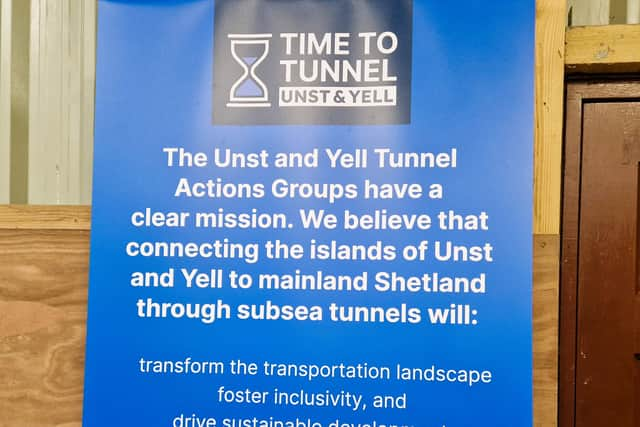
It is an idea that has been brewing for the last three decades, but has picked up momentum in the last month with the launch of the Time to Tunnel campaign.
Local community groups on Unst and Yell, spearheading the campaign, reached a milestone last week after pre-seismic studies they commissioned on potential routes were completed.
The research, funded by the action groups, was carried out by Norconsult, a leading Norwegian firm in geosciences and environmental engineering and who designed subsea tunnels in the Faroe Islands, some 200 miles further north into the Atlantic, where most of the inspiration came from.
The 18 islands, which make up the self-governing nation under the sovereignty of Denmark, are now connected by 23 tunnels, four of which run below the sea, with more under construction.
“They have done everything we want to see done here in the next 20 years already,” Mr Thomason said.
“And they can tell us immediately the benefits: people coming back to the islands, the school rolls go up, housing develops, economy improves. Everything changes overnight. It’s quite amazing.
“Historically, Shetland has moved with the times; these tunnels will be our next big thing.”
Shetlanders have also seen fixed links improve island life closer to home.
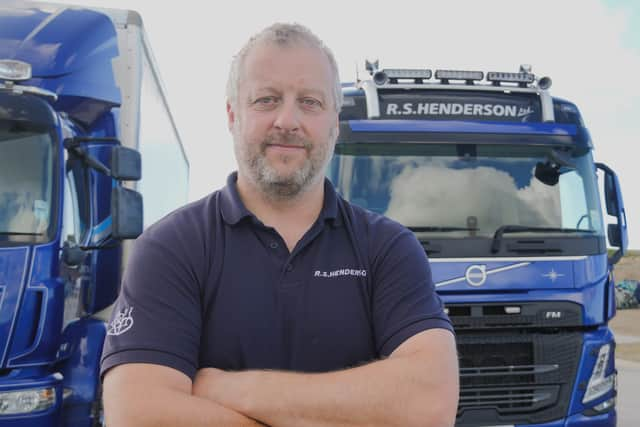
Steven Henderson, who owns Hendersons, a haulage company in Shetland, said inhabited islands off the mainland connected by roads have seen “a population and housing boom.”
Burra and Trondra, islands to the west of mainland Shetland, had single lane bridges installed in the 70s.
“The increase in the communities and schools and new housing has been so noticeable,” Mr Henderson said.
In the last 50 years, official figures show the population for the Burra and Trondra area combined has increased by almost half, from about 550 to around 1,000 residents (2023).
Bridges, however, are not a favoured option for Shetland’s northern isles due to boat traffic and weather conditions across the Bluemull Sound and Yell Sound.
At the moment, a tired fleet of ageing ferries is still relied upon by islanders, including Mr Henderson and his lorries carrying anything from building material to Amazon deliveries to oxygen for hatching salmon.

The current vessels employ agency staff due to issues recruiting and there are fears among some islanders the service will shrink its timetable.
“We, the islanders, can’t go about our daily life without major inconvenience,” Mr Henderson said.
“You can’t make a football fixture or you might miss the end of a gig in Lerwick because you have to get back to make the ferry.
“For the haulage, booking space for vehicles on the ferry is the most stressful. And people can end up spending hours out of their day sitting waiting to get on ferries when they could be working or with their families.”
Shetland Council currently runs ferry services to nine islands, carrying around 750,000 passengers each year on 12 vessels at a cost of about £23m per year.
The average age of the fleet is 30 years old, with four of the vessels approaching 40. Costs have risen sharply in the past decade, and some routes are struggling to meet demand for vehicle places.
Alice Mathewson, joint chair of Unst Tunnel Action Group, said: “If Shetland carries on with a ferry service, we’re going to have to replace the ferries that are here and, more importantly, the terminals, which is going to cost an extortionate amount and take years.”

Members of the action group compared the timeline of potential future ferries to the Scottish government-owned Caledonian MacBrayne’s vessels, including Glen Sannox, that are often beset by problems.
Ms Mathewson said figures quoted by three companies from Faroe and Norway involved in undersea construction said a tunnel from Yell to Unst would cost about £40-50m and for Yell to the mainland it was £70-80m.
“We started campaigning about 30 years ago, before the ferries were replaced with the ones we have now,” she said.
“Now that they are needing to be replaced again, momentum is building again.
“It’s now or never.”
The action groups continue to raise money to fund the next step in their research, which includes geological, sonar and seismic studies.
The local action groups reached an agreement with the council to access the groups’ research findings in a bid to make the proposal a reality.
A major report on Shetland’s future inter-island transport needs was presented to councillors for the first time earlier this summer, with members of the local authority agreeing that the idea of tunnels to Yell, Unst, Bressay and Whalsay should be taken forward for further consideration.
The options presented in the report did not come with any cost estimates, with the council stressing that funding is uncertain. Private finance is understood to be considered a possible avenue.
The council, separate to the groups, has authorised a £990,000 feasibility study into building tunnels which it said is expected to be completed by next year.
Comments
Want to join the conversation? Please or to comment on this article.