
Islanders launch bid for summer guga hunt despite backlash



The ancient practice has sparked significant opposition from animal rights activists since it went ahead after a three year hiatus during a bird flu outbreak
NatureScot has received an application for the controversial guga hunt to go ahead again this year, despite facing a recent explosion in opposition from wildlife activists.
The Men of Ness have applied for a licence to carry out their annual hunt of young gannets, known locally as guga.
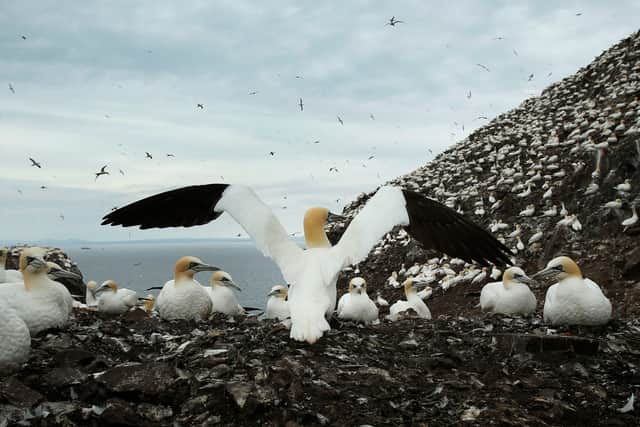
The practice, which has taken place for the last 500 or so years, sees ten men travel to a rocky outcrop, Sula Sgeir, some 40 miles north of Ness on the Isle of Lewis to harvest the birds to eat.
The hunt, which is held in August, was suspended for three consecutive years (2022, 2023, and 2024) because of Highly Pathogenic Avian Influenza (bird flu).
The return of the hunt last year prompted wildlife photographer Rachel Bigsby from East Sussex to launch a petition to ban the hunt, which has since received more than 100,000 signatures.
Wildlife group Protect the Wild has since joined the movement calling to ban the harvest, which included seeing its founder, Rob Pownall, attempt to run as an MSP this year while dressed as a gannet to draw more attention to the debate.
Murdo MacRitchie, a Ness local, said the “hysteria” and “emotive language” that has come from animal campaigners has caused “considerable distress” in the community of about 1,000 people.
“Protect the Wild is not an organisation we can take seriously,” he said.


“The have completely misrepresented our community. Rather than doubling down, we are just not going to engage with them as they have not at any point been reasonable.
“We are going to focus on calm and transparent communication with NatureScot to make sure we stick to what they need from us. I don’t think anyone here has changed their position in response to the hysterical and emotional statements that lack evidence from Protect the Wild.”
Protect the Wild is calling on NatureScot, the government body that licenses the annual harvest, to refuse the application, saying the agency is now the only thing standing between the colony and another year of "senseless slaughter.”
Campaigner Devon Docherty said: “Every year, defenceless gannet chicks are beaten to death on a supposedly protected island - all for an outdated delicacy that nobody needs.”

Historically, islanders ate seabirds as part of their diet. Activists have argued the hunt is no longer necessary because there is a Tesco among other supermarket chains on Lewis, yet some Hebrideans have pushed back, arguing self sufficiency and sustainable food sources are preferred to buying from large corporations.
The guga hunt resumed for the first time last year after the Men of Ness found gannet numbers return to a sustainable level following bird flu. The quota for birds to take home from the island, which is home to an estimated 10,000 gannets, was also reduced from the standard 2,000 to 500 to ensure numbers were able to recover fully.
NatureScot said while it recognises there are strong feelings about the guga hunt, the practice is recognised in law under the Wildlife and Countryside Act, which makes specific provision for the granting of a licence for the purpose of providing food for human consumption in relation to the gannets on the island of Sula Sgeir.
A spokesperson for the agency said: “Our role is to make licensing decisions based on the most recent scientific evidence.
“In 2025, we received our first licence application from the Men of Ness since 2021. After reviewing the survey data, collected in 2024 following bird flu outbreaks, we reduced the maximum number of birds that can be taken from 2,000 to 500 and a licence was granted on the condition that all birds must be killed humanely.
“This ensures the gannet population on Sula Sgeir remains stable for the future.”
The agency said it will assess the application and make a decision in due course.
Comments
Want to join the conversation? Please or to comment on this article.