
Fire safety fears as 80 battery storage plants lodged for Scotland in just 3 years

Following multiple fires at battery storage sites this year, concerns have been raised about public safety.
Fire safety regulations must be brought forward for battery storage sites, SNP ministers have been told, as figures showed up to 80 applications for units were lodged in Scotland over a three-year period.
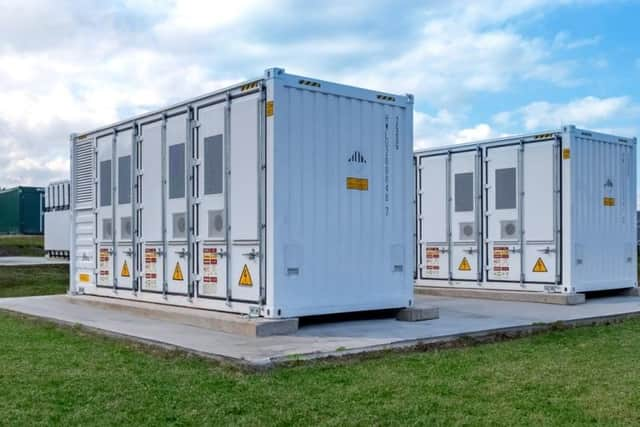
Battery energy storage systems (BESS) are used to store electricity from renewable sources like wind and solar to release the energy back to the grid when needed.
The increase in renewable energy developments across Scotland, with onshore wind capacity alone set to double in the next five years, has led to a rise in the number of BESS.

Douglas Lumsden, Tory MSP for North-East Scotland, said he was “extremely concerned” about the safety of such sites after a string of fires at several facilities across his region and other parts of Scotland. He said there were no laws that specifically govern the fire safety of BESS.

Earlier this year, emergency services attended a fire at a BESS close to the village of Rothienorman, about 25 miles north-west of Aberdeen.
Two months later, a fire engulfed a battery recycling plant in Kilwinning in North Ayrshire. The blaze came one year after a fire at the same site, which reportedly raged for four days.

Figures released by the Scottish Government show 78 separate applications have been lodged for BESS across Scotland since 2022. Results from a Freedom of Information request, obtained by the Scottish Conservatives, showed 75 of those applications have not required an environmental impact assessment (EIA).
Concerns about the proximity of BESS to residential areas, their impact on agricultural land, potential noise, fire and flood risks have been widely raised among rural communities.
Applications lodged without the need for an EIA include the consented 900 MW Alyth BESS in Perth and Kinross and the Coalburn BESS in South Lanarkshire. The latter is part of a portfolio that will total 1.5 GW of power, making it what is believed to be Europe's largest once complete.
Other sites that have not required an EIA include a further eight in South Lanarkshire, eight in the Highlands, seven in East Lothian, and five across Aberdeenshire.
Developments that generate more than 50MW need permission directly from the Scottish Government to be built under the Electricity Act 1989. Meanwhile, applications below 50MW are determined under the Town and Country Planning (Scotland) Act 1997 and are usually a matter for local councils.
Mr Lumsden said: “I’m extremely concerned about the safety of these proposed battery energy storage sites following a string of fires across both my region and the rest of Scotland.”
He added: “In many cases, communities are being steamrolled into industrial zones through an unjust transition, which residents are overwhelmingly opposed to. There is also currently no mandatory consultation with the fire service on the development of these sites, which heightens the risk of catastrophic incidents occurring.
“It’s vital the Scottish Government works alongside the UK government to ensure proper and robust safety regulations are brought forward to protect communities from these often-dangerous pieces of infrastructure.”
A UK government spokesperson said:“Every wind turbine we put up, every solar panel we install, and every battery storage facility we construct helps protect families from future energy shocks.
“Battery fires at storage sites are rare in the UK and we already have high safety standards in place to ensure batteries are safe throughout their lifespan.”
A Scottish Government spokesperson said: “Regulations on battery storage safety enforced by the Health and Safety Executive are reserved to the UK government. It is for them, and the Health and Safety Executive to carry forward any proposals to change these regulations.
“Community safety is of the utmost importance, which is why the Scottish Fire and Rescue Service continually reviews and develops its operational response to any new and emerging technology – including the safety of Battery Energy Storage Sites - to keep communities safe and ensure the highest level of preparedness.
“Well located battery storage will play a role in the future energy mix of Scotland and offers fast responding, dispatchable power when required. Where new development proposals come forward, all applications are subject to site-specific assessments including Environmental Impact Assessment (EIA) where required. Impacts on local communities, including any cumulative impacts, are important considerations.”
Comments
Want to join the conversation? Please or to comment on this article.