
Fears west coast peninsula's most popular walking spot will never reopen following storm damage
Locals say the fairy-like glen is the reason people visit the Cowal peninsula.



It is a walking spot that draws tens of thousands of visitors year on year to one of Scotland’s rugged west coast peninsulas.
Puck’s Glen, named after the mischievous sprite and mythological character from William Shakespeare's play A Midsummer Night's Dream, lures visitors with its magical, fairy-tale atmosphere of a wooded gorge.
But fears are growing that the beauty spot may not be enjoyed by locals and tourists alike for years to come.

The scenic walking trail has been closed since Storm Éowyn brought trees down in January 2025.
Forestry Land Scotland (FLS), the public body that owns the land, announced earlier this year that the site, which it claims attracts between 30,000 to 40,000 visitors a year, would be closed for yet another year.
Estimates shared by the Argyll and the Isles Tourism Cooperative suggest FLS requires £50,000 for a geotechnical survey, £500,000 for path stabilisation and £250,000 for essential tree works, although some believe the final cost could be higher.
About five miles away in Dunoon, business owners said they fear Puck’s Glen, one the core reasons why visitors pass through the town, will never re-open.
Dinah MacDonald, who owns Bookpoint, a bookshop in the centre of the town, said: “Puck’s Glen is the only main tourist attraction in Cowal.
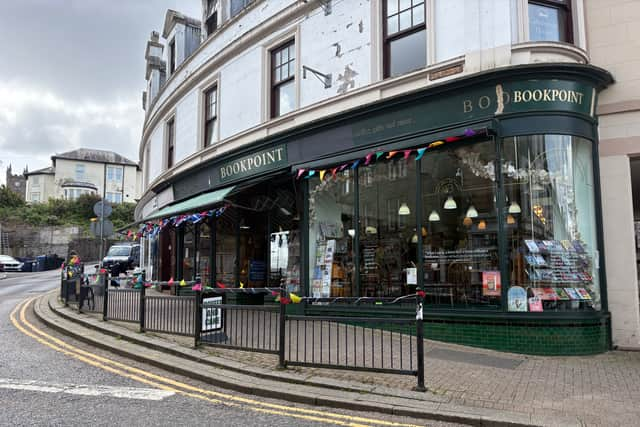
“Because of TikTok we get loads of people coming to see it and it’s gone.
“It feels as though if Puck’s Glen was further east, it would have been sorted, but there just isn’t money for Argyll.”

She said there had been discussion locally about the community and forestry workers coming together to restore the site, which is now barricaded. Some residents have also expressed concern that the damage could worsen the longer it remains closed.
A FLS spokesperson said: “We understand the ongoing frustration with the closure of Puck’s Glen.
“However, due to the extremely complex and challenging nature of the issues that need to be addressed it remains closed for public safety reasons and is not anticipated to open for the 2026 visitor season.
“Dealing with the extensive damage – which includes erosion of paths and steps, fallen trees and additional windblown trees – and doing so while also managing the risk of landslips and rockfalls will require meticulous planning.
“We continue to work with stakeholders and potential partners with a view to developing a feasible, affordable and deliverable long-term plan for the site.”
The glen sits within the boundary of the Loch Lomond and the Trossachs National Park.
Members of the public have been advised to avoid the area and to explore alternative trails and locations.
A spokesperson for the Loch Lomond and the Trossachs National Park Authority said work is ongoing to support FLS and regional partners, adding: “We also recognise the growing challenge of maintaining safe access across the National Park, compounded by climate change and increasingly frequent and severe weather events reshaping landscapes and livelihoods throughout the Park, but we remain committed to adapting how we manage and work with others in response.”
Puck’s Glen was severely damaged in the 1968 ‘Glasgow Hurricane’. The catastrophic event saw winds speeds of more than 100mph recorded in area of the central belt and Argyll, killing 21 people, wiping out forestry and damaging over a quarter of a million homes. A joint effort between the community and foresters saw damage at the glen cleared and the site reopen.
Comments
Want to join the conversation? Please or to comment on this article.