
Court hearing begins into controversial 500-hectare Borders forestry scheme

Campaigners said they are concerned about the impact the plantation will have on the current moorland habitat and surrounding communities
A court hearing for a controversial large-scale forestry scheme in the Borders has opened.
Plans for the 579-hectare Todrig woodland scheme at Todrig Farm, near Hawick, were lodged last year by Gresham House, one of the largest private owners of Scotland’s forests.
Campaign group Save Todrig, who initiated a judicial review of the plantation, claim the provisional sum of public money handed out for the forest would be £1.33m if it is given the go-ahead.
Campaigners said they are concerned about the potential impact the plantation will have on the current moorland habitat and surrounding communities.
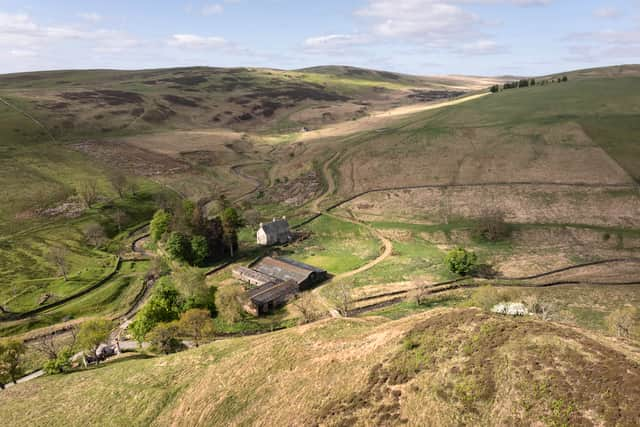

The group lodged a petition claiming that Scottish Forestry, the public agency responsible for regulating forestry and distributing grants, acted unlawfully by screening out an Environment Impact Assessment (EIA) in December 2024, arguing there will be no significant environmental impacts, before a public consultation was done.
The judicial review, scheduled to take place over Wednesday and Thursday this week at Edinburgh’s Court of Session, seeks to legally cancel the screening decision by Scottish Forestry that decided no EIA was needed.
The planned Todrig forest would link to another proposed 700-hectare predominantly Sitka forest at Whitslaid. It means the area will see some 11 square kilometres of conifer plantations across the moorland habitat, campaigners said.
When the petition was lodged, Gresham House told The Scotsman plans for the forest adhere to regulatory standards and that all its projects follow industry best practice.
A Gresham House spokesperson said the company did not have a comment to make on the judicial review commencing.
A Scottish Forestry spokesperson said it would be “inappropriate to comment” while litigation is active.
The court hearing comes as industry leaders warned Scotland will fail to meet its planting targets for yet another year amid concern investment is going elsewhere.
Since annual targets for woodland expansion were set, the Scottish Government has missed the goal every year apart from 2018, when it was met for the first time.
In recent years, planting rates have often fallen significantly short of the set targets, with the year from 2022 to 2023 seeing only 8,190 hectares of a 15,000 target planted.
Jon Lambert, of Goldcrest Land & Forestry Group, an independent UK firm of chartered surveyors and foresters based in Edinburgh, warned the figures are down because of the lengthy and clunky grant application process.
Industry leaders have regularly pointed to the fact that Britain is the second highest importer of timber in the world, bringing in around 80 per cent of its wood products from overseas. They argue there needs to be more “home-grown stock” to reduce a reliance on imports.
Conifers, including the non-native Sitka spruce, are popular with the timber industry due to their fast-growing qualities compared to the slower native species.
Commercial forestry projects, however, have been highly contentious for some rural communities, with some plantations embroiled in legal cases.
The Royal Society of Edinburgh (RSE), Scotland's national academy, also published a report in 2024 recommending that the Scottish Government discontinue public subsidies for commercial conifer plantations, arguing they deliver fewer climate or biodiversity benefits than native woodlands for the cost.
Comments
Want to join the conversation? Please or to comment on this article.