
'The damage can't be undone': Scotland's private schools rail against VAT impact on families
Scotland’s fee-paying schools have described the harm done by Labour’s end to the VAT exemption for their sector.

There is only one answer to the question - and it is a resounding “yes”.
From historic boarding schools to newer day schools, the sector is united in believing Labour should U-turn on its decision to introduce VAT to the independent sector.
However, if the UK government’s tax-raising measure has highlighted anything, it is the resilience of the community.
Across Scotland, institutions have taken steps to ensure as many families as possible might keep their children at school, rather than have to move to the state sector. Despite best efforts, these measures have not prevented a far larger number of pupils being disrupted than the government had predicted.
Some 13,000 young people in England alone, the Independent Schools Council said, have moved into the state system, bringing pressures there. This is more than four times the government estimate.
Siblings are unable to be educated together and the disruption for some families has been extreme.
At Edinburgh’s George Watson’s College, like other schools, the priority post-January 1, when the tax came into force, was to provide as much protection to parents as possible.


The school reduced fees and introduced a three-year fee affordability strategy guaranteeing no fee increase in 2025/26 and a maximum increase of 3 per cent in the following two years.
Watson’s also introduced bridging support for any parent struggling with the imposition of VAT, with the aim that no child should have to leave the school immediately because of VAT.
The school’s spokeswoman said: “By acting swiftly, we are ensuring that Watson’s is prepared for a post-VAT world. But we have seen a drop in applications and pupils leaving us for the state sector.
“This is not an issue that will be a one-year problem, and these numbers are likely just the start for the sector.”
In Edinburgh, parents report struggling to afford school fees, but being unable to access a state school placement.
One Glasgow headteacher said that moves often happen at extreme short notice when a child comes to the top of the waiting list for a local school place and they are gone within the week. The uncertainty, especially in crucial exam years, can have long-lasting ramifications, another head teacher said.
The Watson’s spokeswoman said the VAT policy was bad news for state schools as well as the private sector. The larger-than-predicted number of pupils moving from independent schools places a burden on the taxpayer, local councils and the state schools themselves.
“So, not only will treasury not get the sums it has banked on,” she said, “But there is the double whammy for more pupil places to fund. And that’s obviously before the recent statement from the PM that the proceeds of VAT would instead fund affordable housing.”
A weaker independent sector will also be a real problem for our economy, she added.
Last year a study by Biggar Economics revealed Scottish independent schools contributed half a billion pounds to the Scottish economy, supported 12,000 jobs across the country and saved the taxpayer £200 million in education costs.
George Watson’s College alone reports contributing £34.8m in gross added value (GVA) to the Edinburgh economy, supporting 580 jobs in the city.
“Scotland can't afford not to have independent schools,” the school’s spokeswoman said.
That’s certainly the message from the Scottish Council for Independent Schools (SCIS), which says it gave ample warning to the government of the pressures the VAT measure would bring to bear on the state system.
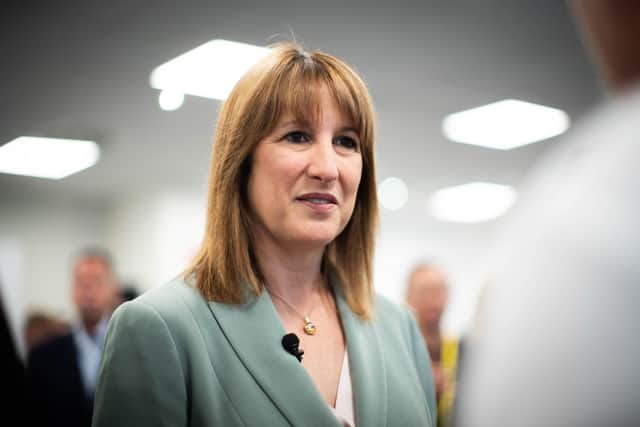
“At a time when political debate is centred on economic growth, VAT on fees is doing significant damage to the economy, and to Scottish education,” a spokeswoman for SCIS said.
“Our schools are adapting and supporting families who are dealing with the imposition of this punitive tax, and they continue to provide an outstanding educational experience for children and young people.”
Dan Wyatt, rector of Kelvinside Academy said the move had “shrunk the marketplace” of families who could afford to send their children to an independent school. A small number of pupils left the school in January and then a second group left at Easter.
“The schools that have seen growth are the schools that had really large reserves, and were able to offset the VAT by absorbing some of the cost,” Mr Wyatt said.
Chancellor Rachel Reeves’s political stance, when setting out the VAT policy, was that “being wealthy schools, they would not impact on the working families that Labour were appealing to”.
“But actually the reality is most schools have had to pass the VAT on to parents, and therefore there's an affordability issue,” Mr Wyatt added.
The emotional impact takes a toll, alongside the practical aspect. “We have quite a lot of tears and upset from families needing to go because they can no longer afford education,” the rector said.
“Children not only learn in school, they grow and they develop. And a big part of that is the emotional anchors of knowing the people, having your friends, knowing the teachers, developing those relationships, and that all goes in an instant with the VAT being brought in when it did mid-year.”
But Mr Wyatt makes the argument that Eton has been largely unaffected due to its vast capital investment while smaller independent schools have closed.
Scotland’s better known public schools, such as Gordonstoun, have been affected.
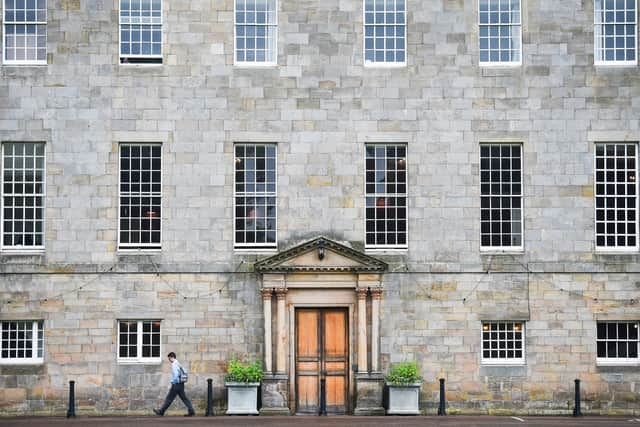
King Charles’s former school revealed a range of fee rises of up to 15.67 per cent in the wake of Labour’s decision to end the sector’s VAT exemption.
A spokesman for Gordonstoun said the school avoided passing the full 20 per cent VAT charge onto parents by looking at new revenue streams, as well as international expansion and cost controls.
Fettes College announced earlier this year that it would not be passing the full 20 per cent VAT to the families of its students and would instead be taking on some of the financial burden.
Lady Morag Wise, chair of the Governors of the Fettes Trust, said the government’s decision had “understandably caused a great deal of uncertainty and concern amongst parents up and down the country”.
Lady Wise added: “The Governors’ decision to not pass the full VAT to families was based on our commitment to maintaining the core Fettes offer, including our full boarding ethos and the dual pathway of International Baccalaureate and A levels in sixth form while remaining good value, which our parents expect.
“This was only made possible by the responsible stewardship of the school’s finances.”
While there are concerns about saying so on the record, there is a firm belief among heads that more school closures are coming down the pipeline while others will merge.
Glen Almond school in Perthshire earlier this year benefited from overseas investment from Qatar, but that is seen as an unusual step. There is a concern, however, that overseas boarding pupils will look elsewhere for their education.
Canadian schools are becoming increasingly popular among families who might otherwise have chosen a British school. There is hope from the government in Greece, where a similar tax was rolled back after the effects on the independent school sector became clear.
The damage, however, is done. Pupils have lost their schools, schools have closed that will no reopen and the disruption has been extreme.
“We're aware that the Etons of this world, when Labour were in opposition and looking across the chamber at Jacob Rees-Mogg falling asleep on the green benches, that the Eton College crew in government at the time were the people they were really looking to attack,” Mr Wyatt added.
“A week is a long time in politics and we can only hope the next Chancellor rows this back.”
Comments
Want to join the conversation? Please or to comment on this article.