
Exclusive:'Espionage on campus': Scots universities warned over Chinese and Russian spies
Alyn Smith has issued a robust warning to Scottish universities over vulnerabilities to spying



Scots universities have been warned to take robust action to counter the risk of espionage on campus following a rare public briefing by MI5.
Tertiary education minister Alyn Smith has written to all Scottish further education institutions to tell them they must be alert to dangers from foreign governments.
Mr Smyth’s intervention comes after the internal security services told universities they may have unintentionally assisted China's espionage.
MI5 said the China General Technology Research Institute (CGTRI) was a front company working for China's intelligence and security service.
The minister said he had decided to take decisive action following a “ramped up awareness” of vulnerabilities on Scots campuses.
Mr Smyth said: “I am saying the Scottish Government takes this very seriously, and the wider risk of espionage on campus is significant.
“We would like a reassurance that they are taking this seriously and have procedures that keep them alive to this.
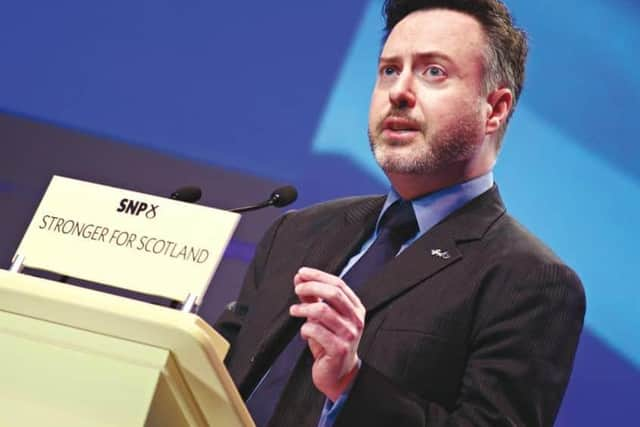
“There is a ramped up awareness that we are seeing a number of organisations being more averse about the risk of cyber disruption, the risk of malfeasance in our communications networks, research networks, and there's a lot of vulnerabilities which we need to be better on our toes about protecting.
“Universities are obviously so globally interconnected, we need to make sure that everybody is aware of the risks.
Mr Smyth said Scottish universities are doing impress work on science, adding: “If you're not doing great science, you're not being spied on - and we are doing great science”.
The risk, he emphasised, is not solely about China but a wider risk of espionage because “our universities are so excellent”.
Every university head was called to a meeting with the security services late last month to be briefed on the risk from CGTRI.
It said CGTRI has "very strong ties" to the Chinese Ministry of State Security (MSS) and had identified more than 100 UK-linked academics who had contributed to projects funded by Ministry of State Security via CGTRI.
It said that in some cases the researchers would not be aware of the front company's role in their project.
Sir Peter Mathieson, Principal of Edinburgh University, was invited to the briefing both in his Edinburgh role and as the lead for Universities UK and the Russell Group on national security.
He said the move was “very unusual” and the first such briefing in his five years in the national security role.

Sir Peter said: “I haven't been shown the evidence on which the warning was based, and I don't expect to be shown because MI5 doesn't usually show its evidence.
“But it is a very unusual step, so they were clearly very concerned about this particular institute and very confident that the information they had about it was correct.”
Sir Peter said universities were told that any existing links are not an offence against the National Security Act, introduced in 2023.
“But having issued the warning, they said if you are working with this institute or you're planning to, we would recommend that you take legal advice about your compliance with the National Security Act,” he added.
“So, it was quite a strongly worded and quite a pointed warning.”
Sir Peter said Edinburgh University had no links with the institute.
The Scotsman asked both St Andrews University and the University of Glasgow if they had or had ever had links to the CGTRI.
St Andrews University said it had not while Glasgow University did not respond.
Chinese espionage targeting academic institutions is a major global problem for higher eduction.
Former SNP MP Stewart McDonald had quizzed then-prime minister Rishi Sunak on the issue in UK universities.
He said some progress has been made in recent years.
Mr McDonald, whose background is in defence and foreign affairs, said: “The saying when the Tories were in office was: ‘Devolve and forget’.
“That’s where the Chinese have an advantage because they know that huge swathes of policy, legislative, and financial leavers don't sit in London.
“They sit in Edinburgh. They sit in Belfast. They sit in Cardiff.
“There's that lack of security coordination, they understand that and they're able to take advantage of it.
“And you can see that across many policy areas, such as energy, education and other areas of critical technologies.
“There's a lot of cracks for the Chinese to get into and turn them into strategic threats against our interests and that's something I think both governments need to catch up with.”
Mr Smyth added: “It’s about making sure we've got procedures in place, making sure that obviously we're an open, free, liberal society, but we need, parallel to that, to be aware there's risks.
“I'm very proud and fiercely protective of Scotland's universities and scientists, and we're globally significant.
“So of course we're a target, and we need to we need to be realistic and pragmatic about what that means.”
His letter, entitled MI5 Espionage Alert – The China General Technology Research Institute, tells Vice-Chancellors:
“While Scottish universities are autonomous institutions, and national security is reserved to the UK Government, we see a clear role in both actively seeking assurance and monitoring emerging risks through the SFC, consistent with the commitments set out in our International Education Strategy.”
In response to the MI5 briefing, a spokesman for the Chinese Embassy in London said the accusation was "imaginary and purely fabricated".
Comments
Want to join the conversation? Please or to comment on this article.