
Exclusive:Children as young as 7 'can access porn' on Scottish council-issued iPads in Glasgow and Borders
Glasgow and Borders council claimed pupils could not access graphic material on school iPads - but parents state their children can

Children as young as seven can view graphic sexual material on school-issued iPads, it has been claimed.
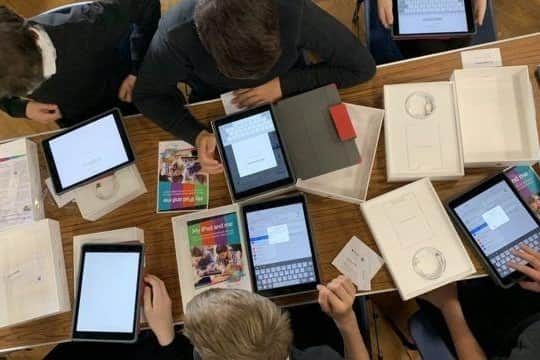
More than 82,000 pupils in two council areas have been given computer tablets that allow access to search engines that can act as a gateway to extreme images and pornography.

Both Glasgow City Council and Borders Council told parents that search engines were blocked on these devices.
However, The Scotsman has seen evidence the websites are easily accessible on school equipment used by both primary and secondary pupils.
Following an approach by this newspaper on Thursday, Glasgow City Council took the immediate step of starting an investigation into the issue.
A council spokeswoman also said a decision had been taken today to block YouTube on all primary pupils’ iPad school devices.
Father-of-two Harry Amies said: “Most people have no idea how many graphic videos and images are hosted on Wikipedia itself.
“In the 'media related to..' sub pages linked from the bottom of articles, you can find pages and pages of pornographic images, and videos, of extreme behaviours including sadomasochism and asphyxiation.
“Is this what seven-year-olds should be seeing in class?”
READ MORE: Former Scottish Labour minister loses MSP selection contest in Scottish Parliament return bid
Glasgow’s council was asked about Yahoo, Brave and Wikipedia, responding to a Freedom of Information (FOI) request to say all three sites were blocked.
The council said it did not hold the information to say when the sites were blocked. However, parents have shown The Scotsman photographs of all three sites readily accessed on school-issue iPads.
Borders Council said Wikipedia was blocked on its educational devices on December 19 last year, but pupils appear to still be able to use the website.
All head teachers in Glasgow were sent a letter on Thursday about The Scotsman’s story.
The letter reads: “And just to confirm that we are in the process of changing over filters and making sure that all the rule sets are copied over – but as solutions work differently, it might not always translate and this is being rectified – we think that is why the couple of blocked sites which we said in FOI response were able to be accessed – but this is being investigated.”
The call for clarity came after it was revealed by The Scotsman that pupils in Edinburgh were able to access pornography on council-issue iPads. Some 35,613 pupils from P6 in primary to S6 in secondary have the devices and the council moved quickly to say access had been reduced.
In Glasgow, which was the first local authority to ensure all children had iPad access, 43,478 pupils in P6 to S6 and in ASL schools have their own device. On P1 to P5, some 27,559 pupils share one iPad between five.
Borders Council said 11,000 youngsters have their own tablet.
Both councils were asked if a risk assessment had been carried out on the use of iPads by school pupils and both said they had not.
Parents are now so concerned by the use of these devices in school they have set up a campaign group, Unplug.Scot, of which Mr Amies and his wife are founding members.
Mr Amies said: “It's currently a wild west of the major tech companies falling over themselves to get their branded devices and platforms into children's hands, with no thought for the children being harmed in playgrounds and bedrooms by their unmodified adult products.”
Glasgow City Council’s spokeswoman said Thursday’s move to block YouTube came “following reports of some instances of pupils accessing inappropriate violent content on this site when using the devices”.
She added: “We have to ensure all content on managed devices are both age and stage appropriate and we will continue to review and block any websites that fall foul of this.”
Scottish Conservative shadow education and skills secretary Miles Briggs said the issue would “cause alarm and concern” for parents “especially if councils have given misleading reassurances”.
He said: “Parents will want to be assured that their children’s safety is the priority, and that the appropriate safeguards have been installed to ensure they are not exposed to material they should not be able to view.”
Scottish Liberal Democrat education spokesperson Willie Rennie said: "This is a concern. We need clear, confident assurances from these councils that this is definitely not happening. I would encourage the parents who have provided the screenshots to contact their council to help them investigate this very serious matter.”
Scottish Labour Education spokesperson Pam Duncan-Glancy said it was vital children were protected from inappropriate content.
She said: “Robust safeguards must be in place on devices issued through this scheme. It is deeply worrying that the problems raised last year don’t appear to have been fixed and councils don’t seem to know what’s happening.
“The SNP must work with local council and schools to ensure protections are in place to keep children safe.”
Last December it was revealed pupils in Edinburgh classrooms were able to access graphic images on their iPads. Parents complained that pupils were showing the images to one another in class.
The council moved quickly to say it had restricted website access on the devices, having been made aware that some websites allow the Safe Search function to be turned off.
Mr Amies added: “We are leaving a whole generation to grow up not just stumbling across extreme content, but be forcefully shown it by classmates in a form of child-on-child abuse. This will harm and is harming children long term.”
A Scottish Borders Council spokesperson said: “Scottish Borders Council is committed to ensuring that all pupils can access online educational resources in a safe and responsible manner.
“Following recent national concerns raised within another local authority, we pro-actively partnered with our IT provider to conduct a thorough review of our digital safeguarding systems.
“We are pleased to confirm that our IT provider has verified our protections as secure and effective. Our advanced filtering technology and continuous monitoring are specifically designed to block inappropriate content while preserving access to high-quality learning materials.
“Our current safeguards include a sophisticated filtering system — distinct from the one used by the City of Edinburgh Council — which categorises and restricts content based on user profiles. In addition, iPads provided to pupils benefit from enhanced protection through our mobile device management system.”
Comments
Want to join the conversation? Please or to comment on this article.