
Why taking ownership is win-win for all involved
Employee ownership brings benefits both to businesses involved and the local economy
As the Scottish Government fast approaches its target of 500 employee-owned businesses operating across Scotland by 2030, there’s growing evidence that this innovative business model can build resilience in times of economic crisis, while increasing productivity and profitability.

Indeed, according to a new census commissioned by Scottish Enterprise, the EOB community has grown to almost 300 companies (up from 195 in 2022), representing a combined turnover of £1.47 billion.
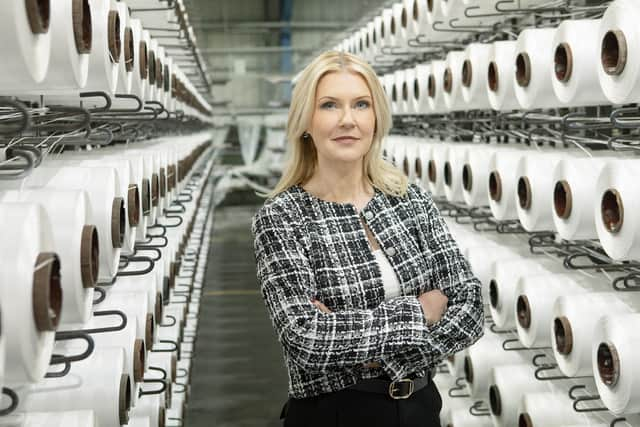
At Scott & Fyfe, we are proud to be part of that success story. Our award-winning, employee-owned Scottish technical textiles company combines a rich heritage of textile innovation with a commitment to shaping the future of technical textiles and materials technology.
Starting out as a linen works in 1864, we are rooted in design and innovation, providing high-performance solutions to countless industry challenges affecting sectors as diverse as agriculture, automotive and construction. From engineering fabrics that reinforce structures to sustainable materials that reduce environmental impact, we allow our clients, 94 per cent of whom are overseas, to grasp new opportunities, transforming conceptual ideas into commercial innovations.
But what part does employee ownership play in our success, and why did we make the leap back in 2013?
Our commitment to excellence and continuous improvement, combined with the need for family ownership succession, led us to adopt employee ownership – a decision that, despite the challenges faced along the way, has fundamentally transformed our company culture and business performance.
We have since shaped a team of around 90 highly motivated, engaged and aligned workers who are willing to go the extra mile to achieve shared goals.
After four generations of family ownership, we have created a business ownership model that secured our future, retained our skills and knowledge and placed ownership of the business into the hands of those who know it best: our employees.
This change also allowed us to continue to fly the flag for the Tay region, Scottish ingenuity and manufacturing, driven by a desire to create a more inclusive and democratic workplace, where every employee could have a stake in the company's success.
Employee ownership is also a win-win for our team with 20 per cent of operating profits shared equally among, with the option to purchase shares in the business. As the business thrives, employees have seen tangible increases in share price, empowering them to achieve personal financial goals and secure a more stable future for themselves and their families. What better motivator could you have?
Driven by success, employee ownership fosters a culture of ownership and accountability, where everyone is deeply invested in the company's future. This has led to a more resilient and agile business, capable of adapting to the ever-changing demands of the market.
After speaking at yesterday’s launch of the Scottish Government report ‘Developing Scotland’s Economy: Increasing The Role Of Inclusive And Democratic Business Models’, I firmly believe that employee ownership is not just a business model but a powerful tool for economic and social transformation.
Offering a pathway to a more equitable distribution of wealth and a brighter economic future for all, it’s a model that not only benefits employees but the broader economic and social fabric of our society.
For me, taking ownership is the only option.