
Why 'sustainable’ hospitality is not simple or cheap
The path to greener operations is a constant negotiation between ambition and practicality, writes Scott Mitchell
In hospitality, the term “sustainability” often gets thrown around with an ease that belies the complexity behind real, lasting change.
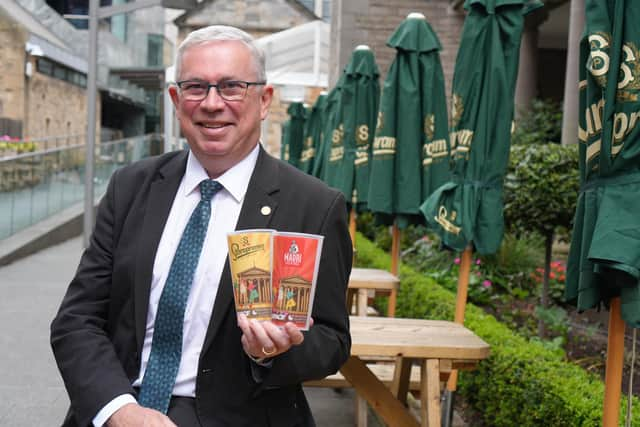

For those of us operating in heritage venues and working across major events, hotels, and catering spaces, the path to greener operations isn’t a checklist – it’s a constant negotiation between ambition and practicality. And sometimes, it’s a costly one.
At Surgeons Quarter, the commercial arm of the Royal College of Surgeons of Edinburgh, we’ve long been committed to reducing our environmental footprint. But that commitment has come with real investment – not just in technology or infrastructure, but in reshaping attitudes.
One of our most visible recent changes is also one of our most symbolic: the introduction of reusable souvenir cups during the busy Fringe season. On the surface, it’s a simple enough idea – pay £2 once, reuse for the duration of your visit, and take home a meaningful keepsake.
But behind the scenes, this small change required a five-figure upfront investment, staff retraining, logistical rethinking and a complete cultural shift in how customers perceive convenience.
Reusable cups may be commonplace in coffee shops but scale that up to a historic events campus hosting thousands of guests each day during a global arts festival, and the picture becomes more complex.
And when your venue includes listed buildings and centuries-old spaces, installing energy-efficient systems or reimagining waste disposal infrastructure presents not just financial barriers but also regulatory ones.
Yet despite these challenges, we’ve pushed forward. At Ten Hill Place Hotel, our flagship four-star hotel, we’ve removed plastic water bottles from all rooms and replaced them with wildflower seed packs, a simple gesture to support biodiversity and extend the memory of a sustainable stay. We’ve invested in uniforms made from recycled plastic bottles and installed electric vehicle charging stations, again at significant cost.
The motivation behind these efforts isn’t trend-chasing. It’s about responsibility to our environment, our staff, our guests, and our broader community. Sustainability only works if it’s embedded in everything we do, from the products we offer to the policies we uphold.
This means every small action needs to make sense within a larger framework and that framework must be built to last. For us, that includes paying all staff above the Living Wage Foundation rate, contributing generously to pensions, and donating a portion of proceeds from reusable cup sales to causes like Ecologi and homelessness charity Cyrenians.
We’re not alone in facing these challenges, and we don’t pretend to have all the answers. But what we do have is a commitment to asking the right questions, even when those questions lead to difficult decisions or unglamorous answers.
True sustainability doesn’t always come in recyclable packaging. Sometimes, it comes in the form of hard choices, significant investments, and long-term thinking.
And as our guests, clients, and visitors continue to make more environmentally conscious decisions, it’s our job to ensure we’re doing the same – not just when it’s easy or cost-effective, but especially when it’s not.
Because in the end, doing what’s right often costs more. But it’s worth it.
Scott Mitchell is Managing Director of Surgeons Quarter, the commercial arm of the historic Royal College of Surgeons of Edinburgh, which promotes, sells and manages all commercial activities within the College campus.
Comments
Want to join the conversation? Please or to comment on this article.