
Why informal donations are a legal minefield for people struggling to have a child
Using a licensed fertility clinic is a vital safeguard for both the intended parent and the resulting child, writes Lindsey Ogilvie
A recent BBC article entitled ‘I’m a Facebook sperm donor and I’ve fathered dozens of children’ has highlighted a legal minefield for people struggling to have a family naturally.
The American donor, living in Ireland, claims to have fathered “dozens” of children worldwide, including three in Scotland. He also runs Facebook groups connecting donors and recipients – with tags such as “Sperm Donors UK – Get Your Babydust Here!”.
He says he prefers direct donation because it is more personal than using a regulated clinic and hopes to be involved in some children’s lives. This should raise red flags for potential recipients.
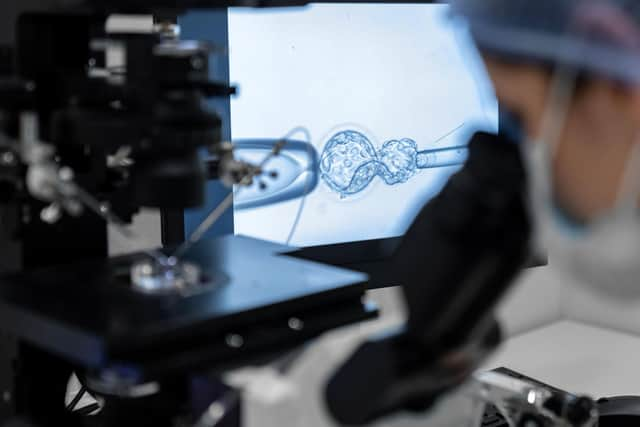

Of greater concern, particularly for the child, it raises vital parentage questions anyone considering donor conception must understand.
In April 2026, the High Court in England issued judgement in the case Re N (Paternity: Unregulated Sperm Donor) involving the prolific “Joe Donor” who claimed to have fathered more than 180 children worldwide. The child was conceived following an informal donation at the intended parents’ home. The arrangement was intended to be purely transactional, with the donor receiving payment and having no further involvement in the child’s life. Regardless, he later applied for a declaration that he was the child’s legal parent. This was refused. Importantly, the English court had the ability to do so if it considered the determination of the application would not be in the best interests of the child.
However, the position in Scotland is quite different. A child’s father is determined by whether the child was conceived through sexual intercourse or donor conception. Where the mother is not married or in a civil partnership, parenthood can only be conferred on an unmarried partner where treatment was carried out at a licensed clinic. Following informal sperm donation, the common law provides that the child’s father is the genetic father. There is no exception akin to England. If a party can establish they are the natural parent, they should be successful in securing a declarator of parentage. That has consequences and opens doors to unwanted legal disputes including applications for contact and claims for child maintenance.
The Human Fertilisation and Embryology Authority (HFEA) regulates sperm donation in UK licensed fertility clinics. Donors are screened for infectious diseases, provided with counselling and information about their legal position, and their donations may be used for a maximum of ten families. They receive limited compensation for expenses. Importantly, a donor who donates through a licensed clinic is not the legal parent of any child conceived, has no parental rights or responsibilities, is not named on the birth certificate, and has no financial obligations towards the child.

Private or informal donation arrangements do not provide the same safeguards. Donors may not have undergone appropriate health screening and there is no limit on the number of families they may help create. This increases the risk of large numbers of genetically related children being conceived from the same donor. There are also safety concerns when meeting unknown donors.
Far from being “cold and regulated,” using a fertility clinic is a vital safeguard both for the intended parent and the resulting child. Every family's circumstances are unique. If you are considering donor conception, family law specialists can advise on parentage, parental rights and responsibilities, and the legal implications of both regulated and informal arrangements.
Lindsey Ogilvie is a Partner, Turcan Connell