
Why electrification challenge will be won or lost on delivery
Scotland understands what needs to be done so the key issue now is execution consistently at scale, writes Gordon McKirdy
Scotland’s transition to an electrified, low-carbon economy is no longer an abstract ambition. It underpins how we heat our homes, travel to work and power the industries that sustain local jobs and communities. Getting it right matters, not just for meeting climate targets, but for building an energy system that is reliable, affordable and resilient for the long term. If delivery falls short, the consequences will be felt in higher costs, constrained growth and increasing pressure on households and businesses alike.
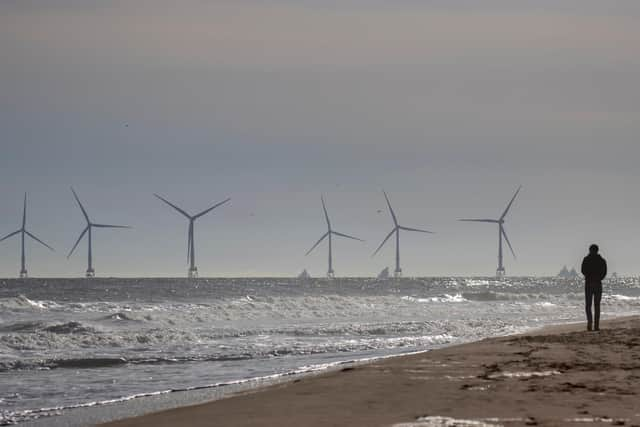
This shift is already visible in substations, transmission lines and offshore wind farms. As demand grows across industry, transport and heat, the infrastructure required to support this transition is moving rapidly from planning into execution.
The scale of that challenge is unprecedented. The electricity industry is committing tens of billions of pounds over the coming decade to reinforce and extend the system underpinning Scotland’s low-carbon economy. Few would question the necessity of that investment. The harder question is how to make it happen at the required pace.

Scotland’s energy sector has long combined ambition with deep technical expertise. Our heritage in offshore engineering, oil and gas, transmission and heavy infrastructure gives us a strong foundation. But electrification is not a sequence of standalone projects. It is a tightly interdependent system build, delivered under growing regulatory, supply chain and workforce pressure.
The challenge is no longer understanding what to do but executing it consistently at scale.
Large capital programmes rarely fall short because of weak intent or poor engineering. They falter when complexity outpaces the way decisions are made, risks are surfaced and scarce expertise is deployed. Too often, delivery models remain optimised for individual projects rather than whole portfolios, with fragmented data, siloed teams and reactive decision making limiting performance.
Accenture’s research highlights the scale of that delivery challenge. In our report Blueprint for Success, based on insights from 700 infrastructure and capital projects leaders worldwide, 92 per cent of major programmes fail to deliver on time and on budget, and only 6 per cent consistently meet or exceed their commitments. What differentiates that top tier is not ambition, but discipline. The strongest organisations deliver more predictably while underspending, as the majority experience significant cost overruns and delays.

At this scale, that is not a rounding error. It is value materially at risk at precisely the moment when grid readiness and delivery certainty matter most for Scotland’s electrification ambitions.
Encouragingly, this outcome is not inevitable. Organisations that consistently outperform take a fundamentally different approach. They manage investment and risk at portfolio level. They focus early effort on the highest value and highest risk decisions. They redesign operating models to concentrate scarce expertise where it has the greatest impact. And they build data and AI-driven foundations that enable foresight and more consistent, disciplined execution at scale.
This is not about technology for its own sake. It is about improving decision quality and embedding execution discipline across increasingly complex programmes. Applied effectively, these approaches can materially reduce overruns and improve delivery timelines, helping organisations move from reactive delivery to predictable performance.
For Scotland, the prize is clear. Not simply meeting decarbonisation targets, but delivering resilient infrastructure that supports growth, earns public trust and stands the test of time.
The next phase of electrification will be decided by execution.
Gordon McKirdy, Energy & Utilities Lead, Accenture Scotland
Comments
Want to join the conversation? Please or to comment on this article.