
Why AI superpower status does not make sense for the UK
We can’t out-America America, but we can excel in AI governance and implementation, writes Richard Abrams
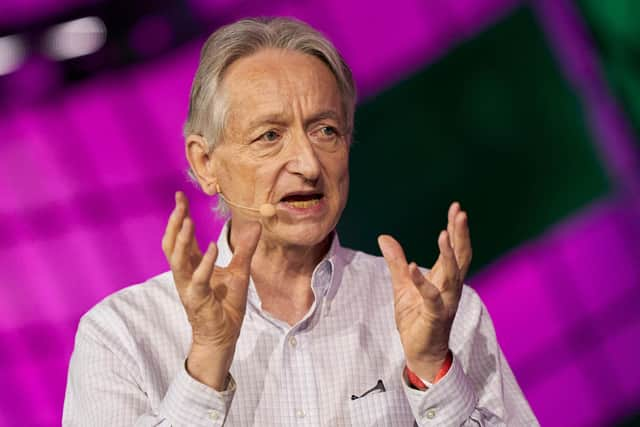
The UK has long punched above its weight in science and computing. Home to world leading universities, we have produced foundational figures in modern AI. From Sir Demis Hassabis at DeepMind to Geoffrey Hinton, born in London and widely regarded as one of the godfathers of deep learning. In terms of intellectual contribution, Britain’s influence on AI is undeniable. But influence is not the same as power.
Since Trump’s return to the White House, the US has pivoted its use of AI from safety diplomacy toward acceleration at scale. What the current administration sees as Biden-era overreach is being dismantled. Regulation is framed as a strategic liability and, in the race to become an AI superpower, speed, compute capacity and American dominance takes precedence.
But is that a race Britain really sees itself winning? We shouldn’t be trying to out-America America, and the UK government knows it. With strengths in integration, regulation and trust, maybe our most realistic and valuable role isn’t to win the AI arms race, but to become a second-order AI power.

AI superpower status doesn’t make sense for the UK
Since the AI boom, the UK has leaned into a pro-innovation regulatory posture, focusing on retaining enough domestic capability to claim technological sovereignty. But planning permission and power availability are already proving to be major bottlenecks.
That said, AI Growth Zones signal a clearer direction. Policy language suggests they could unlock up to £100 billion of additional investment alongside concrete private-sector commitments including over £12bn from Vantage Data Centres, £2bn from Nscale over the next three years, job creation tied to Kyndryl’s AI Innovation Lab in Liverpool and Nvidia’s public commitment to building UK infrastructure.
This is real progress but, in AI terms, £100bn is modest. US hyperscalers deploy sums of this magnitude with striking regularity.

It’s clear the UK is not building the next generation of sovereign-scale foundation models, nor will it control the global AI stack from chips upward. That race is already being run by the US, China and a small group of energy-rich Middle Eastern states prepared to buy relevance through sheer capital deployment. But scale is not the only source of value.
Why Britain deserves a seat at the top table
Since its post-industrial shift, Britain’s strengths lie in integration, regulation and trust. We are unusually good at applying complex technologies to heavily regulated, liability-laden industries like finance, insurance, healthcare, law, cyber security and defence.
AI does not create value only at the frontier. While the US builds the engines and China deploys them at scale, Britain’s opportunity lies downstream: where models collide with messy data, ageing legacy systems, regulation and real accountability. This is where governance stops being an abstract debate and becomes a commercial necessity.
If we focus on what we’re best equipped to do – prioritising safety institutes, standards, applied research and selective infrastructure investment to integrate AI into the real economy – the UK can become indispensable to global AI governance and implementation.
However, we're not alone. Countries like Norway are prioritising trust, ethics, legality and public sector readiness over frontier or consumer-scale models. And they’re moving fast. Without the distraction of an AI arms race, their focus is solely on effective governance and deployment.
The UK has a chance to be indispensable in the global AI market. It may not win on scale, but it can shape how AI is governed, trusted and turned into something that businesses can safely depend on. But if the UK becomes distracted by the pursuit of AI superpower status, it risks squandering the very advantage it already has.
Richard Abrams, CTO for technical and comms at Kick ICT
Comments
Want to join the conversation? Please or to comment on this article.