
UK inflation jumps to 3.3%: What this means for interest rates, pensions and savings
“Clarity surrounding the path for interest rates and inflation has never been more important” – Lily Megson Harvey, My Pension Expert
Interest rates look set to be held next week despite a “gut-punch” hike in inflation.
The annual rate of consumer prices index (CPI) inflation rose to 3.3 per cent in March from 3 per cent in February, the latest official figures revealed. The jump, to the highest level since December, came amid a sharp rise in diesel and petrol prices caused by the conflict in the Middle East.
Indeed, a higher price at the pump was the main driver of the acceleration in inflation, increasing by 8.7 per cent month-on-month - the largest increase since June 2022 , shortly after the Russian invasion of Ukraine. The Office for National Statistics (ONS) found that the average price of regular unleaded petrol rose by 8.6p per litre between February and March to 140.2p per litre. This marked the highest price since August 2024. Prices have pushed even higher in recent weeks.
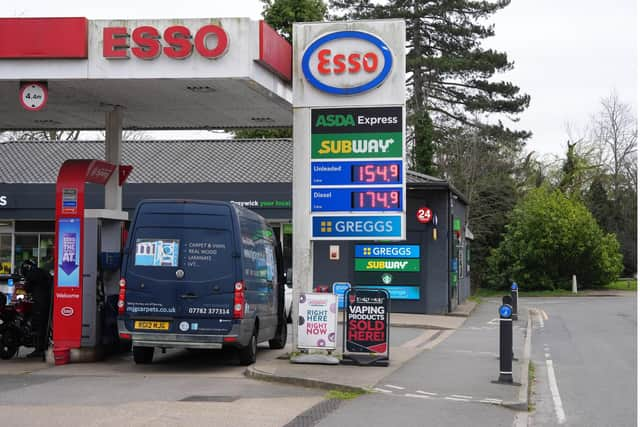

Thomas Pugh, chief economist at audit, tax and consulting firm RSM UK, said: “The jump in inflation to 3.3 per cent in March was almost entirely driven by rocketing fuel prices due to the war in Iran. If energy prices stay around current levels, then inflation will probably peak at close to 4 per cent later this year.”
The rebound in inflation is a headache for the Bank of England, which had been starting to get inflation under control prior to the attacks on Iran and the subsequent escalation of fighting and closure of the Strait of Hormuz to nearly all shipping.
Before the conflict, economists had been predicting a series of interest rate cuts to help ease the pain for millions of mortgage payers, businesses and other borrowers. There is now talk of potential rate rises if inflation remains sticky, despite the volatility caused by higher energy costs being largely beyond the central bank’s control.
The bank’s monetary policy committee (MPC) is due to meet on Thursday 30 April to decide on its next move on interest rates, though a hold at this stage seems the most likely outcome.

Make sure you keep up to date with breaking news from across Scotland by signing up to our free newsletter here.
Professor Joe Nellis, economic adviser at accountancy and advisory firm MHA, said: “The Bank of England’s monetary policy committee makes its decision on interest rates next week, but anything other than a hold would be a monumental shock.
“With inflation forecast to rise further, it is clear why policymakers are in no position to cut rates any time soon. Less obvious, perhaps, is why they are also unlikely to raise them.
“A path of monetary tightening was (rightly) pursued in 2022 and 2023 as policymakers battled the impact of the Russian invasion of Ukraine and a global energy crisis. Supply-side constraints are once again causing a strain.
“But the key difference now is on the demand side. As the economy emerged from lockdown, a surge in demand increased activity in the economy, driving up prices in energy and other sectors.
“That is not the case this time around. Economic growth remains subdued, business investment cautious, and household spending constrained. The inflationary pressures the economy faces now are external and transitory, not structural.”
ONS chief economist Grant Fitzner noted: “Inflation climbed in March, largely due to increased fuel prices, which saw their largest increase for over three years. Air fares were another upward driver this month, alongside rising food prices.
“The only significant offset came from clothing costs, where prices rose by less than this time last year.”
Of concern to central bank policymakers will be an increase in the rate of services inflation, to 4.5 per cent, signalling persistent domestic price pressures beyond just energy. Food and non-alcoholic drink prices were up 3.7 per cent year-on-year in March, accelerating from 3.3 per cent inflation in the previous month.
With fuel and utility costs set to rise further, and their feed through to higher food prices, the risk of a renewed cost-of-living squeeze is back in focus for UK households.
Lily Megson Harvey, policy director at My Pension Expert, described the hike in inflation as a “gut-punch to Britons”.
She added: “It outlines the further strain felt by household finances, with no clear end in sight. For pension planners, it could signify the steady erosion of retirement savings - where even modest inflation can chip away at purchasing power over time.
“Clarity surrounding the path for interest rates and inflation has never been more important. But so too is access to the right support.”
Helen Morrissey, head of retirement analysis at investment platform Hargreaves Lansdown, said: “Inflation has ticked up, putting further pressure on pensioner purchasing power. The good news is that this month the state pension got a 4.8 per cent boost. This means someone on a full new state pension will now get £575 more per year in their pockets, so there is some respite.”
Clare Stinton, senior personal finance analyst at Hargreaves Lansdown, added: “Savings rates have been boosted over the past two months, as the prospect of higher inflation has put rate hikes back on the table.
“Whilst the number of rate hikes expected has been tempered over the past few weeks, they have remained elevated, with fixed rates benefiting the most. Whilst this inflation print is unlikely to affect the Bank of England’s decision next week, if we see a sustained increase and a prolonged conflict, fixed terms could continue to edge higher.
“With multiple fixed rates available above 4.5 per cent, savers can still lock in inflation beating returns and take advantage of these elevated rates.”
Comments
Want to join the conversation? Please or to comment on this article.