
Trump, taxes and takeovers: Aberdeen’s OEG navigates its way to $1 billion sales goal
“Anything that increases costs and complexity - tariffs and taxes - can put you off investing” – John Heiton, CEO
OEG Energy Group, the Aberdeen-headquartered offshore services provider employing 1,500 people globally, remains on the growth trail with further acquisitions set to boost its burgeoning renewables business as it charts a course to $1bn (£750 million) of annual group revenues.
Chief executive John Heiton said the 30 per cent growth seen last year was likely to be repeated this year despite volatile trading conditions on both sides of the Atlantic, US tariffs and higher taxes, with April’s hike in UK employers’ national insurance contributions adding a £1 million burden overnight.
The company, which has roots stretching back more than 50 years, is also having to balance the demands of a pro-oil Trump administration that is pulling back on green investment, with a Westminster government that plays up renewable energy but is “not so supportive” of offshore oil and gas.
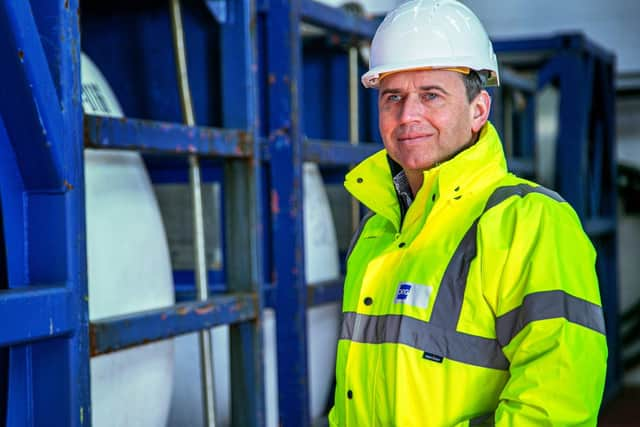

Heiton, a local to the Aberdeenshire area, who joined OEG in 2008, was speaking just a fortnight after the group sealed its first acquisition since being bought by US funds heavyweight Apollo in March. The takeover of Trinity Rental Services (TRS) - for an undisclosed sum - marks a “strategic expansion” of OEG’s US footprint and capabilities.
Founded in 2013, Louisiana-based TRS has grown through acquisition and investment to become a key provider in oil and gas offshore container rentals in the Gulf of America. Its workforce of around 80 skilled employees now becomes part of OEG.
“We expect it to be quite a smooth integration,” said Heiton. “It was a direct competitor so we expect the integration to happen pretty quickly. There are some common customers.
“We won a major new contract in the US and that led to a drive for more equipment and one way to fulfil that was to buy a competitor. Also, we admired Trinity for a long time and had talked about acquisitions with them for five or six years. This was the right time for them to do a deal.”
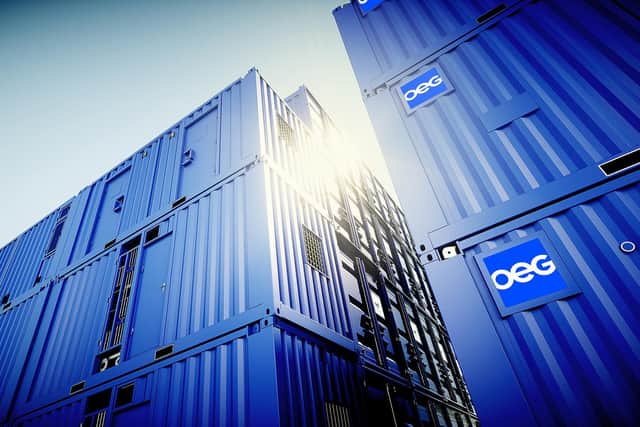
OEG’s predecessor companies - Ferguson Seacabs, Containental and Vertec Engineering - were among the pioneers in the supply of equipment to the North Sea oil and gas industry, but the group now derives about 55 per cent of its business from renewables work. That split is expected to remain about the same this year, even with the Trinity deal.
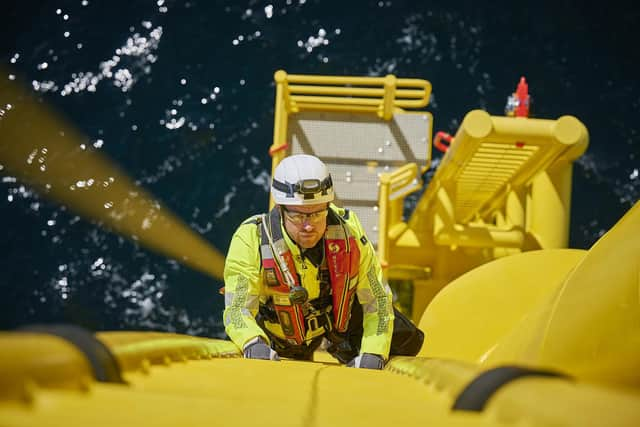
During 2023, the group launched OEG Renewables in a move that brought all subsea, topside, cable handling and marine specialist services under one roof to service both the construction and operational phases for offshore wind farms on a global basis.
Heiton said the TRS deal, though a milestone one, did not mark a change in the group’s strategy.
“If we do one or two acquisitions in containers over five years and probably do ten-plus in renewables, that is the weighting we expect to see in the business,” he noted.
Buying a US-domiciled business like TRS puts the group in an advantageous position with regards to tariffs, though the wider business has suffered some fallout amid President Trump’s see-sawing trade levies.
“They have caused some delays and issues in terms of our US business and led to a general slowdown in the world economy,” Heiton cautioned. “That then drives a slowdown in demand for energy. Anything that increases costs and complexity - tariffs and taxes - can put you off investing.”
The group’s fast-growing renewables business recently won a multi-million-pound contract to support the construction phase of the vast Inch Cape offshore wind farm, which is due to be operational in 2027. Once completed, the development - some ten miles off the Angus coast - will feature 72 giant wind turbines and an onshore substation, generating sufficient clean energy to power the equivalent of more than half the homes in Scotland.
Under the terms of the contract, OEG will supply a package of specialist services including marine coordination, high voltage and ancillary port services. These will all be delivered from the company’s new flagship facility in Edinburgh, which is equipped with the latest state-of-the-art technology for round-the-clock monitoring of operations. OEG will also operate up to ten vessels to help support the ambitious project.
Heiton said the contract award reinforced the group’s position as a key partner in the offshore renewables industry. And, despite the Trump administration blowing cold on wind, the US is likely to be OEG’s second largest market this year for renewables, behind the UK.
“These were projects signed off in the Biden era that are in the construction phase,” noted Heiton. “But in three or four years time that business will probably fall to almost zero as there are no projects coming through. However, we are in pretty much every major offshore energy market.”
Headquarters
Last year saw the group move into a new global headquarters at the ABZ Business Park in Dyce. The office can accommodate up to 100 personnel across three floors and supplements a number of operational bases in the Aberdeen area.
Some 250 out of the 1,500 people employed by the group globally work out of the North-east and while Heiton said the firm was proud of its Scottish roots, the UK now accounted for just 10 to 15 per cent of its business.
“We have a bigger US business and a bigger Norwegian business,” he said. “We have seen a slowdown in the oilfield economy in the UK. Most of the renewables projects are based in England and increasingly Ireland and the Baltic Sea. Taxes do have a real bearing as to where you actually allocate your resources. It’s a modern age and frankly you could base this business anywhere.”
Comments
Want to join the conversation? Please or to comment on this article.