
Scotland attracts record 76 new funders to market as investment broadens
“Investors are increasingly drawn to Scottish companies in sectors that speak to a broader strategic confidence in what Scotland has to offer” – Alison Grieve, YCF
A record number of funders backed Scottish companies with risk capital for the first time last year, a new study has revealed.
Scotland attracted 76 new funders to the market during 2025, up from 73 the year before, according to the latest Annual Newcomers Report from Young Company Finance (YCF), which tracks the financing of early-stage businesses.
Some 31 per cent of the country’s growth capital rounds attracted at least one newcomer participant (43 out of 138 funding rounds), the highest proportion since YCF began tracking the trend, and up from 29 per cent in 2024.


While overall round numbers stayed broadly consistent with 2024, the median deal size across all rounds rose from about £1 million to just over £1.6m. Median deal size for newcomer rounds fell from £3.86m to £3m.
Large individual fund raises continued to draw in new sources of capital, with notable deals including energy storage firm Fidra Energy (£445m equity plus £594m in loan facilities), biotech company Trogenix (£70m) and Highland Broadband (£50m).
Life sciences company Rhizocore, a University of Edinburgh spinout, attracted five investors to the Scottish risk capital market for the first time including The First Thirty, Grosvenor Estate and Sand River, investing alongside Scottish Enterprise and the University of Edinburgh’s Old College Capital (OCC).
While “feeding, healing and fuelling” companies still accounted for some two-thirds of newcomer participants, 2025 saw a marked rise in investment into “sovereign capability” sectors including space, communications, recycling and advanced manufacturing, which together attracted a quarter of all newcomers, up sharply from previous years.
“Healing” companies remained the strongest single category, with newcomer participation in 14 rounds (up from 12 in 2024), attracting 21 investors and in excess of £133m in funding.
Existing Scottish investors continued to co-invest alongside newcomers at a growing rate. Scottish Enterprise took part in 37 per cent (16) of newcomer rounds, the Scottish National Investment Bank in five, and Scottish angel groups in 23 per cent (ten rounds). University venture funds participated in seven rounds.
University of Edinburgh spinouts featured prominently in the latest figures, with nine of the 43 newcomer rounds, including Rhizocore and biotech company Trogenix, going into companies emerging from the capital university.
The full report will be presented at the YCF Conference 2026 September 17 at Surgeons' Quarter, Edinburgh.

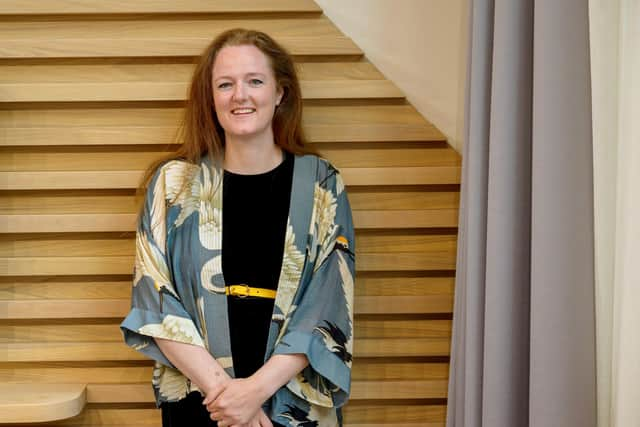
Alison Grieve, editor of Young Company Finance Scotland, said: “The consistent growth in newcomers – now 76 organisations backing Scottish companies for the first time – shows that Scotland’s growth capital market continues to earn attention well beyond its borders.
“What’s particularly striking this year is the shift towards sovereign capability. Investors are increasingly drawn to Scottish companies in sectors that speak to a broader strategic confidence in what Scotland has to offer. With nearly a third of all rounds now attracting a newcomer, we’re seeing a market that’s not just growing, but genuinely diversifying its base of support.”
Andrea Taylor, chief executive of Edinburgh Innovations, the University of Edinburgh’s commercialisation service, said: “It’s hugely encouraging to see the University of Edinburgh attracting new investors to Scotland. And it’s no surprise. It’s testament to the quality of our companies and the thriving support ecosystem we have built around them, including crucial early-stage funding and ongoing co-investment and support from OCC.
“That support, and the investment it brings, enables innovators like Rhizocore and Trogenix to make a real and lasting social and economic impact on the world,” she added.
Now in its 28th year, YCF provides news and data on the financing of early-stage companies with high growth potential in Scotland. YCF was acquired by national business angel association LINC Scotland in March 2022.
Meanwhile, business services giant Deloitte’s latest survey of UK chief financial officers (CFOs) suggests that they are becoming more optimistic about AI’s impact on business.
Finance leaders have become progressively more optimistic about artificial intelligence improving their own businesses’ performance as 73 per cent now report an improvement in AI optimism over the last 12 months, compared to 59 per cent in the closing quarter of 2025 and just 39 per cent in the third quarter of 2024.
Nearly all of the CFOs (96 per cent) polled between July 1 and 13 of this year expect to see a rise in investment in digital technology and assets by UK businesses over the next five years, with 93 per cent expecting an increase in the next 12 months.
More than three quarters (78 per cent) expect greater productivity and improved business performance over the next five years. With many corporates now well into their AI deployment programmes, half of respondents also expect productivity gains over the coming 12 months, the survey noted.
Darren Graves, Deloitte UK chief executive, said: “It is encouraging to see growing optimism about the positive impact AI can have on productivity and business performance.
“With a new prime minister and cabinet in office, businesses will be keen to hear how the government plans to boost growth, competitiveness, and deliver a clear economic strategy that supports the UK’s position as a leading global destination for business and investment.”
When asked about key factors affecting the hiring of graduates, CFOs reported a “wider business impetus for cost control” as the number one reason that reduced the level of graduate hiring in the past 12 months (net 62 per cent) as well as for the year ahead (net 64 per cent).
Comments
Want to join the conversation? Please or to comment on this article.