
Scotch whisky eyes the next growth frontier: India
A UK-India free trade deal opens the door, but distillers must still navigate a complex market
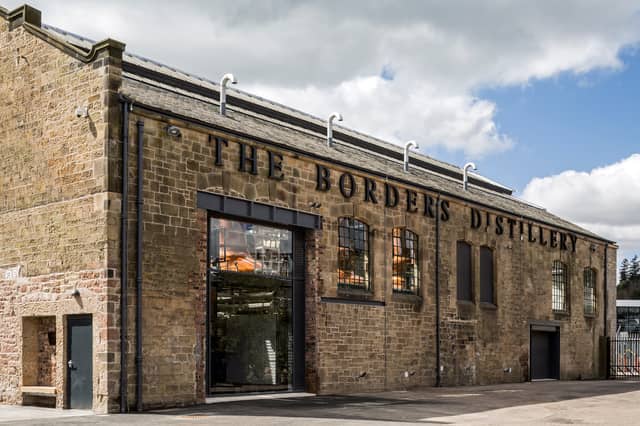


Hawick has ties to India that go back to the 19th century cashmere trade, when the Borders town was a thriving hub for garments made from imported Asian fibre.
Now, those ties are set to be rekindled through whisky. In November, Giancarlo Bianchi, managing director of The Borders Distillery, plans to be in Mumbai for a drinks industry trade fair. His aim is to explore how the Hawick-based distiller might tap into a market that’s emerged as an exciting new frontier for Scotch.
“India is the fastest growing and largest market in terms of the consumer base, made up of a growing middle class that’s trading up and aspiring to more premium single malts,” Bianchi says as he gives a tour of the distillery, the first in the Borders since 1837.
The South Asian country is Scotch whisky’s third largest export market by value after the US and China, according to the Scotch Whisky Association (SWA).
Exports to India last year were 15 per cent higher by value and volume than the previous year.
Yet with the coming into force last month of a Comprehensive Economic and Trade Agreement (CETA) between the UK and India, the hope is for super-charged growth amid a halving of Indian import tariffs under the deal to 75 per cent, and a decline to 40 per cent by 2036.
In a July report for the Scottish government by the UK India Business Council (UKIBC), the “Scottish opportunity” for whisky exports to India was valued at £240 million over the next 10 years. India imported £286m of Scotch whisky in 2025, equivalent to about 220m bottles.
India matters because, faced with the worst downturn since the 1980s, Scotland’s distillers are battling an oversupply of casks laid down more than a decade ago that’s coincided with a decline in alcohol consumption by younger drinkers in mature western markets. Then there have been tariffs, although the SWA recently welcomed the removal of US tariffs by president Trump, and a reduction in Chinese rates.
The SWA acknowledges that while in the short-term India’s growth potential will not be enough alone to counter the industry’s export challenges, the sheer size and scale of India mean it’s a promising long-term prospect.
For the large drinks companies including Diageo (owner of Johnnie Walker), Pernod Ricard (The Glenlivet) and Edrington (The Macallan), that prospect is actually two-pronged.
One lies in the “bulk blend” liquid that’s shipped over and bottled by Indian producers and some western companies like Diageo. This accounts for about 55 per cent of what’s exported to India. The rest is blended or single malt Scotch that’s bottled in Scotland and exported.
Some of the large players have moved quickly. Edrington says it had been working on setting up an Indian business in anticipation of the CETA being finalised, establishing Edrington India in April this year.
“Beyond the headline economic growth, we were seeing particular opportunities in key metro areas, where there was a marked increase in luxury hotels and restaurants opening,” says Paul Ross, Edrington India’s chief operating officer.

For independent distilleries, many of which face existential challenges, India is a tantalising opportunity to sell bottled product given that Scotch whisky still accounts for only three per cent of the total Indian whisky market.
Yet in addition to penetrating a market where price is key, they must navigate a complex system where alcohol distribution, tax and licensing is managed by each of India’s states. The UKIBC report noted that state excise rules and “route-to-market choices” would be “decisive.”
“The price of a bottle of Lagavulin 16-Year-Old varies a lot from Mumbai to Delhi to Bangalore. Thus, you will need separate strategies for each state,” says Srijan Shukla, associate fellow at the Observer Research Foundation think-tank in Delhi. He adds that distribution is dominated by a few players with “serious political connections”, so the key is “to make inroads into these networks”.
Mark Kent, the SWA’s chief executive, says that with the CETA in force, the long-term potential for growth, including for smaller distillers, is “very significant”. But he cautions that it will “take time for new entrants to establish a foothold in the Indian market”.
Siddarth Malik, India’s Consul General in Scotland, says: “The CETA has opened the door, but companies must now understand how to walk through it. The opportunity is substantial, but success will come from combining the improved access offered by the agreement with the right local partnerships, careful market selection and sustained engagement.”
About half the number of independent distilleries that responded to me asking about India said they were interested.
Annabel Parker, founder of Nc’nean distillery on the Morvern Peninsula, said she was “keeping a close eye on developments”, but India wasn’t a priority for now due to tough pricing.
Yet at Stirling Distillery, India was “firmly on our radar”, according to Kathryn Holm, communications manager. The distillery, Scotland’s smallest, started studying the market recently after receiving enquiries from India, including from a potential distributor. “Our current focus is on understanding the practical realities of the market … before committing to a fixed commercial
strategy,” Holm said.
Meanwhile in Hawick, The Borders Distillery is preparing for the launch this month of its inaugural single malt, a limited edition eight-year-old called “The Borders, First Release”. This will be followed in February by three core whiskies that will eventually be offered in India.
“In spite of the various challenges, including stiff competition from increasingly popular locally produced single malts, there will be growing opportunities for newcomers to the premium single malt category as the consumer base matures.” Bianchi says. “That’s where our opening lies.”
Comments
Want to join the conversation? Please or to comment on this article.