
PureLiFi: Edinburgh tech pioneer backed by Scottish National Investment Bank collapses with loss of 42 jobs
“A strategic shift into manufacturing its own hardware was more costly than initially anticipated” – Thomas McKay, BTG
An Edinburgh-based tech pioneer that has spent more than a decade developing its light-based alternative to wi-fi has collapsed with the loss of 42 jobs.
PureLiFi, which was founded 14 years ago, has entered administration after failing to raise further development capital. Kenny Craig and Kevin Mapstone of BTG have been appointed as joint administrators.
PureLiFi was established by “father of LiFi” Professor Harald Haas and Dr Mostafa Afgani in 2012 as a spin-out from the University of Edinburgh. It employed 42 staff at its head office in Leith.
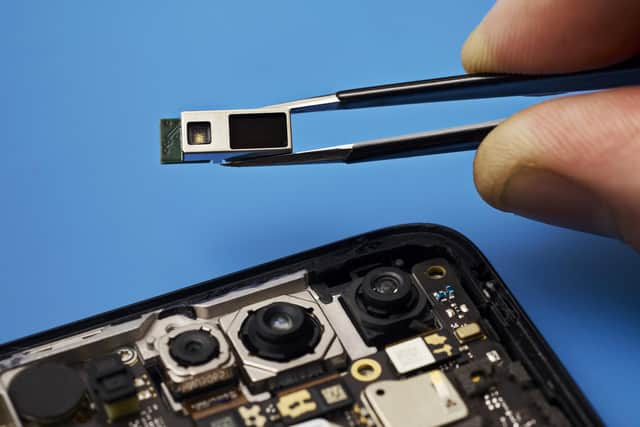

The business was at the leading edge of a new, highly-secure light-based wireless communications technology, and had shifted into manufacturing products based on its own “LiFi” technology and intellectual property. Since 2012, the company is understood to have raised more than £35 million in investment from a range of investors, funds and banks.
A fundraising move in July 2022 provided £10m of firepower from the Scottish National Investment Bank (SNIB), allowing the business to commence on its next phase of scaling up.
The news comes less than a fortnight after the head of taxpayer-backed SNIB admitted that the outlook was “challenging” after the bank’s annual losses spiralled to £138m.
Thomas McKay, managing partner of BTG in Scotland and Northern Ireland, said: “The firm had received significant investment from numerous sources over the years, and despite creating products and generating revenue with some groundbreaking proprietary wireless technology, the business simply ran out of money before it could cross into profitability.
“A strategic shift into manufacturing its own hardware, rather than licensing its globally patented technology to third-party manufacturers, was more costly than initially anticipated. By the end of the second quarter of 2026 the business had simply run out of cash flow and was seeking sources of additional investment needed to cover losses until the business crossed into profitability,” he added.
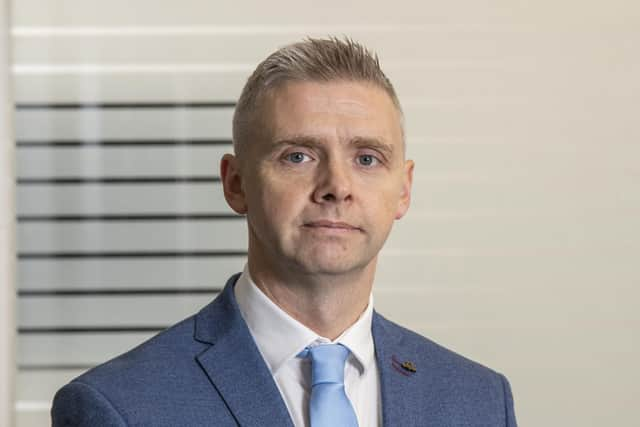
“With no further investment forthcoming, the directors were left with no alternative than to appoint administrators to stop the company’s debts rising, and sadly that has led to the immediate redundancy of all 42 employees at the business.”
In April, it emerged that PureLiFi had sealed what was seen as a “landmark” deal that could have helped deliver gigabit broadband indoors without the need for drilling holes or cabling.
The firm said it had agreed a partnership with network equipment maker Askey to “revolutionise” the fixed wireless access (FWA) market.
PureLiFi had been eyeing a future where LiFi - using light-emitting diodes (LEDs), infrared and the higher reaches of the electromagnetic spectrum - could sit alongside and complement wireless technologies utilising lower-frequency radio waves, such as wi-fi, 4G, 5G and beyond.
McKay added: “Our team is working closely with those affected to help them access the financial entitlements and support available to them, including assistance from Partnership Action for Continuing Employment (PACE) and the Redundancy Payments Service.
“In addition to ensuring these employees receive the guidance and advice they need during this process, our priority is to identify any business assets and realise maximum value from their sale, especially the valuable intellectual property assets built up over the years of development, to the benefit of creditors.”
Six-year-old SNIB’s latest annual report and accounts - covering the year to March 31 - revealed that bottom-line losses amounted to £138m, reflecting losses from the failure of three early investments and other write-downs.
The hefty deficit - which compared with a paper loss of £77m a year earlier - also reflected anticipated losses relating to the failure of two further portfolio companies whose administration processes had not completed by the end of March.
A spokesperson for the Scottish National Investment Bank said: “The bank has worked with PureLiFi and other stakeholders to review its options but, unfortunately, market challenges proved too great. Given these issues, the bank made a provision for the potential failure of the company in its recent annual report and accounts as part of its unrealised losses, meaning the losses we anticipate at the conclusion of the administration process have already been reported.
“As Scotland’s development bank, the bank was established to fill an identified gap in the Scottish funding landscape. Risk is inherent in all investment and we are mandated to take on higher risk than other commercial investors to drive societal impact and growth in the economy. Some failures are inevitable, and our strategy is based on the entire portfolio over the long term.”
Comments
Want to join the conversation? Please or to comment on this article.