
Plea for ‘support and stability’ as Scottish business confidence sinks to lowest level in over three years
“Scottish businesses are dealing with rising costs, weak sales growth and declining investment intentions, all of which are undermining their ability to plan and grow” – David Bond, ICAEW
Business confidence in Scotland has slumped to its lowest level in more than three years, amid ongoing uncertainty and waning economic growth, a survey today warns.
Sentiment tracked by accountancy body ICAEW’s regular Business Confidence Monitor, for the closing months of 2025, found that confidence north of the Border had decreased for the sixth consecutive quarter to a reading of -12.7, down from -0.5 in the previous quarter. It is the weakest confidence reading since the tail end of 2022 and below the UK average.
ICAEW said the findings reflected “ongoing uncertainty” surrounding both the UK and Scottish government Budgets, political developments ahead of May’s Holyrood elections, and a slowdown in general Scottish economic activity.
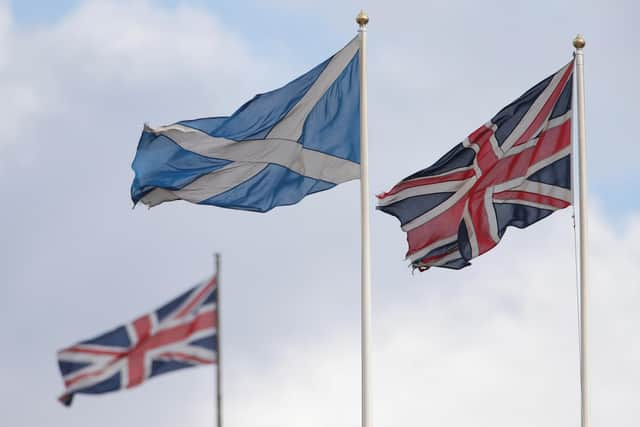

Scottish businesses responding to the survey identified the tax burden as the biggest growth challenge, cited by a record high of 68 per cent of respondents, which the accountancy group said was likely a result of pre-Budget speculation and recent tax increases, such as the hike in national insurance contributions.
Meanwhile, regulatory requirements were cited as a challenge by 42 per cent of Scottish businesses while, conscious of the upcoming elections in May, about a fifth of respondents cited government support as a challenge - more than twice the historic average.
At just 1 per cent, Scotland experienced the weakest annual domestic sales growth in the UK during the fourth quarter of 2025, likely a result of a slowdown in the nation’s manufacturing and engineering sectors enduring a decline in economic progression. While an improvement to Scotland’s annual domestic sales growth is projected over the next 12 months, it is one of the weakest forecasts in the UK, ICAEW noted, only ahead of Wales.
Scottish annual exports growth was also among the weakest in the UK, according to the monitor’s findings, with businesses reporting no growth in the closing three months of last year. ICAEW said there was a strong likelihood that US tariffs had contributed to this downturn, especially for the nation’s whisky producers, which are heavily dependent upon their exports to the American market.
In the coming year, the expected increase in annual exports growth to 1.8 per cent is the lowest of the regions and nations of the UK, likely linked to weak future exports predictions from the manufacturing and engineering sector.
David Bond, ICAEW’s director for Scotland, said: “It’s concerning that business confidence in Scotland has slipped to its lowest point in more than three years as the pressures of tax, political uncertainty and slowing economic activity take their toll.
“Scottish businesses are dealing with rising costs, weak sales growth and declining investment intentions, all of which are undermining their ability to plan and grow.”
He added: “In 2026, governments in both Edinburgh and Westminster must focus on creating the stable, supportive conditions that businesses need to unlock the potential among Scotland’s businesses.”
The survey found that business confidence in the UK sank into double-digit negative territory for the first time in three years, from -7.3 to -11.1 in the fourth quarter, amid “unprecedented fears” over the tax burden and weaker activity.
Make sure you keep up to date with breaking news from across Scotland by signing up to our free newsletter here.
The Business Confidence Monitor comes just a fortnight after it emerged that Scottish companies were seeing further declines in output and new orders as inflation continues to bite.
However, staffing levels were found to be stabilising and businesses “remain hopeful that 2026 will be a year of growth”, according to the latest Royal Bank of Scotland (RBS) regional growth tracker.
It said purchasing managers’ index (PMI) data for Scotland signalled further decreases in output and new orders during December. Despite that, workforce numbers were said to have “broadly stabilised” after two consecutive months of decline, while business confidence regarding the year ahead remained positive.
The headline RBS growth tracker - a seasonally adjusted index that measures the month-on-month change in the combined output of the country’s manufacturing and service sectors - rose fractionally from 48 in November to 48.1 in December, to indicate a fourth successive monthly fall in overall business activity. Any reading below 50 denotes a contraction.
Companies often attributed the latest decline to falling customer numbers and the rising cost of living.
Following marginal cuts to staff numbers in October and November, the report’s seasonally adjusted employment index posted just shy of the neutral 50 level in December, to signal broadly stable employment across Scotland’s private sector - accounting for roughly half the economy.
While manufacturing firms mentioned lowering their headcounts due to reduced requirements, this was largely offset by job creation by service providers, who took on additional staff to replace leavers and increase productivity, RBS noted.
Judith Cruickshank, Scotland board chair at Royal Bank of Scotland, said: “2025 proved to be a challenging year for Scottish businesses, with the latest growth tracker data signalling further falls in both output and new business.
“It is clear that inflation is continuing to put pressure on companies and customers. The latest data shows steeper increases in input prices at the end of the year, suggesting that margins are tightening.
“Despite these challenges, Scottish firms remain hopeful that 2026 will be a year of growth,” she added. “The jobs market also began to stabilise in December after falls in employment over the last two months.”
The findings for Scotland contrasted last month with a modest increase in output across the UK as a whole, according to the latest RBS tracker.
Comments
Want to join the conversation? Please or to comment on this article.