
‘Not all data centres are the same’ - plans submitted for 85-foot tall Lanarkshire facility
“We have seen a lot of data centre speculation in Scotland recently, and the vast majority of it will never be built” – Danny Quinn, DataVita MD
A planning application has been submitted for another giant data centre in Scotland that would rise to a height of more than 80 feet.
DataVita, the data centre operator and cloud provider, is looking to build the new facility at Chapelhall, marking the latest phase of development at the North Lanarkshire site.
The company built, owns and runs the DV1 data centre at Chapelhall. It is also constructing DV3 next door and operates its second facility in Glasgow. The plans for the new DV4 facility follow a period of public consultation.
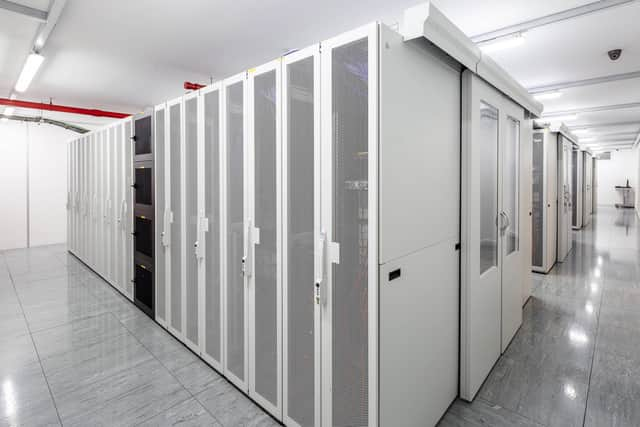

The site forms part of the Lanarkshire AI Growth Zone, designated by the UK government in January as the first in Scotland.
The latest plans come amid a backdrop of controversy over the spread of data centres in general, and large-scale artificial intelligence (AI) facilities in particular, and concerns about their potential impact on electricity and water resources. However, Scotland is considered well placed to attract data centre investment because of its renewable energy resources, digital connectivity and climate, which can help reduce cooling requirements.
DataVita is the largest supplier of cloud services to the Scottish public sector through the Scottish government’s cloud and hosting services framework. The company is headquartered in Lanarkshire and employs its team in Scotland, as well as building and operating its own facilities.
The firm said that following a series of public consultation events, the maximum building height had been reduced from 30 metres (98 feet) to 26 metres (85 feet), operational plant has been placed to the south of the building away from homes, and around 1,000 metres of new native hedgerow would be planted, at least double the length being removed.
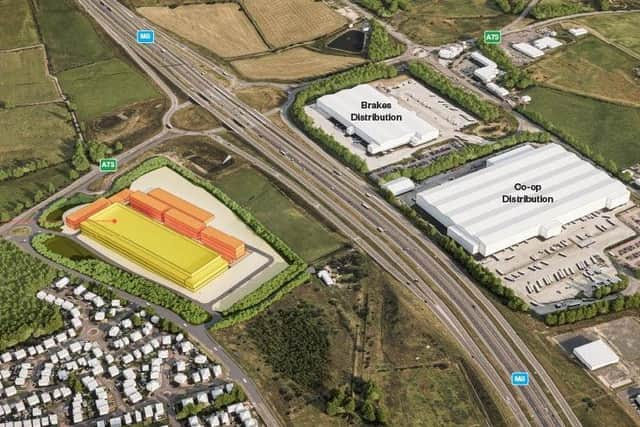
Meanwhile, a feasibility study is under way for a community garden and greenhouse, warmed by surplus heat from the data centre - an idea that the firm said had been raised by residents at the consultation events which would be funded through a community investment fund.
The company said its plans would deliver 120 permanent skilled roles on site, with a number of apprenticeships. At least 40 per cent of capital contracts are expected to be delivered by local suppliers, it noted.
Danny Quinn, managing director of DataVita, said: “We have seen a lot of data centre speculation in Scotland recently, and the vast majority of it will never be built. DataVita has been operating in Scotland for more than ten years, and we already underpin a lot of the critical services used day in, day out across Scotland.
“We built DV1 at Chapelhall, we are building DV3, and we run them ourselves with a Scottish team. DV4 is the next stage of that campus.
“Not all data centres are the same, and we are keen to change the public perception,” he added “Scotland has an opportunity not only to become a data centre location but an exporter of intelligence via low-carbon data centres. We don’t think of exporting barley when we talk about the success of our whisky industry, and data centres should be no different.
“The application is now with the council and open for comment, and I would encourage people to look at the detail.”
The firm said the centre would run on 100 per cent renewable electricity backed by certificated Scottish generation. Cooling for the facility is closed loop and sealed, with no evaporative cooling.
The development represents almost £850 million of construction investment over two years, DataVita added. DV4 is expected to generate more than £30m in business rates for North Lanarkshire Council over 25 years.
Alongside this, the firm said it would be investing £75m over 15 years in a DV4 Community Investment Fund, governed by an independent board, to invest in local community-generated and led projects.
Scotland’s AI Strategy 2026-2031, published by the Scottish government in March, includes a commitment to promote the country as a location for green data centres and to maximise the economic potential of the Lanarkshire AI Growth Zone.
The planning application will be available on North Lanarkshire Council’s planning portal once validated, and members of the public can make representations to the council as part of the statutory process.
Earlier this week, it emerged that plans had been submitted that would see part of the former IBM site at Greenock turned into a major data centre development.
Developers have applied to Inverclyde Council for planning permission for the scheme at Spango Valley, off Inverkip Road. The proposals would bring long-vacant brownfield land, owned by millionaire brothers and entrepreneurs Sandy and James Easdale, back into productive use.
Computing giant IBM opened its Spango Valley operation in 1954. The facility closed in 2017, and the buildings were demolished in 2020.
Slate Island Developments is now seeking to regenerate part of the former technology and industrial site for “modern digital infrastructure”.
Spango Valley is seen as being particularly well suited to the data centre sector because of its scale and extensive areas of previously developed land. The indicative proposals include four data centre buildings providing around 80,000 square metres of floorspace, alongside landscaping, parking and “sustainable drainage infrastructure”. The majority of existing woodland, particularly around the site boundaries, would be retained.
If planning permission in principle is granted, further applications would determine the development’s detailed design, including final building footprints, heights and materials.
Comments
Want to join the conversation? Please or to comment on this article.