
Mortgage warning as Reeves income tax U-turn triggers fresh gilts sell-off
“There’s nothing investors hate more than indecision disguised as strategy” – Nigel Green, deVere Group
Government bonds and the pound were in the firing line amid speculation the Chancellor has scrapped her plans to raise income tax in the upcoming autumn Budget.
Experts warned of echoes of the Liz Truss mini Budget crisis as the UK’s long-term borrowing costs were sent soaring. Yields on 30-year government bonds, also known as gilts, jumped as much as 14 basis points in early trading on Friday, and the yield on ten-year gilts also shot up 12 basis points - rising the most since July. The yield moves counter to the price of bonds, meaning that prices fall when yields rise.
The turmoil came as reports suggested that the latest U-turn would leave Rachel Reeves scrambling to fill a gaping black hole in the nation's finances less than a fortnight before the November 26 Budget.
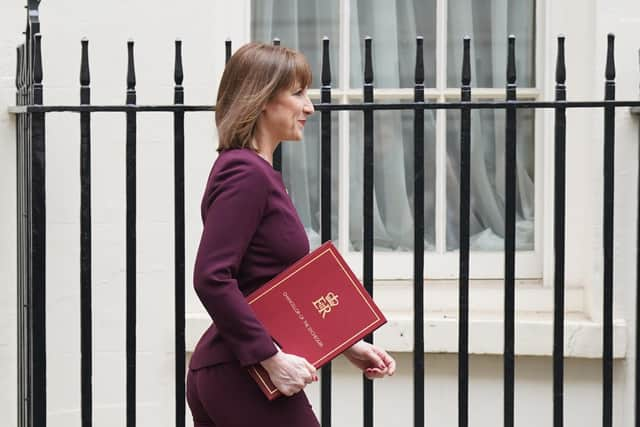

Sterling initially fell on the political concerns swirling around the Budget, before later regaining its poise to remain largely flat at $1.32 to the pound.
Make sure you keep up to date with breaking news from across Scotland by signing up to our free newsletter here.
Nigel Green, chief executive of global financial advisory firm deVere Group, said: “This is exactly how credibility shocks begin.
“Gilts are sliding, borrowing costs are climbing, and sterling is weakening because markets fear the government is improvising. There’s nothing investors hate more than indecision disguised as strategy.
“The reaction is unmistakable. Bond traders are telling the Treasury that they will not tolerate mixed signals. They saw what happened during the Truss turmoil and they’ll not wait politely for clarity. They’re pricing risk in real time.”
Dan Coatsworth, head of markets at investment platform AJ Bell, noted: “Speculation that Rachel Reeves has ripped up part of her Budget plan only days before the big event has spooked the bond market.
“Higher gilt yields can drive up fixed-term mortgage costs because they are used as a benchmark by lenders when pricing long-term products. The situation is bad news for mortgage lenders as pricier home loans could make it more challenging for certain people to get on the housing ladder.
“That explains the sell-off in banking shares including Lloyds and NatWest as well as housebuilders Berkeley, Barratt Redrow and Persimmon.”
The Resolution Foundation said excessive levels of “Budget kite-flying” were fuelling market uncertainty.
The organisation’s chief executive, Ruth Curtice, added: “It is normal for economic forecasts and policies to change in the run up to the Budget. It is not normal for so much of that to be laid bare in public.
“The market moves this morning and in recent weeks suggest a serious look should be taken at the approach to market-sensitive forecast information.”
Gilts have already been under pressure this week amid reports of political turmoil and weaker-than-expected economic data.
A sell-off in government bonds was seen on Wednesday amid rumours over a leadership challenge to Prime Minister Sir Keir Starmer, and this was compounded on Thursday by disappointing economic growth figures showing UK gross domestic product lifted just 0.1 per cent in the third quarter - half the rate that economists had been predicting.
That prompted analysts to speculate over a possible pre-Christmas interest rate cut, with the Bank of England’s monetary policy committee due to meet on December 18.
James Bentley, director at Financial Markets Online, said: “Suddenly the chances of an interest rate cut before Christmas are on a par with the likelihood of mince pies and syrupy TV ads.”
Suren Thiru, economics director at accountancy body ICAEW, added: “These disappointing [GDP] figures pave the way for a December interest rate cut by fuelling fears over economic conditions sufficiently enough to push a majority of rate-setters to authorise another policy loosening.”
Comments
Want to join the conversation? Please or to comment on this article.