
If we fail to move beyond the status quo, it will not only be projects like the A9 that remain stalled
Taking a decade to build 70 miles of dual carriageway would not be tolerated in most comparable countries
The recent Scottish government budget went off not with a bang, but a whimper. Despite an opportunity to be bold just four months from crucial Holyrood elections, it quietly confirmed something many businesses, investors and communities already know: economic growth is too often treated as an afterthought, while private enterprise is viewed primarily as a cash cow. It may be an inconvenient truth for some, but the public sector ultimately exists because of the private sector, not the other way around.
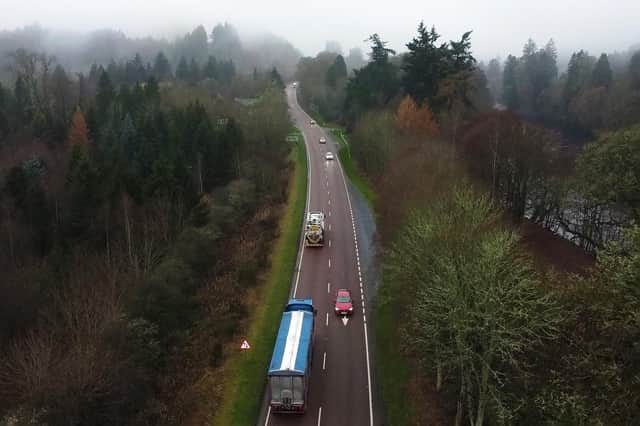

Nowhere is this imbalance more evident than in infrastructure investment. Even projects that are progressing are doing so at a glacial pace. Years of delay, redesign and cost escalation have become the norm.
The recent confirmation that dualling the A9 will now cost close to £4 billion, after private financing was ruled out as “poor value for money”, is only the most visible example. Taking a decade to build 70 miles of dual carriageway would not be tolerated in most comparable countries. The deeper issue is structural. The Scottish government is attempting to meet 21st-century needs using 20th-century funding models, in an era of intense global competition.

This matters because infrastructure is not a technical detail. It underpins productivity, regional growth, investment decisions and quality of life. When transport links are unreliable, housing lags demand, or energy and digital systems fail to keep pace, communities lose out — and businesses and investment go elsewhere.
That reality was thrown into sharp relief for me recently at the Asia Finance Forum in Hong Kong. With a population not much larger than Scotland’s, the city shows what happens when public ambition and private capital work together at scale. Infrastructure works seamlessly and is designed around people’s daily lives. By contrast, Edinburgh and Glasgow — both ranked among the world’s top 35 financial centres — too often feel like large towns rather than global hubs. This gap is not inevitable; it is the product of political choices.
This is the norm in almost every comparable country Scotland seeks to emulate, from Ireland to Norway, where public funding is blended with carefully structured private capital to accelerate delivery and manage risk. These are pragmatic responses to fiscal reality, not ideological experiments.
The most concerning development is that Scotland has effectively shut down serious exploration of alternative ways of delivering infrastructure. The default assumption appears to be that if the public purse cannot stretch further, projects must simply wait. That is a false choice. Yet debate on alternative models too often collapses into shorthand arguments about “privatisation”. Ruling out options before they are properly examined only entrenches delay.
We are, of course, in the midst of an election cycle. But the recent budget underlined that once May has passed, the next Scottish government — whatever its make-up — must urgently revisit this issue. That should include a serious reassessment of private finance, alongside use of devolved bond-issuing powers, the so-called “kilts”, to accelerate delivery.
At Scotland’s Global Investment Summit, international investors were clear: they are keen to invest. But infrastructure quality and delivery timelines matter enormously if warm words are to translate into action.
If we fail to move beyond the status quo, it will not only be projects like the A9 that remain stalled, but Scotland’s broader prospects for economic growth as well. But if we get this right, the rewards — for communities, growth and future public revenues — will be substantial.
Sandy Begbie is Chief Executive of Scottish Financial Enterprise
Comments
Want to join the conversation? Please or to comment on this article.