
How Andy Murray has carved out success as a brand ambassador
‘He’s been very clever in how he’s gone about these roles’
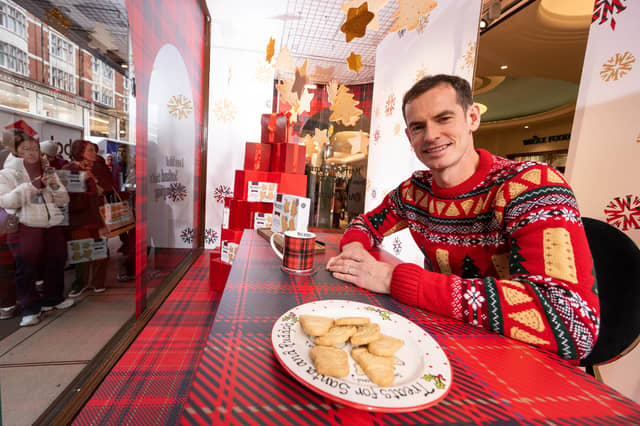


I’m going to go ahead and say it: as PR stunts go, it really took the biscuit.
Earlier this month, tennis star Andy Murray appeared in a shop window at the flagship Whole Foods Market store on London’s High Street Kensington, dressed in a Christmas jumper, munching on shortbread.
The shortbread in question was made by Walker’s, the Aberlour-based business that’s been making the product sold in its red and white packaging since 1898.
Murray’s London gimmick was part of a multi-year promotional partnership that Walker’s announced in June with the Dunblane-born sportsman, touting the “understated charm of two of Scotland’s most famous exports”.
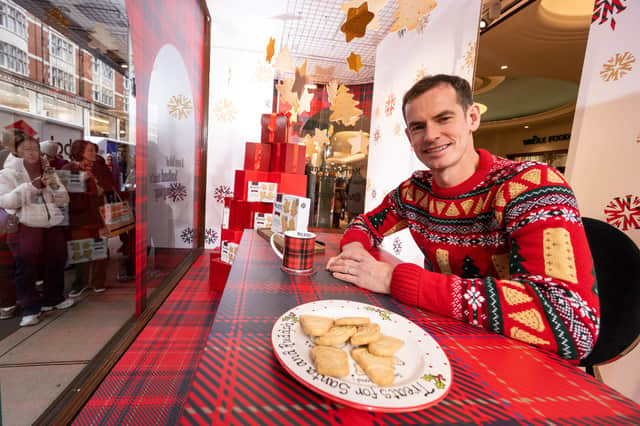
The Christmas jumper, featuring the knitted outline of a shortbread finger, is available to buy on the Walker’s website. Profits go to the “Mission Christmas” appeal by a charity called Cash for Kids run by Bauer Media, owner of JazzFM and Grazia magazine. Today, the knitwear may even be part of that Boxing Day tradition of Christmas jumper re-gifting.
Meanwhile, Murray has since July also featured in a promotion for Albert Bartlett, a Scottish potato company that has long supplied his family’s Cromlix House hotel, near Dunblane. The idea is to “champion the message that healthy, nutritious food is for everyone”, according to company blurb. A video advert shows Murray darting across a kitchen preparing a platter of potato-related dishes – boiled potatoes, mashed potatoes, chips - ending with the gag “What a serve!”.
Not content with two such deals, Murray in September signed up himself and his months-old puppy Bonnie with Purina, a pet food company owned by Nestlé, to promote pet nutrition.
The concept of aligning celebrities with food, drink and related brands is of course nothing new. Think Jamie Oliver and Sainsbury’s, or this year’s campaign by Glenmorangie featuring Hollywood actor Harrison Ford promoting its single malt whisky to a global audience.
Yet at least two questions come to mind. Why is Murray spreading himself across three such “brand ambassador” roles, when one is the norm? And what do these companies get out of a marketing gambit that some might think has outlived its usefulness?
To get some answers, I approached Walker’s through its PR agency earlier this month but was told a spokesperson was “not available for interview on this occasion due to Christmas holidays”. Evidently a busy lot, Walker’s. I then turned to an expert called Elinor Tyler, head of consumer brands at Storm Communications in London. She explained that such brand ambassador deals are not really about immediately increasing sales. Rather, it’s about “building social [media] currency” these days.
“What this ambassadorship has allowed is the brand (Walker’s) to suddenly be talked about, for it to raise its head in the media, to make it seem current, relevant, and be top of mind for consumers in a way that it wouldn’t have been otherwise. That will convert to some sales, but it will also increase brand awareness and brand reputation,” Tyler said.
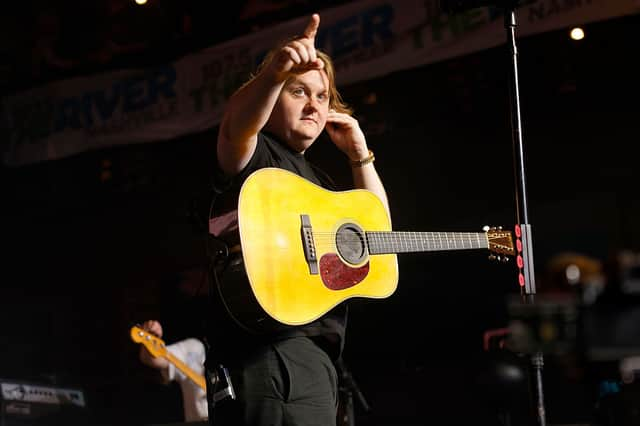
This may be why casual shoe brand HEYDUDE, owned by US-based Crocs, in July enlisted Lewis Capaldi as “global brand ambassador”. The business has been struggling of late and association with the Scottish singer on platforms like TikTok is evidently designed to extend the brand’s appeal.
So why might Walker’s want to raise its social currency? The company has grown sales fairly consistently since a rebranding launched in 2021. More importantly, it managed an impressive 23 per cent increase in operating profit in its 2024 financial results, published in September this year. Much of this was achieved through a combination of raising the price of its shortbread and squeezing out costs as the company battled inflation in key ingredients and rising labour costs.
But there is only so far that these internal levers can be pulled. Cost of living pressures mean consumers are highly sensitive to price increases, while unprecedented rises in the cost of key ingredients are piling upward pressure on operating costs, as another iconic Scottish food company, Tunnock’s, is finding. Last month it reported a 79 per cent plunge in pre-tax profits for the year-ended February 2025, on almost flat sales. The company is being hammered by record prices of cocoa, the key ingredient in the chocolate that goes into its already keenly priced Caramel Wafers and Tea Cakes.
This means that brand profile is more important than ever, especially among the younger consumers who are more used to discovering brands on social media. In the “Top 20 Most Chosen” Scottish food and consumer goods brands ranking from data company Worldpanel, published in August, Walker’s does not even make the cut, while Borders Biscuits came 20th. McGhee’s bakery came second after top-ranked Irn-Bru. Worldpanel highlighted McGhee’s use of social media to connect with younger consumers as one factor in its ranking. For companies such as Walker’s, using a brand ambassador is therefore “a method that these sort of heritage, legacy brands are using to get in front of a new consumer, a new audience that perhaps don’t know them”, explains Tyler, who works with Italian chef Gennaro Contaldo as brand ambassador for parmigiano reggiano, an Italian parmesan cheese.
So, has Murray spread himself too thinly with three brand ambassador roles? Tyler thinks not. She argues that not only do these deals “keep him current” after having retired from professional tennis but there’s a credible rationale for why he is promoting each in a way that avoids “cannibalisation”.
“All three will have some crossover audience, but they also probably have very separate audiences as well,” Tyler says. “I think he’s been very clever in how he’s gone about these roles.”
Comments
Want to join the conversation? Please or to comment on this article.