
Get ready for law on assisted dying
If passed by MSPs, the controversial legislation might affect existing legal arrangements, writes Finlay Williamson
The Assisted Dying for Terminally Ill Adults (Scotland) Bill is approaching its final stage before Members of the Scottish Parliament (MSPs) vote on whether it becomes law.
It is a decision that many MSPs view as one of the most significant they have ever faced as individuals, or collectively in the Scottish Parliament - as it is, literally, a matter of life or death.
With strong voices on both sides, the Bill - introduced by Liberal Democrat MSP Liam McArthur - has split opinion both inside and outside the Holyrood chamber.
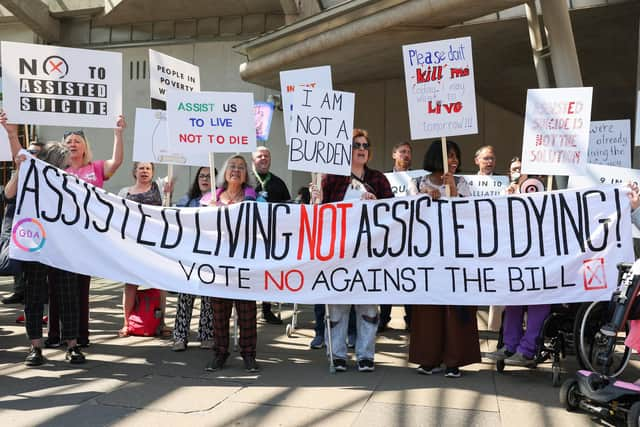

The bill has gone much further down the parliamentary road than previous attempts to legislate in this area, and a final vote is likely in March, before Holyrood breaks for May’s elections.
As Scotland stands on the brink of this significant legal change, it's crucial for individuals and families to consider how the legislation might affect their existing legal arrangements.
All adults should have Powers of Attorney (POAs) in place to ensure that if they become incapable of making decisions, their loved ones have the legal authority to act on their behalf in financial, legal, health and care matters.
However, the Assisted Dying Bill seems to create a potential grey area over how POAs operate in the case of an individual who chooses to end their life early through the potential new laws.

It's not difficult to envisage a scenario where a terminally ill person begins the assisted dying process but subsequently loses capacity to make decisions for themselves. In its current state, the Bill appears to require that the individual maintains decision-making ability to act for themselves throughout, with Attorneys apparently barred from making assisted dying decisions on someone's behalf, or continuing to act on a decision already made by the terminally ill person.
This ambiguity would benefit from clarification. If it isn’t resolved by the time the Act is brought into law, Scottish courts may well be called upon to determine the issue following litigation.
Beyond Powers of Attorney, those concerned about end-of-life decisions should consider an Advance Directive, sometimes known as a Living Will. These written statements set out wishes regarding the refusal of medical treatment in specific situations. While not legally binding, medical staff must take them into consideration when making care decisions.
The Bill should have minimal impact on the drafting of wills themselves, since they only take effect after death. However, legal professionals have identified potential complications arising from Scotland's forfeiture rules, which prevent those who played a part in someone's death from benefiting from it. This raised concerns that beneficiaries who assisted a loved one's death could be precluded from inheriting.
Fortunately, UK legal cases have generally been sympathetic to those who have assisted in a loved one's death, recognising such actions typically stem from compassion. More importantly, the Bill itself indicates there will be no criminal or civil liability for people who provide assistance to terminally ill persons in ending their life.
Anyone with existing Powers of Attorney, Advance Directives, or Wills, should already be reviewing these documents regularly. Those without such arrangements in place, or anyone uncertain about how the Assisted Dying Bill might affect their current legal documents, should seek advice from a suitably-qualified solicitor.
Finlay Williamson is a private client solicitor with Thorntons