
Edinburgh firm’s modular GPS sports watch to take on Apple and Garmin for under £200
“Building a wearable brand involves much more than producing a physical device” – founder Lewis Allison
An Edinburgh-based tech venture is looking to take on the might of Apple and Garmin with a modular sports watch that owners can modify, programme and build apps for.
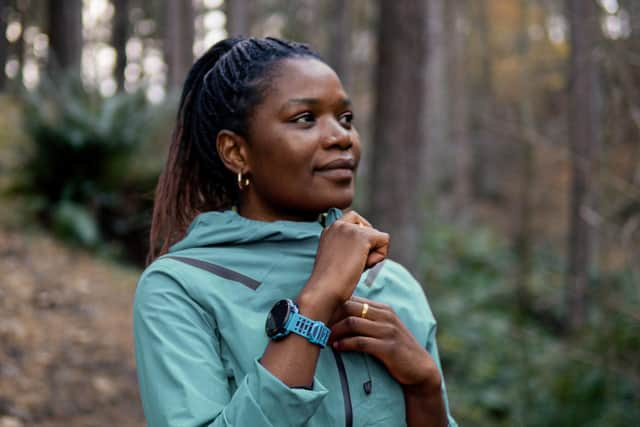
UNA Watch is behind what is billed as the world’s first modular and repairable GPS sports watch, offering an alternative to the sealed hardware, closed software and regular replacement cycles that dominate consumer technology.
Backed by Techstart Ventures and SFC Capital, the capital-based disruptor has moved from crowdfunding into full commercial launch after attracting more than 1,200 early supporters and delivering watches to customers in 32 countries.

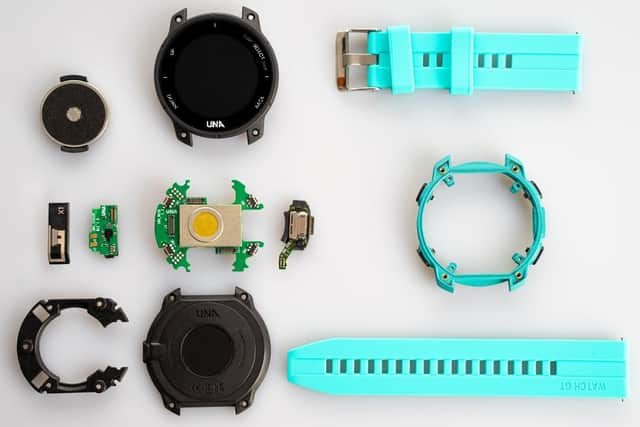
Unlike existing sports watches, UNA is assembled using precision engineered replaceable modular components rather than being permanently sealed shut. Owners can replace parts including its battery and display, with spares available directly from the company. The firm, which last year secured a £300,000 funding boost, began by releasing elements of its hardware design under a Creative Commons licence, enabling owners and third parties to understand and adapt the product and develop compatible accessories.
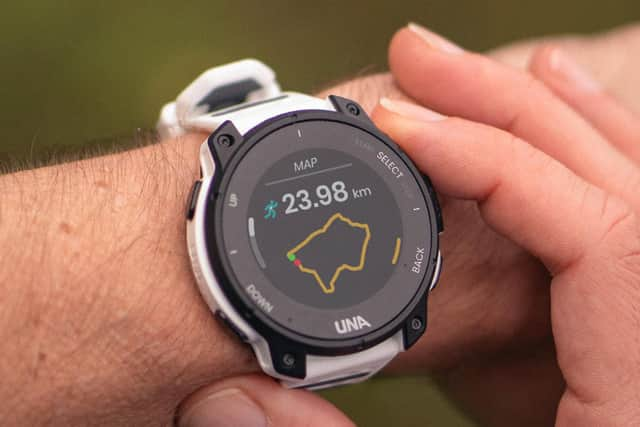
It has created an open software platform and released a software development kit that has helped turn the device into a growing community ecosystem. Independent developers are now producing sport and activity-specific applications faster than the company’s internal team, creating tools for the likes of mapping, yoga, alternative sleep tracking and parkrun, as well as a compass. One developer has even produced a version of the classic mobile phone game Snake.
Company founder Lewis Allison sees having a development community as a way to compete with technology giants whose teams, resources and development budgets it could never match.
“Apple and Garmin have enormous teams and resources, so trying to beat them by copying their closed model would make no sense,” he said. “We have taken the opposite approach by giving people the tools to repair, adapt and programme the product they own.
“We started with open hardware, but users wanted to go further and create software themselves. That has snowballed into a thriving community whose developers are now producing applications faster than our internal team.
“The technology giants decide which features receive attention, how their devices can be repaired and when customers need to buy another one. UNA gives its community a meaningful role in deciding what the watch becomes.”
Allison, an electronics engineer who spent more than a decade developing wearable technology for the golf industry, came up with the watch design to challenge a consumer-electronics model in which manufacturers continue to control how products are repaired, upgraded, and used long after customers have bought them.
The watch uses the popular USB-C connector instead of a proprietary charging cable and offers a claimed battery life of seven to ten days, depending on GPS use, or approximately 20 hours of continuous GPS tracking.
UNA Watch is available in the UK, the US, Canada and across the EU, as well as Norway and Switzerland. The device is priced at £179 in the UK and $199 in the US.
Allison said: “Your watch should belong to you - that should not be a radical idea, yet people can spend hundreds of pounds on a device and still have remarkably little control over it. The hardware is often sealed, the software is restricted and the battery can be difficult or impossible to replace. If one relatively inexpensive component fails, the accepted answer is frequently to discard the entire product and buy another.
“UNA was created to take on that model and show consumers it does not have to be that way. Ownership should mean being able to understand a product, repair it and, where possible, make it do things its original designers never anticipated.”
UNA’s founder accepts that designing a repairable watch costs more and could reduce future replacement sales. However, Allison believes enabling customers to keep products for longer will create greater trust, loyalty and lasting commercial value.
He said: “It costs slightly more to build and we may sell somebody a replacement battery instead of an entirely new watch, but it is the right thing to do.
“Repairability cannot be added at the end. It has to be designed into the product from the beginning. We want UNA Watches to become familiar objects that people keep, rather than disposable accessories waiting for the next annual upgrade.”
The emergence of artificial intelligence (AI) could now extend UNA’s open-development model beyond experienced programmers. People can increasingly describe the function they want in plain English and use AI coding assistants to understand the system’s development tools, generate code, diagnose errors and refine an application.
“In the past, providing a software development kit gave professional developers more freedom,” noted Allison. “In the age of AI, it has the potential to give almost everyone more freedom.
“The starting point no longer has to be, ‘I know how to programme.’ Instead, it can be, ‘I wish my watch could do this.’
“Existing GPS watches are limited by the imagination and priorities of their internal development teams. UNA can draw upon the imagination of everyone who uses it. The best application for the watch may never come from us, and we would see that as a success.”
He added: “Building a wearable brand involves much more than producing a physical device. It requires manufacturing, software, support and, most importantly, a community that cares about what the product becomes.
“It is a privilege to have cutting-edge technology strapped to your wrist, and big tech companies exploit the desire for new features by making replacement the default and restricting how existing devices can be repaired or adapted.”
Comments
Want to join the conversation? Please or to comment on this article.