
Demands for £183m Scottish Government boost to farming
NFU Scotland says agricultural support has lost significant purchasing power over the past decade
NFU Scotland is calling on the Scottish Government to increase agricultural support by at least £183 million in its 2027–28 Budget, warning that Scotland cannot expect farmers and crofters to deliver more while the real terms value of public investment continues to decline.


In its submission to the Scottish Government, the Union is seeking to increase the current indicative annual agricultural support settlement of around £677 million to approximately £860 million, alongside protection against future inflation.
NFU Scotland says agricultural support has lost significant purchasing power over the past decade, with rising costs for fuel, fertiliser, machinery, labour and other essential inputs placing increasing pressure on farm businesses.
The Union argues that the next Budget must establish a new funding baseline, recognising the contribution farmers and crofters make to domestic food production, food security, economic growth, climate action, biodiversity, and the resilience of rural communities.
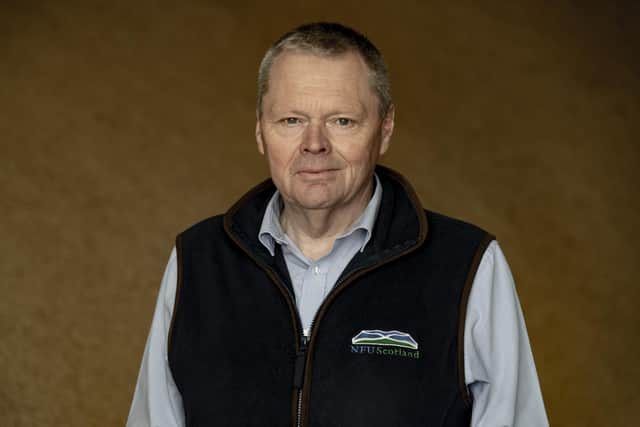
NFU Scotland’s President Andrew Connon said: “Farmers and crofters are expected to produce high-quality food, support rural jobs and businesses, improve environmental outcomes and contribute to Scotland’s climate ambitions.
“Those are legitimate expectations, but they cannot be delivered on ambition alone. They require viable agricultural businesses, confidence to invest and a properly funded support system.
“The current indicative settlement of around £677 million has lost substantial purchasing power through agricultural inflation. Our analysis shows that, after accounting for rising input costs, its buying power has fallen by around 27 per cent compared with 2014. The next Scottish Government Budget must address that erosion, rather than simply roll existing funding forward and allow its value to decline further.
“We are therefore calling for a minimum £183 million increase in 2027–28, taking agricultural support towards £860 million. This must be the beginning of a longer-term commitment to protect funding in real terms through to 2030 and beyond.”
The Union said it supports the Scottish Government’s commitment to deliver at least 70 per cent of agricultural support through direct payments under Tiers 1 and 2 of the future four-tier support framework. NFU Scotland believes these payments must provide a strong financial foundation for active farming and crofting, enabling businesses to invest in productivity, resilience, and environmental improvements.
Agriculture generates around £5.1 billion in gross output annually and underpins a much wider Scottish food and drink industry worth around £19 billion. The support provided to farming and crofting is an investment in businesses, jobs, supply chains, and communities across Scotland.
Mr Connon added: “The Scottish Government has set out its ambitions for agriculture through the Rural Support Plan. We welcome the greater visibility that provides, but certainty cannot mean knowing that the cash figure will stay the same while its real value continues to fall.”
NFU Scotland is also seeking enhanced investment in farm productivity and resilience, including a commitment to run improved Future Farming Investment Scheme and Food and Drink Processing Scheme Scotland rounds in 2027 and throughout the Rural Support Plan period, backed by dedicated budgets.
“The 2027–28 Budget is an opportunity for the Scottish Government to demonstrate that it recognises the strategic importance of Scottish agriculture and is prepared to invest in it,” said Mr Connon.
“Food security, economic growth, climate action and thriving rural communities all depend on a resilient and productive agricultural sector. A properly funded, ring-fenced and multi-annual settlement would give farmers and crofters the confidence to plan, invest and deliver for Scotland.
“If Scotland expects more from its farmers and crofters, it must be prepared to invest in what they can deliver.”
Comments
Want to join the conversation? Please or to comment on this article.