
Exclusive:Confident and assured but the devil’s in the detail - Scottish industry reaction to Autumn Budget 2024

The UK Autumn Budget marked the first under a Labour Chancellor of the Exchequer for 14 years, and the first ever delivered by a woman. A National Insurance Contribution hike dominated but the devil is in the detail with fiscal events.
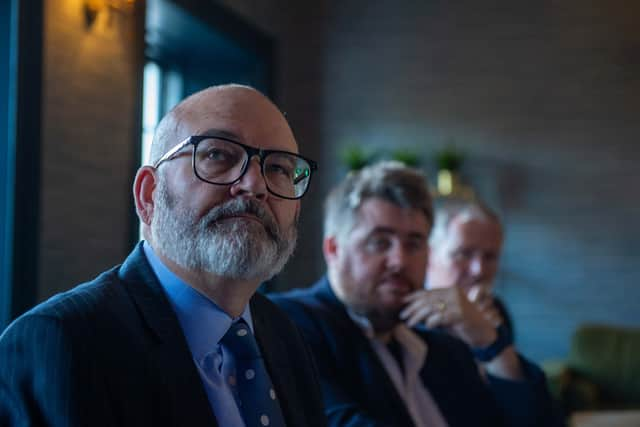
Key figures from the world of policy, accountancy, wealth management and tax joined The Scotsman to watch Rachel Reeves’ Autumn Budget and share industry reaction and analysis. The roundtable was held at Calton’s offices in the heart of Edinburgh, writes Joshua King.
Participants
- Joshua King, Head of Business at The Scotsman
- Rosemary Gallagher, Head of Commercial Content at The Scotsman
- Bruce Hendry, Executive Director and Head of Edinburgh office at Calton
- Euan Fernie, Partner at MHA Accountancy group
- Tom Gillingham, Partner at Charlotte Street Partners
- Christine Yuill, Partner in Corporate Tax at Burness Paull
Macroeconomics
Hendry - It’s interesting that she was talking about going to a balanced budget fairly quickly, but that the impact on growth wasn’t terribly significant. You would have thought to switch from having such a deficit to a £10 billion surplus over that period of time would have a bigger impact on growth. It does beg the question whether we do actually believe all the measures taken are going to have an impact on the UK.


Gillingham - There’s been a long time between the election and this budget, it feels that way. That uncertainty in itself was a problem. Having these concrete steps will help.
Fernie - With Liz Truss’s budget, the markets looked at the borrowing situation and said, ‘whoa, what’s going on here?’ I don’t think we’ll get that today. Actually, I think we’ll get a bit of confidence from how well it was presented, thought through, structured. I’m looking at the markets now and nothing’s crashed.
Hendry - I think they've benefited from inflation tailing off, and because the national insurance contribution increase raises so much. That gave them latitude. As we know, governments say they'll reduce inflation, but they have no control over reducing inflation at all, but they can take the benefits.
National Insurance Contributions
Yuill - It may lead to employees looking at salary sacrifice schemes to try and keep their same overall package without cost to their employers. So I think it will have a direct impact on employees or working people, albeit that is not a direct tax against them. Over half of the money in this budget is going to be raised by employers’ national insurance contributions.

Fernie - For the smaller businesses…they talked about the allowance that's there to make sure that the small employers are still able to take on small volumes of people. I think that's quite important as well. There's some sort of compensating factor there between the rate going up and the allowance going up as well. It was quite a hefty increase in the allowance from £5,000 to £10,500. It will be a limited number of people that benefit from that, but it will take this thing out for some of the smaller businesses.
Gillingham - Scotland is over-represented in terms of SMEs across the UK. So the way it's been framed is quite interesting. The chancellor said it in very careful language, that workers will not see higher taxes in their payslips. That doesn't mean there won't be changes to their pay.
Capital Gains Tax
Yuill - I think the staggered increase to the rates for business asset disposal relief will be welcomed if they're going to increase. It's good that it doesn't go straight from 10 per cent to almost doubling to 18 per cent immediately. That could lead to more transactions before April. In the following year, at 14 per cent, there may be some disappointment that the £1 million overall limit - which has been in place since 2020 and before that was £10 million - hasn't been increased, because four years ago, you could get £10m worth of gain at 10 per cent and now you can get £1m at 18 per cent in a couple of years. So that is a big difference, and may lead to people selling to employee ownership trusts, provided there's no hidden changes to that that allows a shareholder to dispose of their business at zero per cent capital gains tax.
Fernie - Income tax: if you earn, you have to pay it. There's no choice. Capital Gains Tax, there's always a choice. Do you sell the asset? We always see a huge influx of people turning over assets before April 5, where they can, and you'll see a big tax take coming in January 2026, which is when you pay your capital gains tax for the current tax year. But it might then be a much lower tax take as people sit tight and wait to see what's going to happen going forward. Maybe everybody just sits tight and says, ‘oh, we'll just take it if we need the money, we'll pay the tax’. It's much more of a choice than your income tax. Of course, the good side is your capital gains tax losses are worth more money now because the rates of tax have gone up, so that is more valuable. So anybody who’s got a loss, keep a hold of them until the new rules come in.
Pensions
Hendry - Pensions falling into inheritance tax is going to be, probably, the biggest change. A lot of plans have been centred around spending other assets to maintain pension assets for passing down intergenerationally. It's going to be interesting to see how the detail works. The insurance element is potentially a route that people go down, they might think, ‘well, my fund is going to be taxed at inheritance tax, I'll take some income now and insure against it so I can pass it down as well’. It is unwelcome, but you can see where they're coming from, because the argument is there are substantial tax reliefs to go into pension, which are there to sustain you throughout your life. It's not meant to be an intergenerational handout. So it was a nice, helpful break for people, but it's an easy target to go after.
Fernie - We've all had this lovely pot of money that, if you've got a pension fund, regardless of the size, it can be passed onto the next generation. It just seemed too good for so many years, and it became not a pension fund. People used to put money into a pension on the basis that it's going to provide them with an income in retirement. And if you've got the sums right the day you die it should be down to its last penny. This will stop people using it as a sort of tax-free trust fund.

Private Schools
Fernie - It hugely impacts Edinburgh schools. When you look at the percentage of the school population, about 25 per cent goes to a private school here, it's about six per cent across the rest of the country. There were a couple of schools that went to the wall, one in Glasgow, one up in Perthshire. There was an announcement about Stewart’s Melville and Mary Erskine merging. We might see a few more mergers coming with some of the schools. Unfortunately, it's one of those things that the parents are going to pick up some of the costs.
Gillingham - There is also a slight political challenge with raising that tax - obviously that's raised at a UK level then redistributed back to Scotland through Barnett consequentials. There's no guarantee that the SNP will use the funding in the same way the UK Government intends. So I think there's a few measures in this budget that have a disproportionate impact on Scotland. Look at the whisky industry.

Corporation Tax
Yuill - I don't think there'd be much chat before the budget that it was going to change. From a forecasting perspective, I think that's useful. It's important to say that capital gains tax for individuals has increased but companies pay against tax on their gains at the corporation tax relief, so that won't change for them. I think that will be welcome in the corporate world, for sure.
Agriculture
Fernie - I think it is disappointing that they've taken relief down. Could be potentially 100 per cent relief down to 50 per cent relief. That mark up is a huge burden on the families who don't really see the farm as being an asset that has a particular value, or they see themselves as a custodian of the farm for the next generation. What that does is brings in a liability at a time when there's not necessarily cash to pay it. So what it would mean is that people have got to plan ahead now. Rather than retaining things until they die, it may well be that assets have to be given away at an earlier stage.
Comments
Want to join the conversation? Please or to comment on this article.