
BP share price and City reaction as oil giant’s profits more than double
“Stronger profits, particularly those linked to geopolitical disruption, are likely to revive calls for windfall taxes across Europe” – Mark Crouch, market analyst
Oil major BP added to its recent share price gains but sparked anger from some quarters after confirming that profits more than doubled in the first three months of the year.
The FTSE 100 giant said its preferred profit measure - underlying replacement cost profit - surged by some 130 per cent to a better-than-expected $3.2 billion (£2.4bn) in the first quarter, up from $1.38bn a year earlier and $1.54bn in the previous three months. Most analysts had expected a first-quarter result in the region of $2.7bn.
Campaigners accused the group of profiting at the expense of households, who have seen fuel prices rocket at the pumps and are set to see energy bills jump higher when the price cap is next updated at the start of July.


BP’s new chief executive Meg O’Neill, who took over at the helm on April 1, insisted that the group was ensuring fuel supplies were being met across the UK.
“The teams across BP are playing their part to keep oil, gas and refined products flowing during an incredibly challenging time,” she said, “focused on maintaining safe, reliable and cost-efficient operations.
“We are working with customers and governments to get fuel where it’s needed, helping minimise disruption and the impact it can have on people’s lives.”
Oil prices have raced higher since the US-Israel attack on Iran started on February 28 and are now more than 60 per cent up so far this year. Brent crude reached close to $120 a barrel at one stage and, despite falling back, is still considerably above the $100 level as peace talks falter and amid fears over a looming global energy supply crisis.
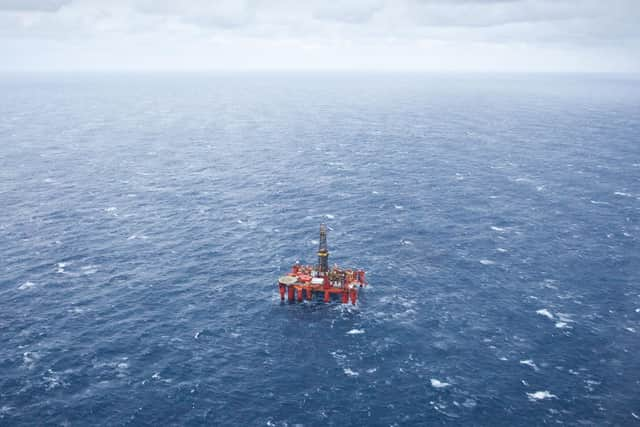
BP’s results revealed that its customers and products division - including its oil trading unit - reported profits of $2.5bn (£1.84bn), compared with $1.4bn in the previous quarter and just $103 million a year ago as traders were able to capitalise on highly volatile oil prices.
The group’s shares rose another 3 per cent or so in Tuesday morning trading, with the stock now having climbed more than a third higher in the past six months amid a boost from the crude rally.
Make sure you keep up to date with breaking news from across Scotland by signing up to our free newsletter here.
Derren Nathan, head of equity research at investment platform Hargreaves Lansdown, said: “BP’s new CEO’s first address to investors came with a solid beat of upgraded profit expectations. While these are results that she’s inherited rather than influenced, it’s a good base to build from.
“The lion’s share of the uplift in headline profits came from the customers and products segment, which benefitted from an exceptional oil trading result as customers scrambled to secure supplies following the closure of the Strait of Hormuz.
“Improved refining margins also boosted the outcome for this division. Oil production and operations saw profit dip, with the spike in crude prices likely to be better reflected in second-quarter numbers.
“Given the high level of uncertainty, BP’s been cautious not to signal a step change in dividends and hasn’t dropped any clues about the likely return date of share buybacks.”
Mark Crouch, market analyst for eToro, said the group’s first-quarter earnings offered a “timely reminder of just how abruptly the pendulum can swing in the energy sector”.
He noted: “Underlying profits jumped to $3.2bn, boosted by a powerful mix of elevated prices and exceptional trading conditions, even as disruptions in the Middle East weighed modestly on operations. In many respects, BP has both absorbed and benefited from the same geopolitical tensions, with volatility once again proving a tailwind for an integrated major.
“The political backdrop, though, remains hard to ignore. Stronger profits, particularly those linked to geopolitical disruption, are likely to revive calls for windfall taxes across Europe as household budgets get squeezed.
“The UK already imposes one of the most aggressive regimes globally, leaving BP walking a fine line between capital discipline, shareholder returns and an increasingly complex fiscal backdrop.”
Oil prices have been on a rollercoaster ride since the conflict in the Middle East began, as investor sentiment swings between optimism and pessimism.
Dan Coatsworth, head of markets at AJ Bell, said: “A matter of weeks ago oil moving through $110 per barrel would be enough to give markets the willies but they seem to be in wait-and-see mode right now.
“Energy prices are reacting to stalled talks between the US and Iran and a blockage of the Strait of Hormuz which has now extended to the best part of two months - with just a few fleeting moments of the key shipping route being open.
“Equity markets remain resilient,” he added. “The FTSE 100 was higher thanks to its oil and gas heavyweights BP and Shell.”
Mike Childs, head of science, policy and research at Friends of the Earth, said: “Just as we saw in 2022 following Russia’s invasion of Ukraine, fossil fuel giants are quids in when global instability drastically inflates fuel prices. But again, it’s ordinary people who pay the price when soaring energy prices threaten to plunge the UK into an even deeper cost of living crisis.”
Maja Darlington, climate campaigner for Greenpeace UK, added: “The oil industry’s capacity to profiteer from human misery is almost limitless.
“Britain subsidises this industry to the tune of several billion a year, and yet they’ll still claim to be over-taxed. Today’s numbers make a convincing case that the opposite is true.”
Comments
Want to join the conversation? Please or to comment on this article.