
Behind the curtain of healthcare’s AI revolution
When new tech fails, the problem often isn’t the kit itself, it’s the infrastructure, writes Dr Matthew Freer
The debate around artificial intelligence in healthcare has become rather predictable. Either AI is going to cure everything and make doctors obsolete by Thursday, or it’s going to take over our hospitals like a Bond villain. Miracle or menace, take your pick.
However, there’s a third possibility which receives less attention. Much of what’s marketed as revolutionary AI is simply technology built on foundations that aren’t fit for purpose.
I often think of the Wizard of Oz. Behind the smoke, booming voice and impressive machinery was a little old man desperately trying to maintain the illusion. There’s rather too much of that in healthcare technology today - slick demonstrations promising transformation, supported by systems still dependent on paper diaries, outdated spreadsheets and manual processes.
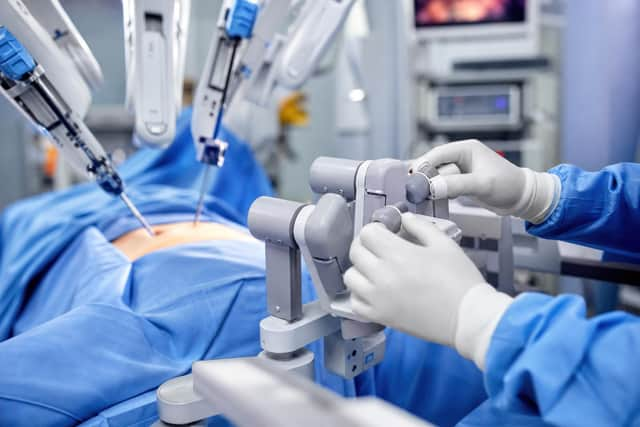

Having spent years working in operating theatres, I’ve learned that when these technologies fail the problem often isn’t the tech itself, it’s the infrastructure underneath it.
Operating theatres are among the most expensive resources in any hospital. So, how can we optimise their use when scheduling information sits across different systems, paper records or even people’s memories? Before introducing sophisticated AI, hospitals need reliable data, properly understood workflows, engaged staff and digital systems that actually work together.
None of this sounds revolutionary. But without those foundations, even the smartest AI simply makes existing chaos happen faster.
This thinking has shaped our approach at Infix, the Scottish healthcare technology business we founded to improve operating theatre efficiency. We bring together clinical expertise, software engineering, design and change management, recognising that successful technology adoption depends as much on people and processes as algorithms.
An experience at the Arab Health conference in Dubai last year reinforced the point. When presenting Infix to directors from PureHealth, the largest hospital group in the Middle East, I deliberately waited until the fifth slide before mentioning AI. Afterwards, their Head of AI approached me. What impressed him most was precisely that restraint. In a room where everyone was shouting about artificial intelligence, focusing on the practical problem stood out.
The application I’m most excited about isn’t a robotic surgeon or an algorithm replacing clinical judgement, it’s giving healthcare professionals their time back. At PureHealth, surgical coordinators using our Infix Tracker technology have reduced time-consuming administrative work, freeing them to spend more time speaking directly with patients. Patient satisfaction has improved as a result.
That might not generate the same headlines as an AI system diagnosing disease, but it’s a meaningful improvement for patients, staff and hospital efficiency.
Of course, AI will play an increasingly important role in clinical decision-making. But these applications bring considerable complexity, regulatory challenges and potential risks.
Meanwhile, substantial improvements are available today by fixing the operational problems that quietly undermine healthcare delivery. One additional surgical procedure, fewer cancellations or an afternoon returned to an overstretched coordinator can make an enormous difference.
So perhaps we should spend less time dreaming about robot doctors and more time retiring the paper diaries and spreadsheets holding our hospitals together. The real promise of AI in healthcare isn’t replacing the human touch. It’s giving healthcare professionals more time to provide it.
Dr Matthew Freer is the CEO and Co-founder of Infix Support
Comments
Want to join the conversation? Please or to comment on this article.