
50-megawatt battery energy storage farm to be built close to Scottish town
“We are confident that this project will bring considerable economic and environmental benefits to West Lothian” – Laura Petrie, project manager
A battery storage facility that it’s claimed will play a “critical role in tackling climate change” has been given the green light in West Lothian.
The site for the new facility, which will have a capacity of just under 50 megawatts, is located at Middlerigg Farm, between Bathgate and Armadale.
A planning application for the project by Galileo Empower has been granted unanimously by the local council’s development management committee. It is the renewable energy company’s first consent in Scotland.
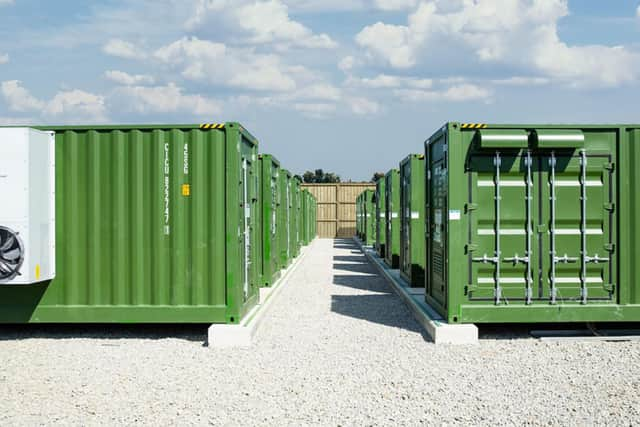

The firm said it was committed to ensuring that local people benefit from the “positive economic and social value that this project can bring”.
Project manager Laura Petrie said: “Infrastructure such as this has a vital part to play as we move away from polluting fossil fuels to clean, green, renewable energy, playing a critical role in tackling climate change and supporting Scotland to achieve its net-zero target.
“We are confident that this project will bring considerable economic and environmental benefits to West Lothian. In addition to a community benefit fund, the development will deliver considerable investment, creating jobs and boosting the skills of our current and future workforce.
“We look forward to continuing to engage with the council and local communities as we progress the consented project,” she added.
It is envisioned that a community benefit fund will focus on two key priorities - health/physical activity and training/education.
A battery energy storage system (BESS) consists of several large batteries that store electrical power for use at a later time. They can be charged using excess electricity generated by wind or solar farms, for example, or by grid connection during periods of lower demand. However, many of these projects have attracted local criticism over their impact on the landscape and concerns regarding the risk of fire.
Several large-scale BESS projects have been given the nod in recent years. Such facilities generally provide sufficient power for relatively short periods of a few hours before requiring recharging.
In March, a vast £130 million facility in West Lothian was granted consent, with the 200-megawatt site having the capacity to meet peak electricity demands for approximately 240,000 homes for two hours.
Developed by onshore renewables firm OnPath Energy, the “state-of-the-art” facility will be located on Pond Industrial Estate near Bathgate. The firm said Pond Flexible Energy Park would play a vital role in Scotland’s journey towards its 2045 net zero goals.
Meanwhile, in May, ILI Group said planning consent had been granted for its 100-megawatt Learielaw battery energy storage system project near Broxburn, also in West Lothian. It marked the company’s first major planning approval of 2025 and followed what it said had been a “strong finish” to 2024, with 350 megawatts (MW) of storage projects consented across North Ayrshire, North Lanarkshire and the Highlands.
Hamilton-based ILI Group said its Learielaw project met technical and delivery criteria, and had a current grid connection date in 2028 - making it “ideally positioned to support Scotland’s growing need for flexible grid infrastructure”.
Comments
Want to join the conversation? Please or to comment on this article.