
From the Archives: How The Scotsman covered HOME, the nationwide launch of the NTS
In February 2006, the National Theatre of Scotland marked its official launch by staging ten shows in locations all around the country on the subject of “home.” Scotsman critics covered all of them - here’s what they had to say...
ABERDEEN, SHETLAND, DUNDEE, EDINBURGH, GLASGOW - JOYCE MCMILLAN It’s half past six on a chill February evening in Aberdeen, and a new era in Scottish theatre begins not with a bang, but with the familiar rattle of a small hopper bus, carrying an audience of excited theatregoers out to the edge of the city. Waiting for us in the Middlefield estate are 20 actors, young and old, professional and community; and six unoccupied flats on the same low-rise staircase, each with a nameplate on the door featuring the word "Home". For "Home" was the theme chosen by the National Theatre of Scotland for its unique launch event, featuring ten site-specific shows in ten locations all over Scotland.
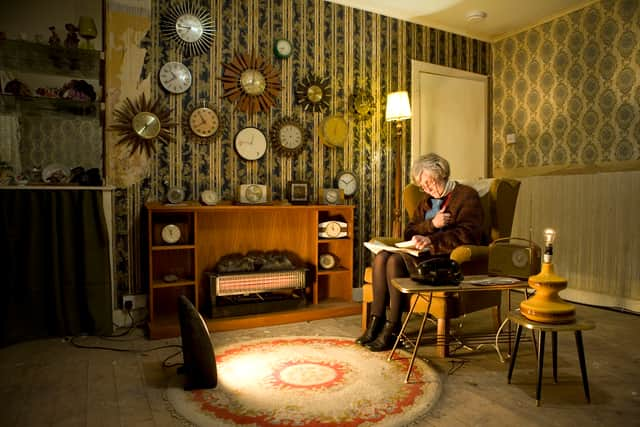

In Aberdeen, director Alison Peebles and writer Rona Munro – together with designer Martin McNee – put together a vivid, edgy, and moving meditation, in six flats and ten parts, on what "home" means today. To the left, as we crowded into the cold staircase, a door was labelled "home is where the heart is"; behind it, in a room full of old photographs and nostalgic decor, an old lady was living out a life of crushing loneliness, haunted by the ghosts of her long-gone family. In the top flat, an ageing fisherman thrown on the economic scrapheap wondered who was suffering the more painful slide towards extinction – himself, or the cod he once fished. What the Aberdeen show achieved was a bringing-together of all the strands of meaning in the word "home", from nostalgia to the quest for new places to call our own.

Across the rest of Scotland, it was as if different aspects of the theme slid in and out of focus, although never again in a show quite so rich in texture, and so clearly and confidently theatrical. In Shetland, in a beautifully finished installation show staged aboard the Northlink Ferry by director Wils Wilson, a haunting poetic text by Jackie Kay – delivered through personal guided tour handsets – led us through a story of deeply-buried female experience, and of the perennial island tension between leaving and staying, as ghostly actors dressed in 1940s or 50s costume drifted through the lounges and saloons of the ship.
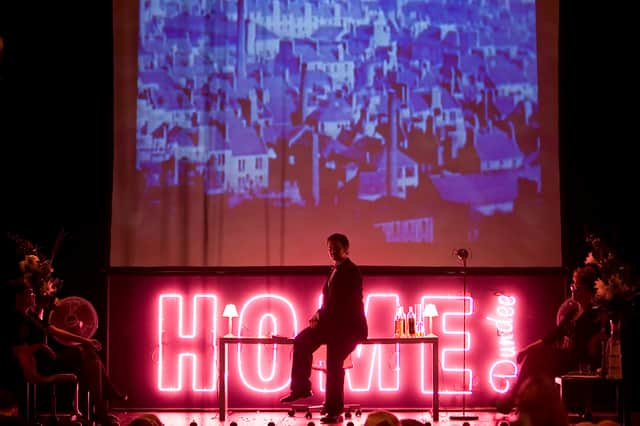
There was 1940s nostalgia in Dundee too, as director Kenny Miller decked out the hallway of the McManus Gallery in the glamorous glitter-ball pink and black of a wartime ballroom; although here almost nothing happened in terms of live theatre, as the audience sat passively watching a history film of humorous old Dundonians remembering their wartime youth. In this context, Anthony Neilson's short, sharp Edinburgh show – a surreal 35-minute session of the Scottish Parliament, written by seven primary-school children – came as a welcome shift of tone, a show which seemed genuinely more interested in our crazy present and possible futures than in the past. The problem, though, was that for local Edinburgh audiences seeing only this show, the piece was too short, slight and daft to look like the launch of anything substantial. It was also a drastic underuse of the talents of a stellar cast, including Dawn Steele, Joe McFadden, Tam Dean Burn and Daniela Nardini.

Nor was there much nostalgia in the high flats at Cranhill in Glasgow, where director John Tiffany told the ultra-dramatic story of hero Murdo's return from London to his old high-rise home, where his 17-year-old brother Tam is under surveillance by the state. The brilliance of Tiffany's concept was to combine live theatre – faces in windows, dark figures abseiling down the building – with intimate screen drama, transmitted live from inside the flats via surveillance cameras held to the windows by the abseilers in black. The script was often weak, but something about Tam's quest for a reunion with his dead Dad – a victim of Gulf War syndrome – touched the heart; and all six professional performers on camera, led by Billy Boyd, Blythe Duff, and Colette O'Neil, acted their hearts out.

So is it possible to draw up a tentative balance sheet for the achievement of the National Theatre's first event? On the downside, I would say – on the evidence of the five shows I saw – that it has been a shade too artistically uneven for comfort; and sometimes, too, ominously short of faith in the power of live theatre, as opposed to the screen images on which many shows depended. On the upside, though, the new company has achieved a dazzling geographical reach, and a real sense of connection with local communities that has both enabled those communities to re-examine their own story, and given them a new voice on the national stage. It's been a start, in other words; and, taken as a whole, a brave and imaginative one, designed to smash and rearrange many hostile Scottish preconceptions about theatre. But there are still many miles to travel before Scotland can begin to take this long-neglected art-form back into its heart, and into its sense of what home is, and what it might become.

CAITHNESS - KENNY MATHIESON The now closed and deserted glass factory on the outskirts of Wick made an atmospheric but decidedly chilly venue for the Caithness offering in the Home extravaganza. Director Matthew Lenton and his team had converted the yawning factory space into an imaginative, semi-surreal old folk's home, the backdrop to elderly resident Elsie's hyper-active imaginative life – or was it perhaps just a glimpse of another reality? Lenton's script was full of ambiguity, but the show was a colourful and often moving piece of semi-naturalistic theatre.
Ensconced in an old folk's home that is not truly home after the death of her husband, Frank, Elsie (superbly played by Myra McFadyen) is visited by the definitely corporeal presence of her doting grandson, Marcus, and a series of imaginary characters from a range of films, including Once Upon A Time In The West and 2001: A Space Odyssey. The film characters emerge from various points within the space, including a prominent ramp. Only Elsie can see them, but to her they appear to be as real as her grandson and the staff around her, and eventually inspire her to make a break for her real home in search of her husband, encountering memories from her past along the way. The denouement, as Elsie literally parts the rending veil between worlds, could easily have been made mawkish, but Lenton and his cast pulled it off in some style. The result was a bold contribution to Home, if not always totally convincing. Physical theatre with rough and tumble

INVERNESS - KENNY MATHIESON The Inverness instalment of Home took place in Arts and Motion's Creation Centre, a Nissen hut buried in an unlikely setting in the heart of Evanton Industrial Estate. With no seating, Scott Graham's production required the audience to move in promenade fashion through the space, discreetly ushered by the performers.
The fast-moving action progressed through three domestic "rooms" (with additional use of balconies) in a chronological sequence and was built around a skeletal narrative framework focusing on the experiences of three couples as they moved from the carefree abandon of student life to the trials and conflicts of living as partners. Graham's background is physical theatre and the action was based on movement and physical interaction rather than text; the result was tightly choreographed but with a rough and tumble energy when needed. The six young performers – Delphine Gaborit, Tim Morris, Georgina Lamb, Gier Hytten, Vicki Manderson and James Daniel Wilson – were exuberant and athletic in the frantic passages, but were equally effective in the more reflective interludes, including a striking setpiece involving mobile phone conversations lit only by the ghostly glow of the handsets.

DUMFRIES - TIM CORNWELL As we filed into the barn-like Loreburn Hall we were offered a cup of tea – a homely gesture in a not very homely building. At first it felt like the wrong place for this intimate show, in which Pauline Lockhart and Callum Cuthbertson re-enact interviews with Dumfries pensioners. Inspired by 4 Last Songs, Strauss's meditations on old age, director Graham Eatough's team had asked the pensioners about what home means to them.
Sometimes Cuthbertson and Lockhart played the pensioners, sometimes the interviewers, as they interacted with recordings of the interviews. At first, it was frustratingly disjointed, a series of sentimental, unconnected anecdotes about work, food and marriage that didn't seem to amount to much. But it gradually developed a quiet power, and a narrative about couples separated by war, making homes, and finally being separated again by death. Eatough couldn't resist overegging this last section a bit, even throwing a symbolic sunset into the tear-jerking closing scene. It was understandable; Strauss's stirring music makes you want to think big, profound thoughts about death. Cleverly, though, the show also undercut this; when asked life's big questions, the pensioners tended to offer small, mundane answers. If Home Dumfries concluded anything, it's that the older you get, the more comfort you find in domestic details, like good soup. Which, actually, gave the none-too-homely choice of venue real poignancy. These interviewees weren't really at home at all, but in day centres, struggling to hold on to their identity, or letting it slip away.

EAST LOTHIAN - KELLY APTER Adults wishing to see Home East Lothian were firmly instructed to bring a child in tow. It was billed as a mysterious fairytale walk in the woods, for an audience of about 50 at a time. Now the run is over, I hope I am allowed to reveal it is a retelling of Hansel and Gretel, directed by Gill Robertson of Catherine Wheels theatre company. It was the only production in the Home line-up aimed expressly at children.
The outing began at the Brunton Theatre, in Musselburgh, where we boarded a double-decker bus to the unlikely setting of the Prestongrange Industrial Heritage Museum. There, amid the old mine buildings, the story was told in three parts – within the children's home, in a winding walk along a wooded path, and at the house of sweets, where Cath Whitefield reappears as the witch. This was Hansel and Gretel played for effect, rather than laughs, on an ambitious scale. The action relied as much on dumb-show as dialogue, with clever use of live music . Whitefield made a fine pouting stepmother, while James Anthony Pearson, as Hansel, and Susan Harrison, playing Gretel, were perfectly cast for childlike bewilderment. The highlight was a vast table laid out by the witch to lure children, but the gruesome trail through the woods also went down well.

STORNOWAY - ROGER COX Remember what it felt like when you were eight and you visited the house of a friend who had just been given an amazing new toy? That's what it felt like being at Home Stornoway. For the past four weeks, director Stewart Laing and his team have been hard at work building an exquisite doll's house in an empty shop in the town centre. The show they wove around it – an intimate affair for about 20 people at a time – consisted of a guided tour of its various, detachable rooms. Laing gave a commentary in English and the sprightly Phil MacHugh did the honours in Gaelic. The lounge, made by local artist Moira Maclean, was inspired by her habit of visiting abandoned crofts and filming their interiors. As Maclean shone a tiny torch around her creation, Laing explained that she made her "outlawish" missions in darkness.
In Marc Hardy's swish, birch panelled kitchen, Harry Potter sat down to dinner with George Galloway and the White Witch (the only person from Narnia who could make it along) while in the bathroom – modelled on Laing's own – the director took us through his Sunday afternoon bathing ritual. Laing and MacDonald put on surgical gloves to investigate Will Holt's clinically-lit hallway, where a murder appeared to have taken place; an amateur archaeological dig was in progress in Simon Daw's cellar; while in Minty Donald's bedroom, a dream sequence was projected on to the walls to a hypnotic soundtrack by Paddy Cuneen. It was enough to bring out the wide-eyed child in even the most jaded cynic.
For full details of the National Theatre of Scotland’s 20th anniversary season, visit www.nationaltheatrescotland.com.
The Scotsman’s arts newsletter is now sent twice a week - subscribe today
Want the latest Scottish headlines sent directly to your phone? Sign up to our new WhatsApp channel here
Comments
Want to join the conversation? Please or to comment on this article.