
Plans to 'unlock' spin-off bodies for culture industries - including gaming

Creative Scotland head Ian Munro told MSPs there were “live conversations” about the potential creation of other bodies for sectors - such as gaming - which would be "unlocked" in the coming months.
Spin off agencies focusing on specific cultural industries are set to be created in the model of Screen Scotland, the head of Creative Scotland has told a Holyrood committee.
The Scottish Parliament’s culture committee heard that Screen Scotland, which is to separate from Creative Scotland following a review of the government-funded body earlier this year, had “outgrown” its time as part of the agency and needed to become fully independent.
Creative Scotland head Ian Munro told MSPs there were “live conversations” about the potential creation of other bodies for sectors such as gaming, which could potentially sit within Creative Scotland as Screen Scotland had done, or be set up independently from the beginning. He said he hoped the agencies would be "unlocked" in the coming months.
Culture secretary Mairi McAllan previously hinted that additional sector bodies could be a possibility in an interview with The Scotsman last month.
MSPs grilled Mr Munro, as well as Isabel Davis, executive director of Screen Scotland and Alastair Evans, director of strategy at Creative Scotland, about updates on the implementation of the review, which described the body as “bureaucratic” and “impersonal” and made 36 separate recommendations for reform.

Mr Munro, who is to step down at the end of the year, said: “It’s a live conversation and we’re doing some work to help the Scottish Government, to provide advice and research to inform their thinking. I think they appreciate the Screen Scotland success and can see opportunities for a very willing national body in Creative Scotland to do the same for other areas in the creative economy - I have mentioned games as an illustration of that.
“It’s very live at the moment and I hope we can unlock that in the months ahead.”
He said that Screen Scotland’s success could be replicated, adding that the creative economy “pays dividends for the country in multiple different ways”
He said: “The model we see as being most effective is a combination of government with Creative Scotland in a leadership role, with key industry partners alongside us playing various roles.”
Mr Munro said Creative Scotland was a “development organisation” at heart, but admitted it had become “best known for funding”.
“Funding reform is another major part [of the review], but what’s really important is that we’ve always seen and understood ourselves as a development organisation.”
He said a consultation was underway of organisations and individuals who have received multi-year funding from Creative Scotland, to improve the process and acknowledged in response to questions from MSPs that “the extent of which people are form filling is well known to us”.
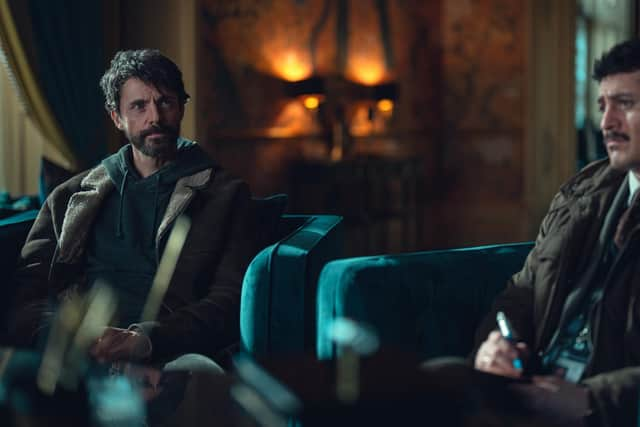
Ms Davis, who is also to leave the organisation in the coming months, highlighted Screen Scotland success stories, including Netflix series Department Q, which was filmed in Edinburgh.
She said in response to a question from MSP Colin Beattie, that the newly-separated Screen Scotland would need a team of new staff for back office operations, saying any additional costs would be outweighed by economic benefits of the organisation’s contributions to the sector. It has a target of £1 billion GVA by 2031.
She said: “Within the very concept of an incubator is the notion that, at some point, one outgrows that structure. And if we, as Screen Scotland, are to take forward all of that growth and go even further into the future, then it’s time for us to have a fully dedicated team and we will no longer be perching on the precious resources of Screen Scotland and the shared team colleague that we have across comms, HR, finance, business affairs and so on.
“So, the way we build Screen Scotland as a dedicated specialist agency which is targeted very, very fixably, at growth, can be supercharged for the future.”
Comments
Want to join the conversation? Please or to comment on this article.