
SCO & Nicola Benedetti, Edinburgh review: 'tough, rugged, visionary'
The biggest musical revelations in this performance came in Maxim Emelyanychev’s revealing take on Brahms’s Fourth Symphony, writes David Kettle
SCO & Nicola Benedetti, Usher Hall, Edinburgh ★★★★
Nicola Benedetti was, it goes without saying, the big draw at the Scottish Chamber Orchestra’s full-capacity concert in Edinburgh’s Usher Hall, and there was a definite buzz in the air that only a jam-packed venue can conjure. In many ways, however, her Mendelssohn Violin Concerto was probably the least interesting thing in the evening.
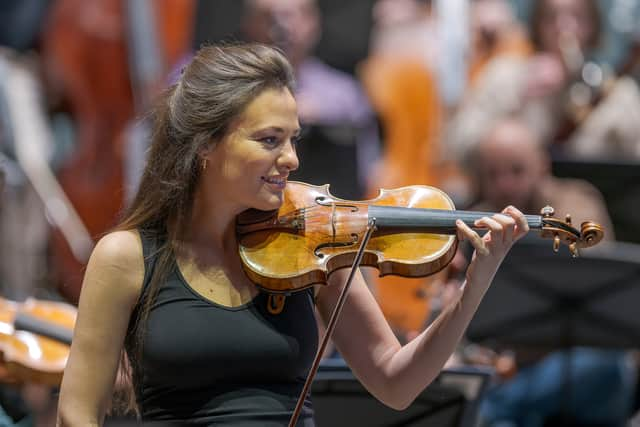

It’s clearly a work that Benedetti knows inside out – indeed, it’s hardly the first time she’s performed the Concerto in that same venue – and as ever, her technical brilliance shone brightly and was unfailingly put to the service of the music itself. But it was a strangely recessed performance, as though Benedetti were playing with friends rather than performing to 2,000 listeners, and it sometimes felt as if she were struggling to rediscover the sense of spontaneity and natural authenticity that she often brings. Her encore – Elgar’s Salut d’amour – brought more of the same, feeling effortful rather than naively charming.
There was spontaneity and authenticity in spades, however, in the two pieces by Brahms that Maxim Emelyanychev conducted either side of the Mendelssohn. He might have injected a touch more wit and sparkle into the opening Academic Festival Overture, but it was a gloriously noble account all the same, zippy and vividly characterised. But it was Emelyanychev’s closing piece – Brahms’s Fourth Symphony – that really impressed.
It’s a deceptively easy listen for a tough, rugged, visionary piece, but Emelyanychev took delight in exposing the music’s inner workings, to particularly revealing effect in the first movement’s churning harmonies and incessant transformations of its material. This wasn’t just a lesson in music theory either: it was a deeply human account, from the slightly desperate boisterousness of the third movement to the granitic repetitions of the closing passacaglia, here seldom simply monumental, but instead speaking of emotion, even vulnerability. This was where the evening’s real musical revelations came from.
The Scotsman’s arts newsletter is now sent twice a week - subscribe today
Want the latest Scottish headlines sent directly to your phone? Sign up to our new WhatsApp channel here
Comments
Want to join the conversation? Please or to comment on this article.