
From the Archives: Idlewild reform in 2015 after a five year break
As Idlewild prepare to release their tenth studio album, we revisit an interview by Fiona Shepherd from January 2015 - a point at which the band had just emerged from a five-year hiatus with a new line-up, a new outlook and a new sound
Glad tidings for a new year: prepare to plug that Idlewild-shaped hole in your life as the much loved Edinburgh band re-emerge after a five-year hiatus with a confident new album. Everything Ever Written demonstrates that absence doesn’t just make the heart grow fonder, it can provide a musical shot in the arm for tired rock groups.
“Idlewild is a new band to me,” declares freshly fortified frontman Roddy Woomble in the accompanying press release. The beefy, snake-hipped rock sound of lead track Collect Yourself backs up his assertion, but only tells part of the comeback story. The rest of the album and the group themselves can fill in the remainder.


Despite their creative reunion, the band members are still scattered geographically, so I speak first to a cold-filled Woomble from his home on Mull, then to guitarist Rod Jones in Edinburgh. “To be honest, that’s probably better because he just talks non-stop,” says Woomble. “And I don’t want to catch his cold,” laughs Jones.
Both agree that a rest was as good as a change for Idlewild. After 15 years of gigging and recording, few bands can maintain momentum and motivation. The group were dissatisfied with the rush to release their 2009 album, Post Electric Blues, and life on the touring treadmill where all roads seem to lead to Barrow-in-Furness. “Nothing against those towns…” says Woomble, who understands as well as any musician how important the live circuit has become since album sales have diminished.
“It was starting to feel dangerously like a living,” says Jones. “To make another record just to pay the bills was not really what we wanted to do. We needed to remove that so that it became fun again.”
“It wasn’t like closing a door, it was like ‘let’s leave the house for a while and come back’,” says Woomble, “so we all went and did different things for two or three years.”
Woomble settled further into his more folk-oriented solo career and life on Mull, and drummer Colin Newton moved to Canada for a while. Jones established mental health arts group the Fruit Tree Foundation with former Delgado Emma Pollock, and set up community songwriting workshops for those with mental health problems. He also recorded solo, before forming backing band The Birthday Suit. “The control freak in me likes the idea of doing a record on my own and doing everything myself but touring on your own – it’s kind of rubbish,” he says. “There’s a definite partnership there between me and Roddy that works in some way and I think we just missed that.”
In the end – and no thanks to a counter-productive online campaign by fans to boycott their solo projects in the hope of forcing a reunion – they could only stay away for so long. Woomble and Jones met up in Edinburgh in 2013 and started working on ideas which soon involved Newton. In the interim, however, bassist Gareth Russell and guitarist Allan Stewart had moved on to other things, the latter joining stoner rockers Holy Mountain. So Idlewild in 2015 is literally a new band with the addition of Luciano Rossi on keyboards and Andrew Mitchell of The Hazey Janes on bass. Both provide backing vocals and Rossi in particular has been instrumental to adding some jazzy and baroque pop flourishes to the new songs.
“The arrangements are quite different now,” says Woomble. “Latterly, I think the problem with Idlewild was we were relying too much on doing what we did best, which is no bad thing – plenty of my favourite bands do that, but it doesn’t always make for exciting records. The last two Idlewild records were made by five guys in a room and I really wasn’t interested in doing that again. Outwith the band, I’ve made some records with folk and jazz musicians and I just love that freedom of being able to give a song to a musician, whoever that is, and saying ‘add something to this’.”
Jones, who also produced the album, agrees. “We’re fortunate that when band members have changed, every incarnation has been good for the band at that time.”
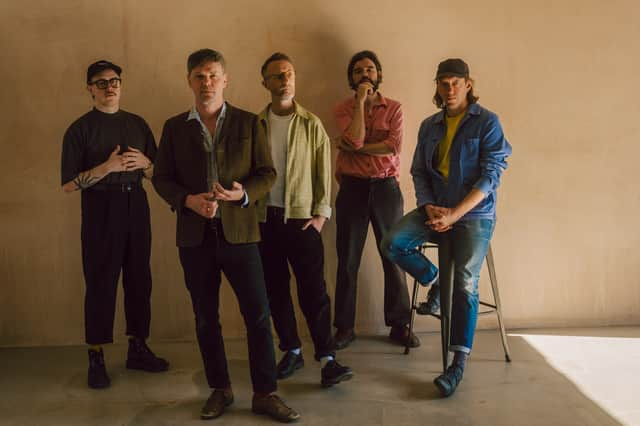
One of the standout features of Everything Ever Written is its diversity. Woomble and Jones cite bands such as Wilco and The Walkmen for their freewheeling approach to music, for pushing the parameters without compromising their identity. I would add The Waterboys to that list, as a group who reacted against certain expectations of their sound, opened up a whole new chapter in their career and are still reaping the freedom that gave them. Post-hiatus, Idlewild sound similarly invigorated and open to fresh possibilities.
“By and large we’re known as a melodic rock band and it would be daft if we tried to become a jazz fusion band,” says Woomble. “But there is a freedom to feeling we can do anything we want within reason – the spotlight is not on us, we’re not the hip band of now, and also we don’t really have a record label, so we can just do our own thing.”
This is an edited version of a story that first appeared in The Scotsman on 6 January 2015. Idlewild’s tenth studio album, ‘Idlewild’, is out on 3 October, and they play St Luke’s, Glasgow on 7 October and the Liquid Room, Edinburgh on 8 October
The Scotsman’s arts newsletter is now sent twice a week - subscribe today
Comments
Want to join the conversation? Please or to comment on this article.