
Album reviews: Django Django | Skerryvore | Katie Gregson-MacLeod | Michelle Burke
Inspired by a mythical Midwest town, the new “ambient concept album” from Django Django is unlike anything they have previously released, writes Fiona Shepherd


Django Django: Doveland (Clouds Hill) ★★★★
Skerryvore: Beautiful Mistakes (Cooking Vinyl) ★★★
Katie Gregson-MacLeod: Albatross (Last Recordings on Earth) ★★★★
Michelle Burke: Mind How You Go (Proper Records) ★★★
Django Django have built their catalogue on using the studio as a creative playground, fired up by the sheer joy of sonic possibilities. Their latest album is a different beast, not quite going back to basics but utilizing a pared back palette of instruments and following a lyrical line of inquiry. Doveland is inspired by a mythical Midwest town people claim to remember holidaying in (like alien abduction for millennials). This online urban myth awakened a cinematic song world in the band members, but also provided a place to process grief for family members who passed away during the making of the record.
The resulting “ambient concept album”, produced by former Franz Ferdinand guitarist Nick McCarthy, is unlike anything they have previously released, with their songwriting given the space to really hit home. The psych folk pastoral of opening track Meteorite and the widescreen symphonic soul of Still Life come on like Beck in his broodier moments. Cameos is equally captivating, with its shimmering symphonic arrangement and syncopated rhythm becoming ever more insistent.
Gruff rapper Hak Baker guests on the sparse semi-spoken reflection Little Me, backed by rueful drones, while eastern mantra Year of the Snake is suffused with loss, its bassline bubbling under. Sonorous instrumental Quicksand is followed by the album’s poppiest moment, Left Alone, inspired by bassist Jimmy Dixon’s return home for lockdown. The subtle influence of Syd Barrett on this track then gives way to some lightly funky Gerry Rafferty references on So Heavy - all good company to keep in the quest for a lost utopia.

Skerryvore’s latest album won’t do anything to counter the impression that they are a mainstream pop/rock group in folk band clothing, although they do kick off with a more trad-sounding instrumental named after Tiree village Scarinish which is begging to soundtrack the next panoramic Visit Scotland advert.
Frontman and songwriter Alec Dalglish has an appealing vocal tone but his lyrics and sentiments can border on Celtic cliche. He manages to power through on standard Celtpop number Fly, which deploys a phalanx of bagpipes where the big synth break would normally go to create an effective, infectious modulating drone.
Singing Up In Heaven, a requiem for Dalglish’s dad, is quintessential MOR pop with some folky flute embellishments. The Game - as close to politicking as they get - pulls the same trick but with a rockier tune, while the acoustic troubadour title track is charming in its simplicity.
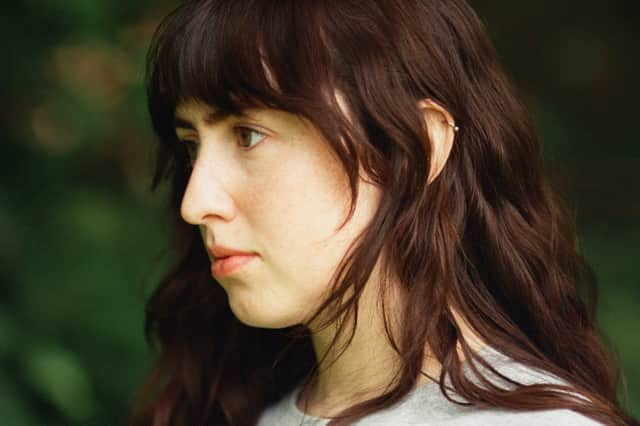
Katie Gregson-MacLeod comes at folk pop tradition from a different angle on her anticipated debut album. Does the Albatross refer to her viral hit Complex, the song which won her an Ivor Novello nomination and pitched her into an ill-fated major label deal? Returning home to the Highlands after her brush with overnight fame, she has taken her time to get it right, with an old school singer/songwriter collection which is confident in expression and direction, ranging from the delicate indie folk brooding of 196 via the mournful Americana and plangent layers of guitar on Nothing Really Changes to the engaging Joni Mitchell/Joan Baez songbird style of How Were You To Know and I Don’t Think Of Kissing You, on which she modulates her voice with almost classical expertise.
Former Cherish the Ladies singer Michelle Burke is now based in Glasgow but keeps up her transatlantic connections on her latest solo album, with guest appearances from august players Rhiannon Giddens and Chris Hillman and co-writing credits from Duke Special, Boo Hewerdine and Kathryn Williams. The easy listening country yearning of Blue Rinse Heaven is inspired by Burke’s work with dementia patients, From Cabot Cove to Conna is an impish, touching tale of watching Murder She Wrote with her grandmother and she sticks with familial inspiration on Smile A While, a musical setting of a 1921 poem written by her great-grandfather’s brother Tom Griffin from prison.
CLASSICAL
Steven Osborne: Ok by me (Hyperion) ★★★★★
When pianist Steven Osborne offers an encore it tends to be up close and personal. “Introspection is my natural territory”, he writes of his new album, OK by me: A life in encores, consisting mostly of distinctive easy listeners - anything from Bach and Schumann to Keith Jarrett and Joni Mitchell - that have distinguished his musical postscripts. The result is more than just a compendium. Osborne’s candid sleeve notes lend autobiographical context to the eclectic playlist: childhood memories of his mother’s jewellery box (Liadov’s A Musical Snuffbox); life at St Mary’s Music School (fellow pupil James Clapperton’s atmospheric Haar and Maxwell Davies’ soulful Farewell to Stromness); the later shared impulse of improvisation (on Jarrett and Michael Tippett); a cartoonesque Wagner channeled through Doucet’s irreverent Isoldina; the love of jazz unleashed in Gershwin’s Three Preludes. Osborne’s artistry is captivating throughout, not least in his own lyrically ruminative title track, OK by me. Ken Walton
FOLK
Bede Patterson, the Nexus Project: Glaisvair (BPM) ★★★★
This often enthralling debut from Glasgow-based Australian piper Bede Patterson’s Nexus Project explores contemporary piping possibilities with saxophonist Dean Garrity, drummer Roan Anderson and Ewan Johnston on keyboards. Combining traditional and fresh compositions with tunes by Fraser Fifield, Ross Ainslie and Martin Bennett, they command attention right from their opening Prelude, with its multi-tracked Highland pipes, pulsating synths and acknowledged American minimalist influences. The title track re-imagines The Finger Lock piobaireachd, opening with stentorian chanted cantaireachd. In The Old Sword, the bagpipe soars in with a variation of the traditional piobaireachd ground before taking off with boisterous keyboard, sax and drums. Further ear-openers include didgeridoo virtuoso William Barton contributing an earth-shuddering improvisation, elemental group chaos giving way to serenity and the piobaireachd Lament for the Children. Also outstanding is Dastirum’s duet between pipes and sax – 18th century piobaireachd meeting the influence of saxophonist Jan Garbarek. Jim Gilchrist
The Scotsman’s arts newsletter is now sent twice a week - subscribe today
Enjoying the Arts & Culture journalism on scotsman.com? Make it easier to find by selecting us as a preferred Google source
Want the latest Scottish headlines sent directly to your phone? Sign up to our new WhatsApp channel here
Comments
Want to join the conversation? Please or to comment on this article.