
Independence would 'risk cultural identity' of people living on England-Scotland border

The book explores cultural identity in the UK’s border regions
The cultural identity of those living along the Scottish-English border would suffer if Scotland became independent, the author of a new book has claimed.
Richard Colett, author of Along the Borders, which examines the Anglo-Scottish border, the Highland-Lowland divide and Shetland as well as other UK borders, warned independence would force people living in the borders regions to choose their nationality, when they have always stood “somewhere in between”.
Travel writer Mr Colett, who toured both visible and invisible borders around the UK, found that people living in the Borders, as well as those on the Welsh, Northern Irish and Cornish borders, identified first as “borderers” before being British - or Scottish, Welsh, Northern Irish or Cornish.
In the book, which is published by Penguin Random House, he wrote: “I fear independence would push Scotland further away [from England].
“While it’s uncertain if there would ever be a hard border – it’s a remote possibility – it’s unlikely that the ‘Middleland’ of the Anglo-Scottish border would survive intact. Local, regional identities would suffer as people would be forced to choose between England and Scotland when really, they’ve always stood somewhere in between.”
The Scottish Government has said the issue of a second referendum on Scottish independence will be on the agenda in talks between Prime Minister Sir Keir Starmer and First Minister John Swinney when they hold their first meeting after the Holyrood election next month.
Mr Collett, who decided to write the book during the pandemic, when he said different lockdown rules between regions within the UK had created divisions, told The Scotsman around 90 per cent of the people he interviewed in the border region identified as a borderer, rather than a nationality.
He said: “A lot of people I was speaking to had this idea that they had this third identity, this border identity and I think that would certainly disappear.
“They would say they were a borderer at first, and then if they were from Carlisle, they would say they were English second, if they were from Hawick or Melrose, they would then say they were Scottish, but that border identity came first.”
He added: “Regardless of which side of the border you're on now, you can kind of pick and choose, or you can just choose to be British, which solves the problem in a way.
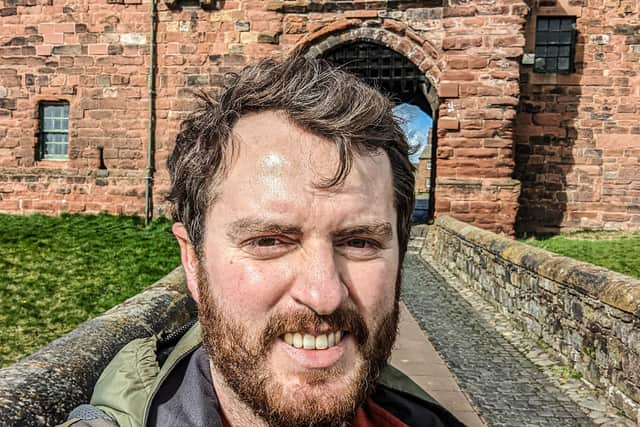

“But if you were forced to choose between Scotland and England, and you weren't necessarily sure which identity you are most keen on, then it could cause rifts, or a lot of people would feel that their own identity was being shoehorned into being Scottish or English.”
He said people he met in Shetland, however, showed support for Scottish independence, believing it would give them greater autonomy as a region - despite the rise of festivals and traditions such as Up Helly Aa increasing Shetland’s identity as a Norse island.
He said: “To then go up there and then to hear very proud Shetlanders who were born and bred there, then saying, ‘actually, I might support Scottish independence, purely because it might mean that Scotland would give us more autonomy to make our own decisions than we get from London at the moment,’ was surprising.”

Mr Colett, who was born in Aberdeen to English parents, said he had struggled with his own cultural identity.
He said: “For me, the British identity has always been this way, to bring all these disparate peoples who speak different languages and cultures together - whether you're Scottish or English or Irish or Cornish, the British identity allows you to sort of coexist under this larger national umbrella.
“I think that was inspired by the the people who have lived in the borders.”
Comments
Want to join the conversation? Please or to comment on this article.