
To See Ourselves by Alistair Moffat review: 'a double-layered approach to writing history'
Filtering the last 75 years of Scottish history through the author’s own experiences, this book gets the balance just right between capturing telling details and presenting the bigger picture, writes Roger Cox
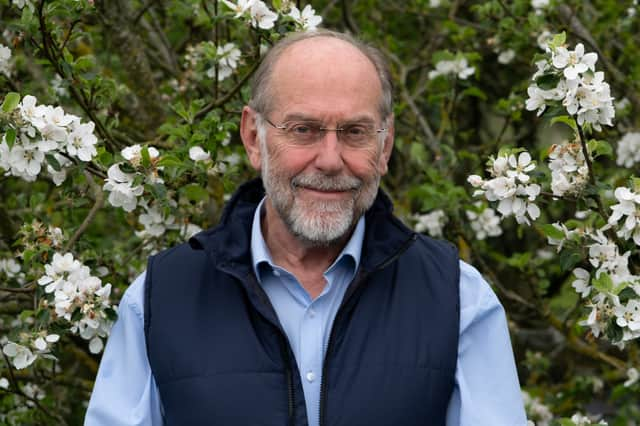
As its subtitle suggests, this is a book that attempts to ride two horses at the same time. On the one hand, Alistair Moffat sets out to chart the various social and political changes that have taken place in Scotland over the last 75 years, yet this is also a personal account, an almost-memoir, so to varying degrees the macro-scale events described are also filtered through the author's own experiences.

This kind of double-layered approach to writing history has the potential to go horribly wrong: too much "me", and the author runs the risk of seeming self-important; not enough "me", however, and there's a risk of ending up with something that reads like a school textbook with a few token anecdotes bolted on to spice things up.
Happily, Moffat succeeds in pulling off this tricky act of literary horsemanship - partly because he gets the balance between these two aspects just right, but also because his life story just-so-happens to embody so many of the important changes that have taken place since the end of the Second World War.
The fact that he grew up in a prefab council house in Kelso, for example, means he can talk first-hand about the social housing initiatives of the mid-20th century; as a beneficiary of a free university education, he can speak to the huge possibilities this far-sighted policy unlocked for a whole generation of young people; thanks to his spell as director of the Edinburgh Festival Fringe from 1976-81, during which time he successfully negotiated for the Fringe Club on the Royal Mile to stay open until 2am, he is well placed to write on changing attitudes to both alcohol and entertainment; and his time as Director of Programmes at Scottish Television means he can write with authority on the seismic changes which have swept Scotland's media landscape.
Moffat has played an active role in politics too - indeed, has perhaps played a more pivotal role in Scotland's larger story than many people realise. Having campaigned (unsuccessfully) for Gordon Brown in Edinburgh South in the General Election of 1979, the two men remained friends, and in the run-up to the 2014 Independence Referendum both were of the opinion that the vote would be close, and that Brown urgently needed to express his views about it to David Cameron. With the Prime Minister refusing to engage, however, Moffat contacted Conservative MP and fellow Borderer Rory Stewart and, Moffat writes, "the blockage was quickly removed." Next sentence: "Centrally important at that moment was 'The Vow...'"
Would The Vow have been made, then, without the hasty bridge-building effected by Moffat and Stewart? Either way, this passage neatly encapsulates the great trick this book pulls off again and again: demonstrating how the great arc of history is often rooted in apparently minor details.
To See Ourselves: A Personal History of Scotland Since 1950, by Alistair Moffat, Birlinn, £18.99. Alistair Moffat is appearing at the Edinburgh International Book Festival on 19 August
Comments
Want to join the conversation? Please or to comment on this article.