
StAnza Poetry Festival, St Andrews review: 'a kaleidoscope of voices'
This year’s StAnza was illuminated by a whole world of personal experiences, writes Susan Mansfield


StAnza Poetry Festival, various venues, St Andrews ****
Scotland is now rich in poetry festivals, but StAnza – which ended yesterday – is its oldest, with a long-established track record for bringing the best poets from across the UK and the world to St Andrews in March. It has changed over the years, and is now somewhat reduced in size, but it continues to present all things poetry to an engaged and appreciative audience.
Friday’s opening event was a kaleidoscope of voices. In keeping with this year’s theme, You Are Not Alone, festival director Ryan Van Winkle introduced a total of eight poets who engaged in a colour-themed reading relay as rich as an artist’s palette.
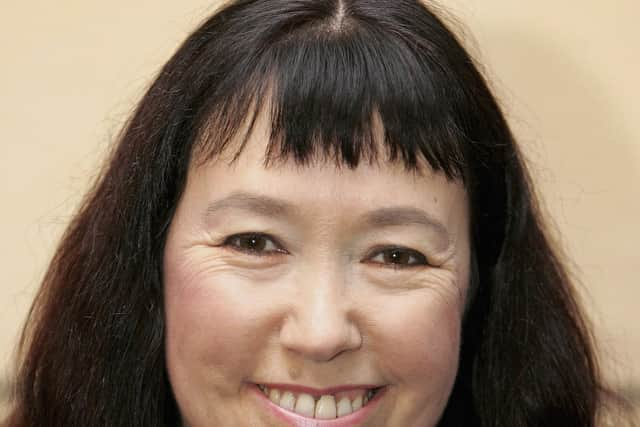
This was followed by a poetic duet in which Niall Campbell and Anthony Vahni Capildeo read their work in a poetic counterpoint around a theme of islands and oceans.
On Saturday, Scots makar Peter Mackay presented six Scotland-based poets in Our Many-Voiced Country, the fruit of an experiment in which he set out to “bring poets together to mess around with each others’ languages”.
The results far exceeded his hopes, he explained, whether in the single multi-language poem woven by Mexico-born Juana Adcock and Scots-Jamaican writer Jeda Pearl, or in the collaboration of Agata Maslowska and Meg Bateman working between Polish, English and Gaelic, or Robert Crawford’s wonderful Scots version of the achingly sad poem Presence, by Glasgow-based Palestinian poet Iyah Hayatleh about the loss of his wife.
Connection across cultures and histories continued when Trinidad-born Anthony Joseph, a TS Eliot prizewinner, joined his friend, British-Ugandan poet Nick Makoha, on stage for a relaxed yet gently probing conversation.
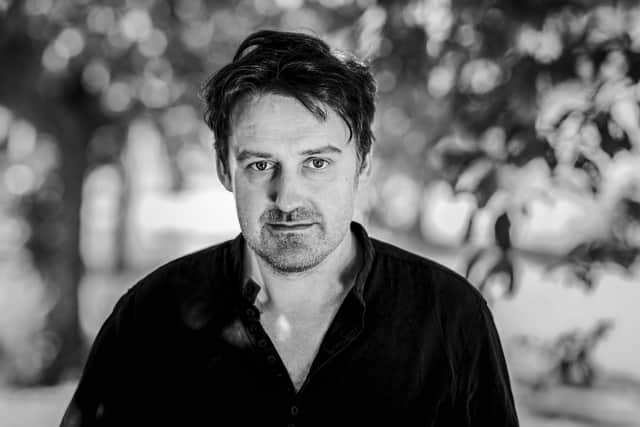
Makoha’s recent book, The New Carthaginians, is garnering a world of praise, as he writes from his experience as an exile (his family fled Uganda in 1976 at the time of the Entebbe hijacking), weaving in the work of the artist Jean-Michel Basquiat and the mythical figure of Icarus. This was a chance not only to hear stand-out work by both writers but to start to get under the skin of what poetry is, and how it’s done.
Facing up to illness was a theme which ran through an impressive showcase of voices by Scottish poetry publisher Mariscat. Kate Hendry’s pamphlet MXSIMP charts, clearly and compassionately, her experience of diagnosis and treatment for breast cancer. In “Sonnets for My Mother As Lear”, Martin Malone traces his mother’s journey into dementia.
And award-winning poet Vicki Feaver’s recent pamphlet with Mariscat, The Yellow Kite, courageously charts her journey since her diagnosis with Parkinson’s Disease in 2020 with brightness, grace and good humour.
Her reading evoked a menagerie of animals, as did Pascale Petit, reading at Saturday evening’s Centre Stage event organised by Poetry London.
While her writing unflinchingly processes her experience of abusive parents, it is also full of energy and a kind of delight, transporting us from Wales to the Amazon, to a world of jaguars, caymans, lammergeiers and bee-eaters, and to a sense of hope and recovery, both personally and for the earth.
The final reader of the day was Pulitzer-winning poet Carl Phillips, the first American guest of the weekend. His conversational poems, often aphoristic, always surprising, explore desire, sexuality and love.
Comments
Want to join the conversation? Please or to comment on this article.