
Graeme Macrae Burnet on the island murders that inspired his new novel
When he found 130 handwritten pages of witness statements relating to a triple murder on the island of Benbecula in the 19th century, Graeme Macrae Burnet realised he had everything he needed to reconstruct a long-forgotten story, writes Susan Mansfield
In 2016, Graeme Macrae Burnet was shortlisted for the Booker Prize for a novel about a violent triple murder in the Highlands in the 19th century. The book claimed to be a collection of historic accounts Macrae Burnet had discovered while investigating his own family history, though it was a work of fiction.
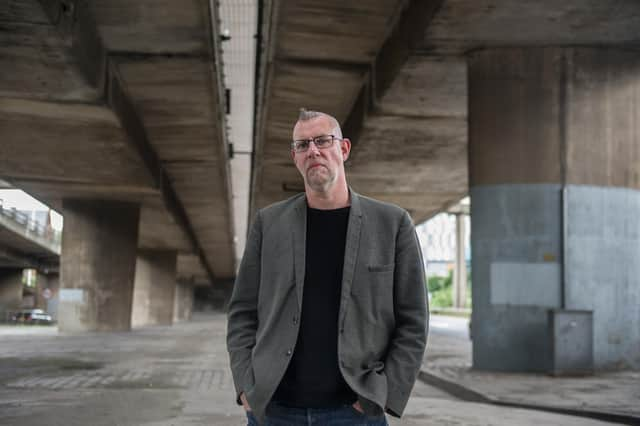

It’s intriguing, then, that his new novella, Benbecula, the latest in Polygon’s acclaimed Darkland Tales series - in which writers reimagine stories from Scotland’s history, myth and legend - is also about a violent triple murder in rural Scotland in the 19th century. But this one is based on fact.
When we meet in a cafe on Glasgow’s Southside, Macrae Burnet, 58, gives a wry smile. “At the very first event I did for the book, I was talking about how I’d read all this material in the archive, and somebody put their hand up and said: ‘Yeah, we’ve heard that one before, I don’t believe a word’. I’ve only got myself to blame for that with my track record of pretending things are true.”
In fact, he discovered the case of Angus Macphee, a Benbecula crofter who murdered his father, mother and aunt in 1857, about ten years ago when working on His Bloody Project. “I was about two-thirds into writing the book, so it didn’t have any impact on that story, but it was very striking that I was writing about a fictional triple murder in the Highlands and I came across this real-life case. When Jamie Crawford asked if I would be interested in writing something for Darkland Tales, I knew I wanted to explore it.”
Angus Macphee was tried in Glasgow in October 1857, found not guilty on grounds of insanity - interestingly, a defence put forward, unsuccessfully, for Roddy Macrae in His Bloody Project - and was incarcerated until his death 42 years later. The events are narrated by Angus’s older brother Malcolm, living alone in the family croft, ostracised by the community and slowly losing his grip on his sanity.
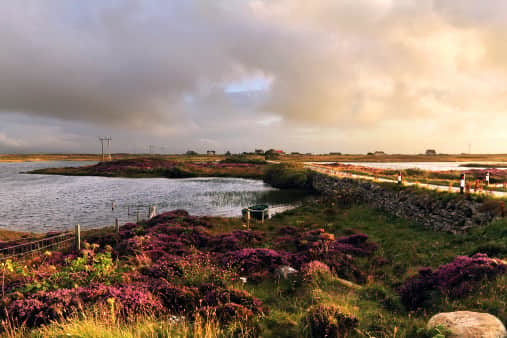
Digging in the National Archives, Macrae Burnet found 130 handwritten pages of precognition statements (witness statements made prior to the trial) from more than 20 witnesses, “totally fascinating materials” which gave him everything he needed to reconstruct the story. He is surprised that the tale of the killings was little reported on at the time and now appears to have been almost completely forgotton.
“There was one newspaper article when the murders happened, ‘Maniac runs amok in Benbecula’ sort of thing. The murders happened in the same week as the trial of Madeleine Smith (a Glasgow socialite accused of murdering her lover) which had blanket coverage in The Scotsman and The Herald, and yet a triple murder in Benbecula merited barely a mention.” Even in Benbecula itself, he could find no one who knew of the tragedy.
He visited the island in January, on the eve of Storm Eowyn - “it was driving rain, just to make it even more bleak than it might have been” - and, using a hand-drawn map he found in the archive and an Ordnance Survey map from 1851, he was able to identify the ruins of the croft where the murders took place. “I would say I’m more than 95 per cent sure, I’m even getting goosebumps telling you about it. I was able to look out to the shore, and onto the stretch of water between Benbecula and South Uist, and picture what Malcolm saw. That was absolutely crucial to the writing of the book.”
Hunched over his desk through the dark months of winter, he felt he was inhabiting a similar darkness to his protagonist. “The darkness of January and February is really associated for me with Malcolm being in what he calls his skull-house, often in the darkness, alone, isolated. I always try to inhabit the character, I don’t stand outside and think: ‘Is he a nice guy? What’s wrong with him?’ I don’t diagnose my characters, but I always feel compassion for them.”
Readers will notice the thematic connections to Macrae’s other books: an interest in the reliability (or otherwise) of narratives; in madness and sanity (though those terms might not be particularly helpful); in the stability (or otherwise) of the self, or selves. None of his books - not even his French-set Gorski trilogy of detective novels - offer easy or comfortable conclusions.
“I like to present readers with the information that I have, and then they can come to their own conclusions about it, if they want to go through that thought process,” he says. “I always want readers to finish the book with some questions alive in their minds.”
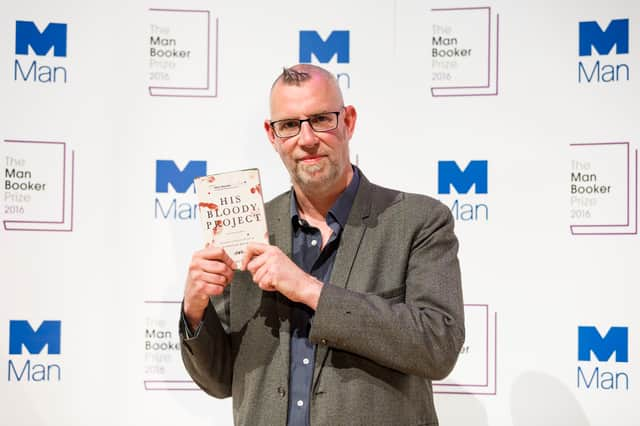
Macrae Burnet’s first novel, The Disappearance of Adèle Bedeau, was published in 2013, after multiple rejections, by Saraband’s then new crime label, Contraband, followed two years later by His Bloody Project. It’s rare enough for a novel by a little-known writer, published by a small press, to reach the Booker shortlist, but His Bloody Project went on to outsell the other five novels on the shortlist put together in the shortlist period, and went on to sell a total of 200,000 copies in the UK and be published in more than 20 languages.
“After I didn’t win I thought, OK, I can go back to my normal life now and relax, but the book just kept selling. I spent most of the following year travelling. Obviously it was given a platform by the Booker, but not every shortlisted novel captures the imagination of people. The most amazing thing is hearing from readers in Russia or China that they found something in the book.”
Determined “not to repeat a formula”, he went on to publish another Gorski novel, The Accident on the A35, then Case Study (2022) about the encounter between a young woman and a maverick therapist, which was also Booker longlisted, and then the final part of the Gorski trilogy.
He is fond of pointing out that metafiction and unreliable narrators have been part of the writer’s toolkit for centuries, featuring in books such as Hogg’s The Private Memoirs and Confessions of a Justified Sinner, and The Moonstone by Wilkie Collins, often described as the first detective novel in English.
“People often talk to be about my narrators being unreliable, but to me they’re just narrators. The very nature of narrating something is unreliable, because you are giving a personal account. I think that’s my fascination with it, that’s how reality is. Even if it’s a stabbing on a train, as soon as it’s happened, the eye witnesses all give conflicting accounts. If Wilkie Collins was a postmodernist then so am I.”
Benbecula is published by Polygon as part of the Darkland Tales series, price £12. Graeme Macrae Burnet is appearing at the St Andrew’s Book Festival in London on 30 November, see www.standrewsbookfestival.org The Scotsman is the official media partner of the St Andrew's Book Festival.
The Scotsman’s arts newsletter is now sent twice a week - subscribe today
Want the latest Scottish headlines sent directly to your phone? Sign up to our new WhatsApp channel here.
Comments
Want to join the conversation? Please or to comment on this article.