
Glasgow: A New History, by Alistair Moffat review: 'full of quirky facts'
One of the joys of Alistair Moffat’s new history of Glasgow is his magpie eye for lesser-known facts, writes David Robinson
If you want to find out how to write a history of a place, you should talk to Alistair Moffat. In the last year he has published two of them - Edinburgh: A New History coincided with the capital’s 900th anniversary, and this book about its friendly rival to the west, currently celebrating its 850th.
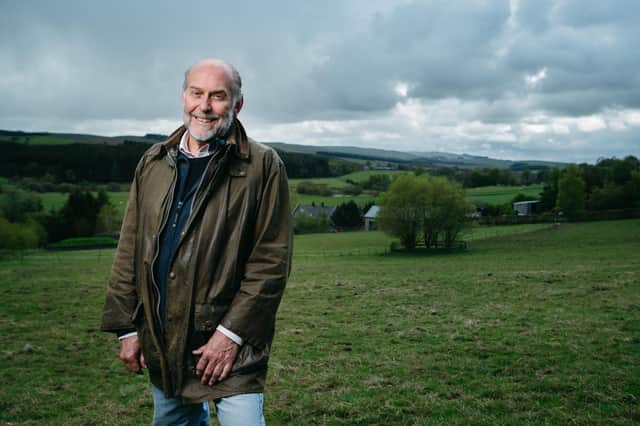

In format, they are almost identical twins: both have similar jackets, with short, punchy chapters written with Moffat’s trademark narrative brio. The fact that, as the historian behind the magnificent Great Tapestry of Scotland project, he is well versed in boiling down the nation’s epic, sprawling history into 160 panels may well account for the pithiness of the format.
Yet of course the two cities are anything but identical. Edinburgh has the advantage of being an obvious place for a fortress capital: only in the 18th century, when Glasgow offered the option of a shorter Atlantic crossing than English ports allowed for American tobacco trade, did geography start to work more in its favour - on top, of course, of all the further advantages of easy access to coal, iron and a deep water river.
But the key difference with Edinburgh is surely not one of geography but of attitude: how does a city that has historically been as deeply divided over religion as Glasgow manage to have such a strong sense of its own identity? From first to last, from John Smeeton’s “This is Glasgow. We’ll set about ye” remark after seeing off the 2007 terrorist attack on Glasgow Airport to an audience member shouting out “Go, big man!” in the silence just before Pavarotti began to sing at an SECC concert held in the city’s 1990 reign as European City of Culture, this thread runs throughout Moffat’s book. This spirited individuality, he seems to suggest, is what makes Glasgow special. Maybe indeed, on occasions, miles better.
Moffat doesn’t offer any glib answers as to where that strong sense of humour and civic connectedness comes from, but it may be significant that he spends quite a bit of time on the pre-industrial city. Those roots go deeper than many realise. Work on Glasgow’s Cathedral, for example, began in 1119, supposedly on the site of the church built by St Kentigern (Mungo to his mates) Glasgow’s 6th-century founder. If rivalry with Edinburgh went back this far, 12th century Glaswegians could say that not only was their cathedral started first, but they had their own local saint too. Later, in the figure of Robert Wishart, its bishop from 1272 to 1316, it had someone who played a leading role in the struggle for Scottish independence.
Maybe Glaswegians know all of this already, but one of the joys of Moffat’s book is his magpie eye for lesser-known facts. Perhaps you knew that Glasgow’s police force was founded 50 years earlier than London’s but did you know that in 2021 the Advertising Standards Authority had to warn the Metropolitan Police not to repeat their claim to be Britain’s oldest municipal force? Again, you may well know about Celtic’s European Cup victory in 1967, but did you realise that when the final whistle went six of the team ran back to pick up their false teeth from the goalie’s hat?
I love quirky facts like that, and Moffat’s book is full of them. Which makes some of the omissions of some more significant events so odd. Although he may be right that too much has been made of Red Clydeside, Glasgow’s radical tradition is wider and deeper (Chartists, suffragettes, the War of 1820 etc) than he shows. More surprising still is that not a single Glasgow fiction writer makes the cut: not Gray, not Kelman, not McIlvanney, not Hind, not Mina. Glasgow is no mean city for writers, and their absence is an oversight in this otherwise engaging and enjoyable book.
Glasgow: A New History, by Alistair Moffat, Birlinn, £14.99
The Scotsman’s arts newsletter is now sent twice a week - subscribe today
Comments
Want to join the conversation? Please or to comment on this article.