
The best art exhibitions of 2025: Scotsman critics name their top ten
From Andy Goldsworthy’s blockbuster show at the RSA to the Scottish Colourists at Dovecot, Susan Mansfield and Duncan Macmillan name their favourite exhibitions of 2025
Wings of a Butterfly, Ingleby Gallery, Edinburgh There was a conversation across time in Wings of a Butterfly, an ambitious, triumphant show at the Ingleby Gallery. The artist Pierre Bonnard (1867-1947) wrote in one of his final diary entries: “I should like to present myself to the young painters of the year 2000 with the wings of a butterfly”. This show put his work (two paintings, three drawings) alongside work by 11 painters and a sculptor from the 21st-century. These were artists who already had a relationship with his work, including Chantal Joffe, Andrew Cranston and Phoebe Unwin, and it turned out that the things that made Bonnard different from his peers, and perhaps more difficult – his casual compositions, his tendency to resolve a work while leaving areas eerily unresolved – are right up the street of contemporary artists. SM


The Scottish Colourists: Radical Perspectives Dovecot Studios, Edinburgh Drawn from the Fleming Collection and a wide range of loans, The Scottish Colourists: Radical Perspectives marked the centenary of the first exhibition in the UK of the four Scottish Colourists, SJ Peploe, JD Fergusson, FCB Cadell and Leslie Hunter as a group. Their first group show was in Paris the year before. The aim was to bring them together with the English, Welsh and Irish artists who, like them, responded to the upheaval in French art that the English critic, Roger Fry, christened Post-Impressionism with exhibitions in London in 1910 and 1912. DM

Acts of Creation: On Art and Motherhood, Dundee Contemporary Arts Acts of Creation was an inspired and ambitious show curated by Hettie Judah for Hayward Touring. Fiercely and sensitively, Judah took issue with the “blindspot” art has about “real motherhood”, set out to affirm artists as mothers, and to assert their right to use their own experience in their work. She made her case with over 100 works, arranged clearly in four colour-coded themes. The 60-plus artists were a broad range: British and international, young and old, famous and little-known. It was a joy to see a strong themed show which knew what it wanted to say and said it, offering up an endlessly broad range of work in support of its arguments. SM
READ MORE: Art reviews: The Thread That Pulls | Nature turns | Barbara Rae DBE: Prints
The World of King James VI and I, Scottish National Portrait Gallery, Edinburgh This brilliant exhibition at the Scottish National Portrait Gallery set out to redeem the reputation of James VI and I. James’s portraits both from before his move south by Adrian Vanson and from shortly after the move by John de Crtiz show him as intelligent but withdrawn and watchful, as well he might be. The iconography of a large picture that greeted you at the entrance of the exhibition, meanwhile, was an elaborate accusation that his mother Mary was complicit in the murder of his father, Henry Darnley. Later an engraving showed the Guy Fawkes conspirators in a group. These were tough and turbulent times. DM
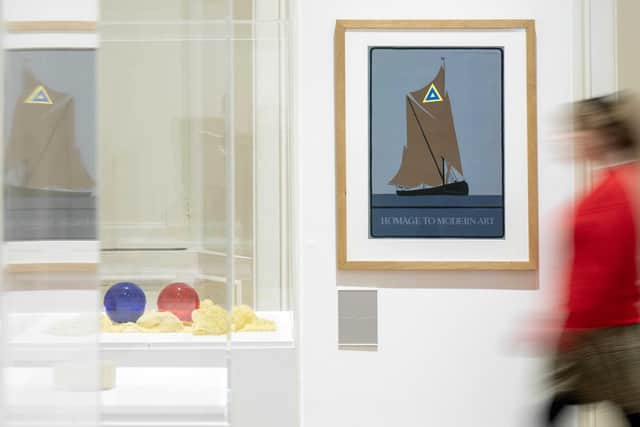
Ian Hamilton Finlay, National Galleries Scotland: Modern Two, Edinburgh 2025 is the centenary of artist-poet Ian Hamilton Finlay, and the National Galleries of Scotland marked the occasion with an exhibition of artworks and documents. The labels accompanying the show were a good introduction, not only to the work but also to the man himself, for though his work is deliberately impersonal in execution and was usually created with a skilled collaborator, it is also very personal. Finlay’s career as a painter was short and he had some success writing, but his breakthrough came in the early 1960s when he moved towards concrete poetry, where the form and the image the words make are as important as the words themselves. He wrote at the time: “I feel I have come to the end of poems that are about, and I want to do poems that just are.” DM
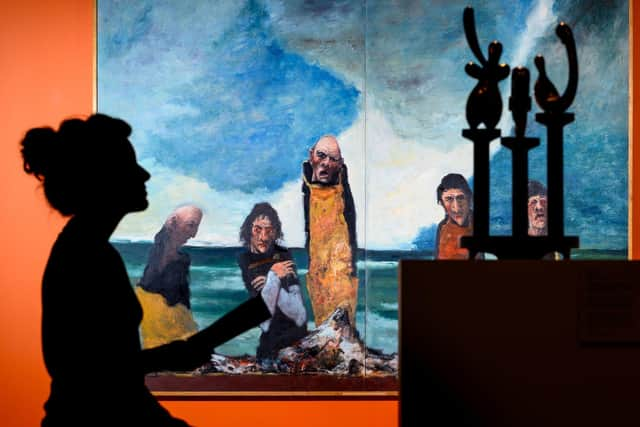
John Bellany: A Life in Self Portraiture, City Art Centre, Edinburgh A Life in Self-Portraiture was the first big survey of John Bellany’s work in Scotland since his death in 2013. So important is the self-portrait within his oeuvre that the show’s focus did not feel like a narrowing down, more an opening up of a rich seam which runs through everything he did. Put together with the assistance of his wife Helen and lifelong friend Sandy Moffat, it felt personal, if not intimate. It included examples of his sketchbooks, fragments of a handwritten memoir and a good number of paintings rarely exhibited before. These were large works, presented with a minimum of interpretation. Walking among them was a reminder of Bellany’s dazzling skill and ambition, but also that the raw material with which he chose to work so fearlessly was the product of a psyche unlike any other. SM
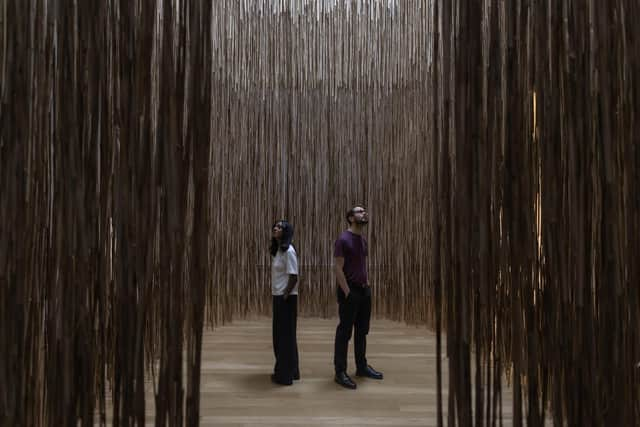
Andy Goldsworthy: Fifty Years, Royal Scottish Academy, Edinburgh The Royal Scottish Academy is one of Scotland’s great exhibition spaces and, while the spacious Georgian rooms adapt surprisingly well to contemporary art, they always remain themselves. You can show what you want, they seem to say, but you’ll never forget where you are. Andy Goldsworthy, though, challenged this building. His 50-year retrospective for National Galleries of Scotland squared up to it like a wrestler spoiling for a fight. A significant proportion of this show was new work, made specifically for the building. He filled rooms with rocks, reeds and roughly sawn oak branches, and changed how these spaces feel. SM
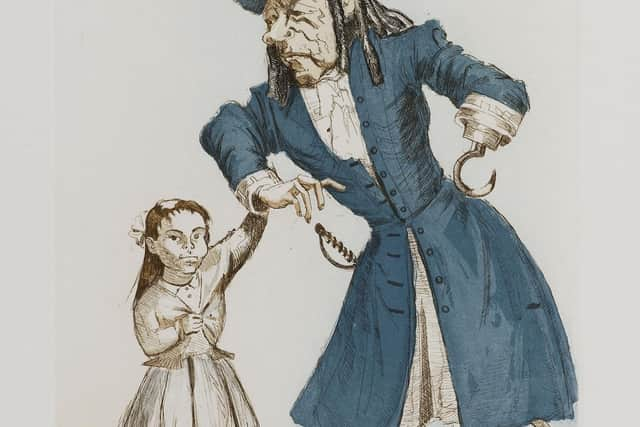
Paula Rego: Visions of English Literature, Dick Institute, Kilmarnock Sometimes you stumble on a breathtaking exhibition where you don’t expect one, like this show of Paula Rego’s prints at the Dick Institute. Rego was an outstanding draughtswoman and seemed to find a joy and spontaneity in printmaking. This show consisted of three expansive series inspired by literature. She is a master at capturing nuanced emotions, as good at complex group scenes as she is at focusing on a single figure, and capable of creating multiple dramas within a single frame. Her prints are not always easy viewing, but they are very, very good. SM
READ MORE: Art reviews: Jaune Quick-to-See Smith | Shen Xin
Drawing the Italian Renaissance King’s Gallery, Edinburgh Taken from the Royal Collection, the Renaissance drawings on display in this exhibition at the King’s Gallery were stunning. All from the 15th and 16th centuries, they included work by Leonardo, Raphael, Michelangelo and other giants of the Renaissance. Many of the artists were less well known, but their work was still amazingly good. Mostly the drawings were remarkable for the confidence with which they were executed. There were very few signs of changes of mind or rubbing-out, but some show the excitement of creation. DM
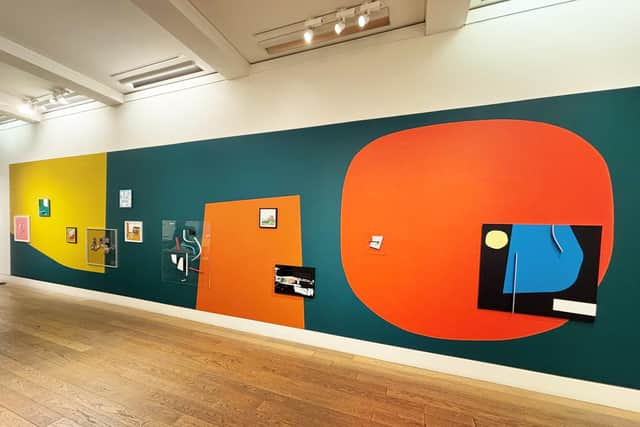
Toby Paterson: A Short Guide to Towns Without a Past, Royal Scottish Academy, Edinburgh Toby Paterson is an abstract artist. He uses flat colours with clearly defined, although not strictly geometrical shapes. There are also often elements of relief. What seems to inspire him is living in cities – especially his native Glasgow – and, all witnessed in the existential moment, their rise and fall, their mix of vision, accident and failure and the frequent loss of their past through demolition in the name of development, of a future that is always uncertain. Elements of pre-war modernism are often echoed in Paterson’s work, reflecting how it was adopted by architects as they set out to rebuild the country as a modernist utopia from the ruins of war. Paterson clearly sympathises with the vision of these architects, but is equally conscious of how far it failed in the realisation. DM
The Scotsman’s arts newsletter is now sent twice a week - subscribe today
Want the latest Scottish headlines sent directly to your phone? Sign up to our new WhatsApp channel here.
Comments
Want to join the conversation? Please or to comment on this article.